
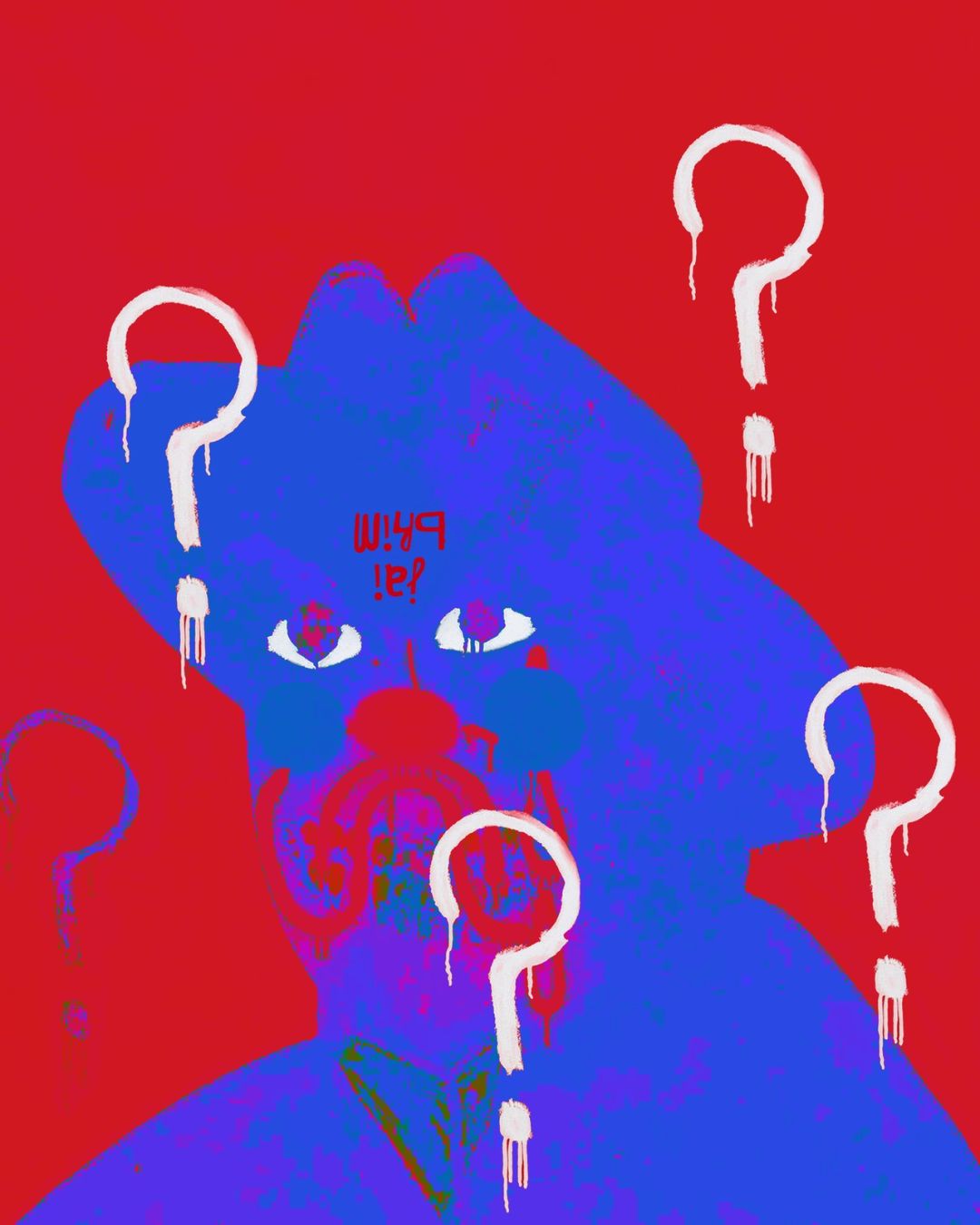
Why do we protest? Do we protest because we are bad? Bad as citizens, bad as human beings, bad daughters, and sons? Why do our youth protest? Why does this act of protest arouse so much fear? Fear from society and the state. Aristotle writes that the “young men (and women) have strong passions and tend to gratify them indiscriminately” (Aristotle 2012). The younger generation possessed tremendous energy, creative force, and potential. More importantly, they are full of life, and life, to thrive, needs the proper conditions that the current regime failed to provide. However, it is the nature of life to expand itself. Hence the protest of the youths. The old society, religion, and state use force to serve their purposes and try to control the boundless possibilities of youth. When any social and political structure downplays human nature and the necessities of life, we can no longer contain ourselves and remain silent. There is a limit to controlling the inner nature of humanity. Family, society, religion, and political power have always been terrified of human nature. They are forever trying to control, subjugate, and overpower the true potential of humanity.
Gods came, religion came, and then came the state! But is it possible to contain our boundless humanity that runs in our veins? History has proven again and again that it has never been, and never will be, able to suppress the beauty of humanity. The way religion, society, and the state forever wish to control individuals, individuals in return have forever rebelled and protested in every way possible. No god, no religion, no society, or no state can contain our boundless humanity. Is it possible to contain a river that flows forever? We might try to control it and temporarily put the brakes on its flow, or it may dry out in a particular season. But for how many days? For how many seasons and years? It will return in the next season; it will return next time, eventually, with more vigorous force; it will make its own course. Nothing can stop it from reaching its destination.
In the same way, human beings possess immense potentiality. Hence, their free actions, thinking and will cannot be stopped. Protest and rebellion can manifest in different ways. It may not always be political. Sometimes it is chaotic, enigmatic, mysterious, and even decadent, even when it tells the truth. When politics reduces itself to tyranny, we rebel not only in the political domain but also in art, literature, science, and even philosophy. Rebellion is a part of human life and its very existence. Reducing everyone who reads, thinks, and creates to the level of ‘Dimagi Naxal’ is absurd and branding basic human nature and constitutional rights as criminality. It must have been an act of rebellion that attracted the attention of those in power. All of these are various forms of negotiation with the existing socio-political structure. When we refuse the dictates of family, society, religion, or the state, that act of refusal becomes a site of protest. The protest must be understood as an act of negation. Camus rightly asked, “What is a rebel? A man who says no” (Camus 2013). By saying ‘no’ to negative politics, organisations, and beliefs, we say ‘yes’ to what is desirable and good. By negating something, we claim our human personality, agency, and nature. We own ourselves once again. It is an act of fighting for ourselves.
When we refuse and abandon ourselves, we become bad and ugly – not only to ourselves, but also to others. What happens when we endure injustice? First, we hate the one who causes it; second, we allow him to continue violating others; third, we hate ourselves for our inability to defend what is right; and finally, the outcome of the process: resentment. Resentment of oneself is resentment toward everyone. Hate and resentment are negative psychological states. Due to this kind of psychological state, we hardly find peace and can settle down. In an act of protest, first we refuse the violator. Protesting against the violators means not only putting a full stop to their violations, but also helping them become good. By doing that, only we can become good. We will not resent ourselves, we will not hate him forever, and finally we will not resent everyone around us. In the long run, protest allows us peace and space to be good. This is the process of creating a good society in which individuals are not suppressed but are given space to thrive alongside the larger society.
Control and subjugation started at the basic level, in the family. When Indian parents control their daughters and manipulate their sons, either through the ideology of love, caste, rules, regulations, or force, they disable them. Since control never erodes, our children never grow up to be independent. Blind obedience becomes their first nature. The same obedient children later obey the authority without questioning it. They become good slaves. They can hardly believe that power can be corrupt and questioned. Further, parental control over girl children makes it difficult for them to survive and navigate the world all alone. Their right to survive with dignity is snatched away by parents.
Their capacity to become an individual and develop their true individuality was crippled at the very door of their freedom. First, they depend on their parents, and later on their husbands. The family, and later society, first disable their daughter and then declare her a burden. The act of declaring girls a burden turns South Asian parents into murderers and criminals for either killing girl children, otherwise known as female infanticide, or disabling their daughters. This social process creates bad parents. Secondly, a woman who cannot survive on her own starts despising herself, hating herself, and leads a life of resentment and humiliation under a man. In this process, she becomes bad. Men are controlled as well and forced into society and family. Parental control over young men never wanes. It is not enough to blame the parents. We must also blame ourselves. It is our incapacity, silence, endurance, and unwillingness to take our own responsibility that allow parental, societal, and casteist abuse. We have allowed that to happen. Hence, merely protesting against the government, society, or religion is not enough. We must protest against ourselves as well; we must denounce our weak, pathetic, and powerless conditions. Youth not only need to rebel against the government; they also need to rebel against the family that wishes to impose a casteist, patriarchal way of life. The question of rebellion is not merely political but also existential. We protest because we can no longer exist in the current socio-political and religious climate.
Women are subjugated from childhood, while men become lovers and husbands and wish to become supermen. Heroes only exist when a large number of people remain helpless. However, they are merely men. Their unexpressed emotions, desires and anger turned ugly over time. They emerge as toxic masculine figures. They grow up despising themselves and their toxic parents. This toxic masculinity enables them to perpetuate crime, demand dowry and abuse their parents, wives, and children. Dowry death has been one of the horrific crimes that is taking place till today. Instead of raising financially empowered women, parents search for men for their daughters. Men in our society treat women as their private property and themselves as the owners of them. Hence, they perpetuate violence with impunity. In this cycle of toxicity, the man becomes a criminal. In a Brahmanical society, everyone becomes bad, controlling, and manipulative. The greatest creation of Brahmanism is not merely evil but legitimising it and glorifying it as a dharma, culture, and tradition. The moral values of society as a whole are deeply eroded by Brahmanism. Brahmanical organisations are poisoning our young generations with hate against minorities, women and marginalised communities. Ambedkar rightly observed that “the effect of caste on the ethics of the Hindus is simply deplorable...virtue has become caste-ridden, and morality has become caste-bound" (Ambedkar 1936). When our youths protest, they wish, should, and they must annihilate caste-ridden ethics to create universal morality. When younger generations reject their parents, claim their own agency, and protest, they not only liberate themselves but also others. We need not fight for others. We have to fight for ourselves, for our rights. Every protest is a creation of universal moral and egalitarian values.
A young woman, by fighting for herself, fights for others. Her liberation is liberation for everyone. Her fight is to make herself good. Her becoming good is everyone becoming good. Hence, every fight we fight for ourselves is a fight for everyone. Protest and rebellion are moral acts. Aristotle writes in the context of youths that “their lives are regulated more by moral feeling than by reasoning; and whereas reasoning leads us to choose what is useful, moral goodness leads us to choose what is noble.” Hence, protest is an act of nobility and virtue. To fight for ourselves is good, and to be good is to be beautiful. German philosopher Friedrich Nietzsche asked, “What is good?” While answering, he wrote, “to be brave is to be good.” The protest that has aroused our youth across India is about them becoming good, just, moral, and beautiful. It is a protest to make others moral as well. It does not tolerate weakness, corruption, or mediocrity. They wish to take their destiny into their own hands. They no longer wish to depend on others. They want to be accountable and, at the same time, hold others accountable. More than that, it is a protest against a society and a system that treats young people as irrelevant—as pawns in the hands of old people, systems, and tradition. It is us chasing our destiny. We will never be stopped. We have no bounds, no limits. Nothing can stop us from expanding our inner qualities, agency, and humanity.
Old age, social relations, and traditions should be discarded. They should perish with time. The young have arrived, and they should take India's destiny into their hands. The old people have ruined India with the ugliness of caste, gender, and all forms of corruption. And the old politicians despise the new age, new life, and new generations. Under the current regime, they wish to reverse time. The old live in ‘memory’, while the young live in hope (Aristotle 2012). And hence, the old long for the past while the young long for the future. However, the older generations have possessed our young minds like ghosts possess their victims; in doing so, they have contaminated their hearts, minds, and souls. A substantial number of young populations are contaminated by the virus of Brahmanism. Ambedkar foresaw this ‘sickness’ long before, in 1936 (Ambedkar 2014). They are suffering through outdated thinking, traditions, and social relations. We must cure them through compassion, humanism, and radicalism. More importantly, we have to let them know their true potential, the beauty of their body and mind. These young bodies, possessed by the old, are the vanguard of the ‘ancient regime ’; they forgot their own well-being and that of fellow beings. With the help of these victims, the old are on the path of destruction of every democratic institution and law because they wish to “go back to the Vedas.” They love the backward conditions of existence. They disregard change and despise the beauty of democracy. They hate the rhythm and unity of life, and they resent youthfulness. They say India is youthful, and yet when they find our youths loving, sitting, or walking, they are beaten down by anyone as if they have committed a crime. Crimes are forgivable in India, but love is not. They kill their daughters and sons of other mothers in the name of honour and now in the name of love jihad. That tells us the conditions of the youth in India. Love is a very basic thing; forget about demanding jobs and accountability. Alas! They deployed an army battalion with sticks, tear gas, water cannons, guns and goons.
The kind of condition we are in now needs more than protest, more than becoming good and more than a revolution. Everything India needs is more, and it must be in every field, every aspect of our lives. The youth have to be organised and start scrutinising everything old, ugly, and outdated. They should long to be good, just, moral, beautiful, and dangerous. They should hate weakness, corruption and mediocrity. That is the only door to the future. That will save our corrupt and mediocre souls. With hope, let us protest, revolt, and participate in this dangerous festival so that we can reclaim our human personality and become good citizens of the nation and the world. The dead are forcefully creating our world in their own image. That is why India has become ugly, stinking, and a 'hellhole.’ It is time to kill the dead, the past. It is time not only to “create dangerously,” beautifully, and radically, but also to act and live dangerously (Camus 2019).
References
Albert Camus, Create Dangerously: The Power and Responsibility of the Artist, Translated from the French by Sandra Smith, Vintage International, New York, 2019.
Albert Camus, The Rebel, Penguin Books, New Delhi, 2013.
Aristotle, The Art of Rhetoric, Harper Collins, London, 2012.
B.R. Ambedkar, Annihilation of Caste, in Dr. Babasaheb Ambedkar: Writings and Speeches, Vol. 1, Government of Maharashtra, Bombay, 2014.
Indra Dutta Sharma, “Swami Dayananda Saraswati (1824-1883)”, The Indian Journal of Political Science, Vol. 6, No. 3, January-March, 1945, pp. 149-153.
Hannah Ellis-Peterson, “India Voices Anger after Trump Shares Comments Calling it a Hellhole”, The Guardian, April 24, 2026.
Friedrich Nietzsche, Beyond Good and Evil, Wilco International, 2023.
Will Durant, The Story of Philosophy, Replika Press, 2006.