
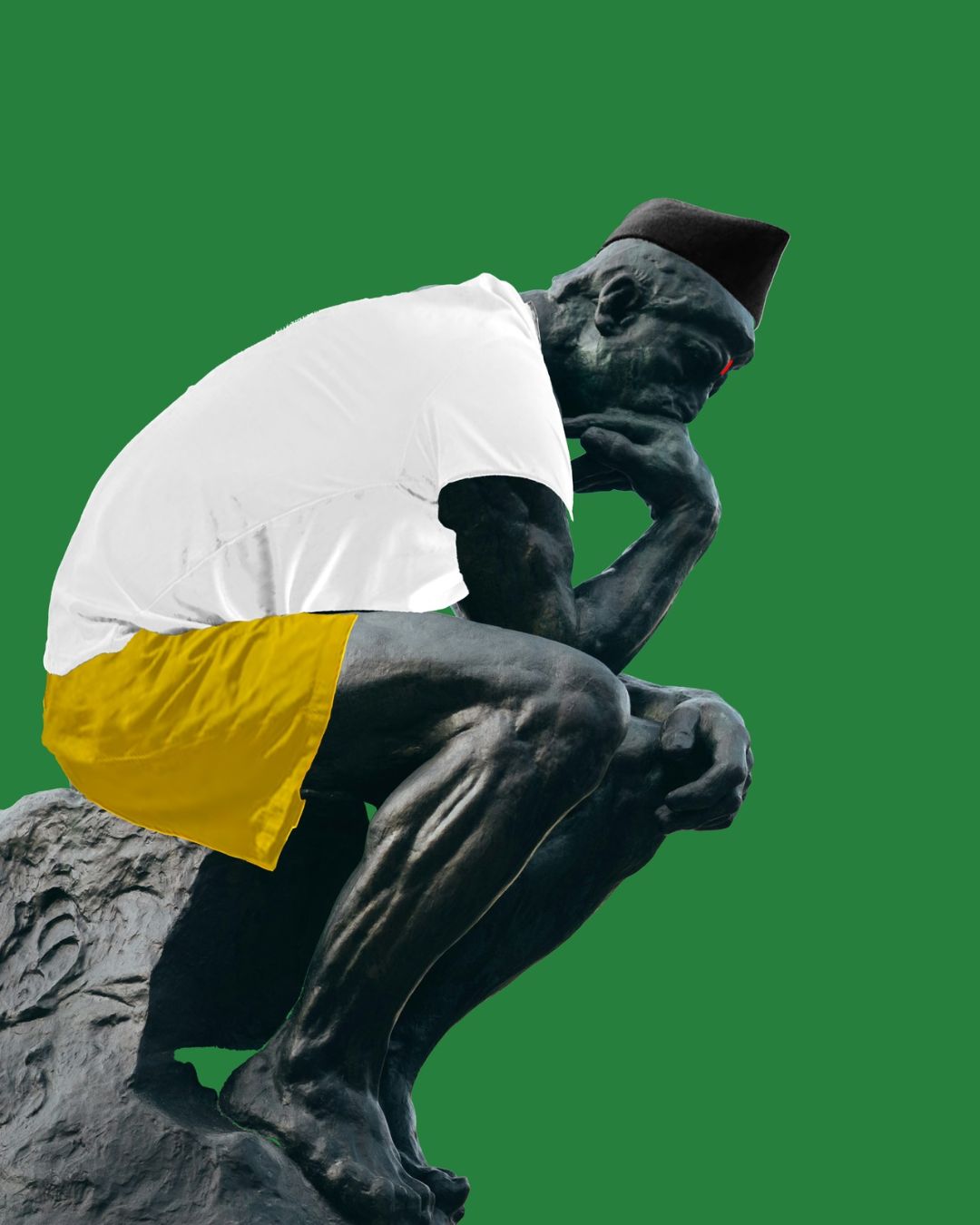
A notice was published last month by the Indian Council of Philosophical Research (ICPR) under the Ministry of Education, which invites applications from colleges, universities, and research institutions across India to organize lectures and seminars on World Philosophy Day. All colleges have the freedom to pick their own title and concept note for submission, either by picking a topic directly aligned with ICPR’s suggested broad thrust areas of research or by formulating a unique philosophical topic. But the caveat is that simply submitting does not guarantee funds. The proposals need to go before the ICPR Committee. Only after this committee approves the proposal will ICPR issue a formal Sanction Order detailing the exact grant amount allocated.
In the past decade, we have normalised the incursion of political power in campuses, but now, the topics given by the ICPR are alarming, because not only is this a blatant attempt to push Hindutva ideas to the forefront, but with that, they have deliberately tried to avoid any and all kinds of criticism or ideas that could pave the way for criticism against the national government. And it is alarming, since Philosophy is one of those subjects dismissed by most as an obsolete, abstract discipline, undermining its significance, especially for a country like India, to have debates grounded in philosophical enquiry.
Some of the topics listed in the notice shamelessly advocate for a Hindutva-leaning national agenda, heavily prioritizing orthodox Hindu philosophical schools while sidelining almost all the other complex, diverse and dynamic darshanas of Indian Philosophy which originated across India. One might assume this is an honest mistake on the part of the ICPR, but we should have no doubt, since it is evident that even the choice of words is extremely careful, deliberate, and ideologically precise.
For instance, if we look at the 2nd topic, titled “Basic Values Embodied in Indian Culture and their Relevance to National Reconstruction”. This theme not only smuggles in the premise that Indian civilization possesses a single, monolithic moral code but also suggests that it is important in national reconstruction. We all know “National Reconstruction” (Rashtra Nirrmann) is a concept directly imported from the lexicon of Hindutva statecraft articulated by thinkers like Deendayal Upadhyaya in Integral Humanism. While Deendayal Upadhyaya is absolutely a significant figure in Indian philosophy, the problem lies in the choice of words in the title, which not only states that the nation is a damaged or fragmented entity but it also does imply that must be “restored” to a harmonious past through moral and cultural alignment. In reality, India has historically hosted multiple competing traditions, such as the materialist Lokayata challenging Vedic orthodoxy and egalitarian anti-caste movements challenging Shastric social hierarchies. Presupposing a single set of “basic values” is a green signal to those topics that invariably favour Sanskritic, duty-based, and majoritarian norms. Not only that, but it also sets an implicit conclusion before the research even begins by combining “basic values” with “national reconstruction”. This implies scholars are not allowed to critically examine whether these traditional values are egalitarian, oppressive, or relevant but are merely instructed to demonstrate how they can be used to serve the state's national reconstruction project. This topic alone demonstrates that it's not a careless error on the part of ICPR, but there is more.
The 15th title is “Panch Pran and Role of Philosophy in Vikshit Bharat and Atmanirbhar Bharat”. By placing such right-wing marketing agenda in academic scholarship, executive political messaging attempts to gain scholarly legitimacy. Political slogans are elevated to the status of formal philosophical doctrines that students must study, debate within prescribed limits, and internalize. Scholars are asked to explain how philosophy can serve the government’s economic and political targets, rather than critically examining whether those targets are equitable, sustainable, or flawed. This also passively pressures institutions to host events centered on these themes to secure grants; by that, the government gets platforms where they get their ideas advocated by young minds, which can be marketed by misconstruing the whole youth in India as accepting government’s vision without any question.
There is another subtopic explicitly titled “philosophy of welfare state and good governance in Indian history with special reference to regional Indic empires like Rajput, Maratha.” Framing these medieval empires as paragons of the “welfare state” romanticizes native kingship while sanitizing its structural realities. Even though it is true that Indian academia has long been critiqued for operating under Eurocentric frameworks, these medieval polities were built on steep agrarian taxation, rigid feudal hierarchies, and institutionalized caste stratification. Presenting them as exemplar models of good governance constructs a mythic pre-colonial golden age, washing away historical oppression and shifting the focus away from structural inequality. Also, it conveniently forgets subaltern critiques from the perspective of peasants and those oppressed who actually bore the burden of these imperial tax and caste systems.
The second last title says “Empowering Bharat, articulating and contribution of women from a Philosophical perspective; special mention may be made of women thinkers, leaders, educators, activists, philosophy from classical past to Contemporary times”. As we know, the feminist movement in India has contributed to and continues to act as a vanguard against a deeply patriarchal society; the role played by women thinkers is not small. In any sane world, these movements would be celebrated, whereas here they are treated as subsidiary and optional, which makes one wonder whether it would have been a lesser insult if it had not been mentioned at all. While the whole list of topics tokenizes women’s contributions through safe historical archetypes such as Ahilya Bai and the Rani of Jhansi, it steers clear of contemporary feminist and queer theory that critically interrogates the patriarchal foundations of classical Indian family structures, marriage laws, and gender roles codified in the shastras.
Topic 18, titled “Philosophy of Education in conformity with Gurukula Tradition” is framed as an ideal, holistic alternative to Westernized or colonial education models. Classical Gurukulas were famously reserved for the “upper varnas”, which strictly prohibited Shudras and “avarna” communities from accessing Vedic education. The iconic story of Ekalavya and even Karna in the Mahabharata serves as a classic narrative of how low-caste, self-taught individuals were denied formal instruction and even punished under the traditional Gurukula code. Another point to note is that, barring a few exceptions in the early Vedic period, Gurukula education in classical and medieval India was predominantly restricted to males. Framing modern national education around a system that was historically built on caste and gender exclusion directly contradicts the principles of universal access, affirmative action, and constitutional equality enshrined in Article 21A, which is the Right to Education. Ancient Gurukulas relied heavily on the oral transmission of canonical texts, memorization of mantras and scriptural commentary. Aligning modern education with this tradition can blur the line between empirical science, historical evidence, and mythological/theological claims. The classical Guru-Shishya relationship demands absolute reverence, unquestioning obedience, and devotion to the master (Guru-Bhakti). Knowledge is transmitted top-down from an infallible source. In a modern democracy, students must be trained to challenge authority, question inherited dogmas, and analyze power structures. Re-instituting a “Gurukula conformity” risks cultivating passive compliance and deference to hierarchy rather than independent, critical analysis.
We know it is the state’s broader agenda of pushing indigenous knowledge systems (AYUSH) into national policy and healthcare frameworks, but in topic 16, suggesting Ayurveda under the banner of “philosophy” elevates traditional medical systems to an epistemological authority equal to that of empirical science, without requiring rigorous, evidence-based critique. Treating Ayurveda as a philosophical truth rather than as a historical medical system open to ethical scrutiny shields traditional medicine from critical bioethical and scientific evaluation. While philosophy students study theoretical yoga and Ayurveda, here they are tasked with defending Ayurveda, which is clearly not philosophy’s job.
There is another topic that is titled “Interpretation of Socio-political Philosophy through Shastra and philosophy of governance with shastras”. A direct hit against thinkers like Ambedkar, who viewed ancient codes and Shastric governance not as sources of welfare, but as instruments of systemic subjugation. It also rejects the need for critical engagement with the Indian Constitution, universal franchise, and minority rights.
The 17th topic includes Nath Sampradaya. While historically an esoteric, ascetic yogic movement, it is in modern politics closely associated with the Gorakhnath Math, a prominent hub of contemporary Hindutva politics. Its inclusion elevates a specific regional, politically aligned monastic order to a central pillar of national philosophical study. Historically, the Nath Sampradaya was known for its fluid boundaries and anti-establishment character. The early Nath tradition rejected ritualism, social hierarchy, and orthodox caste distinctions. Historically, Nath yogis interacted closely with Sufi orders, Nath lore attracted both Hindu and Muslim followers, and the Gorakhnath Math itself historically held ties with local Muslim communities and rulers. But the ideology and the movement diverged sharply from these medieval roots in the mid-1900s. One of its former leaders, Mahant Digvijay Nath, played a key role in the 1949 mobilization that led to the placement of Ram idols inside the Babri Masjid in Ayodhya, anchoring the Gorakhnath Math to the Ram Janmabhoomi movement decades before the BJP adopted it as a central platform. The current head of the Math founded the Hindu Yuva Vahini, a right-wing youth militia that enforced aggressive Hindutva policies such as anti “Love Jihad” campaigns and cow protection agitations at the grassroots level and is the current CM of Uttar Pradesh, Yogi Adityanath.
Not only that, in the 19th title it says “Philosophy of Education with special reference to Indian Educationist in line with NEP 2020,” and the subtopic lists the name of Chinmayananda, who focused on translating Advaita Vedanta and the Bhagavad Gita into accessible formats for modern youth. Even though he is a renowned educationist, the Chinmaya Vidyalayas he established were widely regarded as aligned with Hindu values of education. It should also be noted that Savitribai and Jyotirao Phule, who were pioneers of education, have been left out; they were the ones who opened the first schools for untouchable girls and “lower caste” children in the 19th century; their absence skips the anti-caste foundations of modern Indian education in favour of “upper caste” Vedantic reformers like Dayananda Saraswathi.
Philosophy is a discipline in which we are trained in analytical thinking and cognitive reflection, which systematically suppress intuitive religious beliefs, conservative attitudes, and dogmas over time. As a result, a substantial majority of those who pursue advanced academic programmes in philosophy are atheists; meanwhile, the minority of believers in philosophy are often those specialising in theology. A 2020 survey of professional philosophers by Bourget & Chalmers supports this, finding that about 67% to 70% accept or lean toward atheism. The National Government correctly identifies philosophy as one such subject that, if not tightly regulated, can foster dissent that could coalesce into broader ideological movements threatening the fragile narratives the national government tries to sell.
Thus, the topics in the notice tie political philosophy and leadership to Shastras anchored in scriptural and religious authority rather than to modern constitutionalism, human rights, or democratic accountability. While intellectual traditions grounded in historical materialism, class analysis, and subaltern studies, such as the works of D.D. Kosambi, M.N. Roy’s Radical Humanism, or modern left-wing critique, are entirely omitted. Marxist and subaltern philosophies provide a direct structural critique of capital accumulation, feudal structures, and elite-driven nationalism; critical philosophy that examines the dangers of state-sponsored religion, militant secularism, minority rights protection, and the philosophical limits of majoritarian democracy finds no space. The framework instead emphasizes ancient governance models and indigenous duty-based ethics (Dharma). By bypassing modern secular theory, the curriculum shifts the philosophical validation of governance away from constitutional democracy and universal human rights toward historical and monarchical state models. Knowing even a genuine feminist critique of ancient texts would expose the systemic subordination of women embedded within traditional social codes, it has been excluded, undercutting the idealized view of traditional gender roles promoted by Hindu nationalist ideology.
Campuses can be said to be the birthplace for several famous and infamous ideologues who transformed India for better or worse. And we can say with certainty that campuses have been the birthplace for revolutions that challenged the power centres. This may well be one key factor the ruling dispensation fears and thus tightly regulates any and all venues where dissent can originate. True philosophy teaches us to engage with ideas in openness rather than indifference, engage in dialogue rather than debate, and cultivate a habit of listening and analysing more rather than outright attacking the opposing view. By controlling the nature of these venues, the government is not only curating its own version of an ideal, ideological blueprint for a citizen but also depoliticizing the youth into civic apathy and teaching them in a dynamic age to be inert by normalising passiveness.