
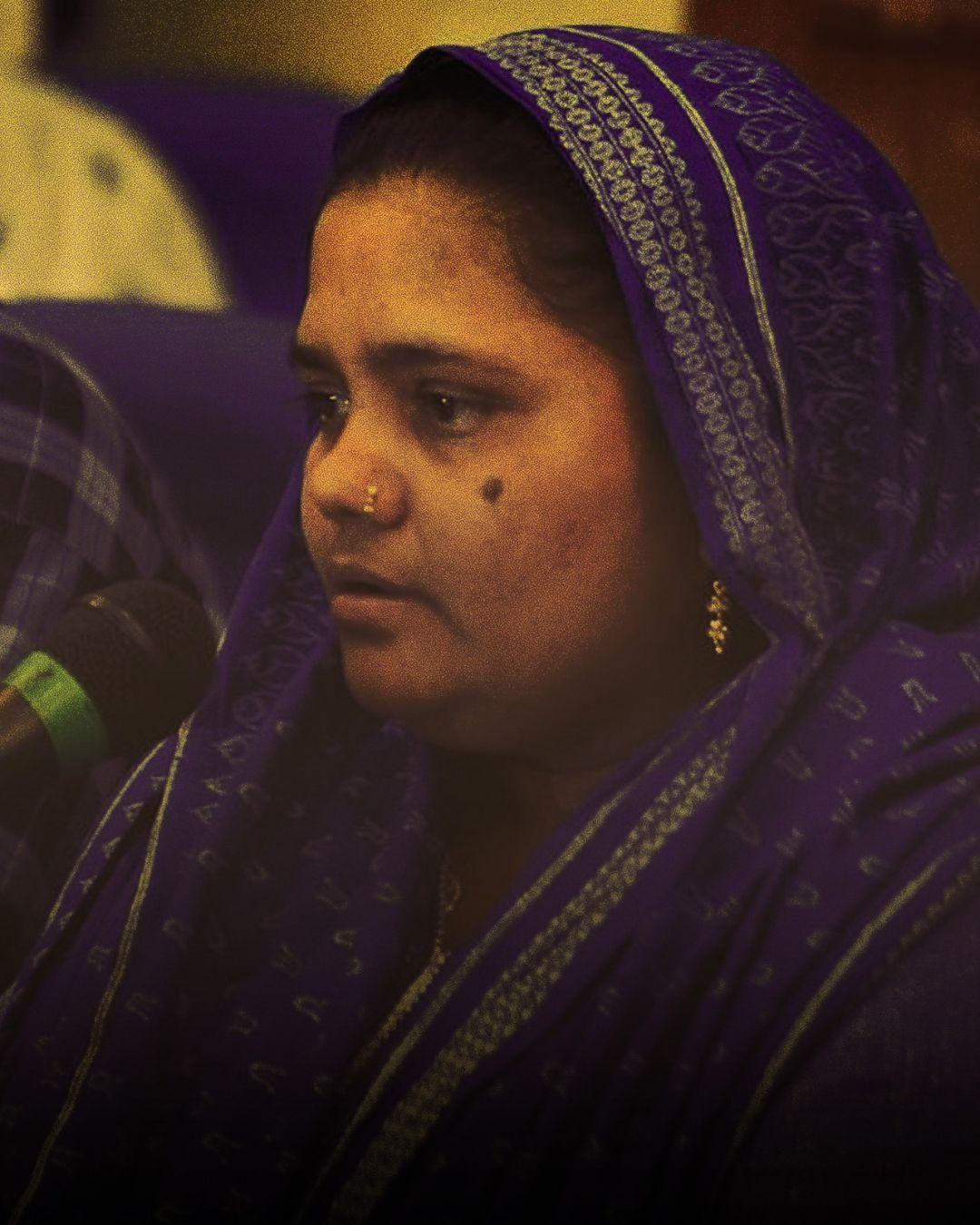
The Supreme Court on 16 November suspended the life sentences of two convicts in the Bilkis Bano case from the 2002 Gujarat riots and granted them bail. Bilkis Bano was gang-raped, and seven of her family members – including her three-year-old daughter, Saleha – were killed.
In 2024, the Supreme Court reversed the Gujarat government’s remission to all 11 convicts. Two of them, Bipinchand Kanaiyalal Joshi and Pradip Ramanlal Modhiya, have now got bail. In August 2022, the Gujarat government had released the convicts under its remission and premature release policy. But in January 2024, the Supreme Court quashed the remission, holding that the Gujarat government lacked jurisdiction to pass such orders. The court had said that, as the Bilkis Bano case was heard in a court in Mumbai, it was the Maharashtra government that had the power to grant remission, and Gujarat could not “usurp” it. In its order on October 28, the Supreme Court directed that the duo’s appeal, challenging the Bombay High Court’s May 2017 order upholding their conviction and sentencing, be listed for hearing in due course.
BJP’s long-lasting legacy, which goes beyond any liberal strategy of defeating it, is to make violence the ambience in the country. The news of vigilantism and atrocities has become so banal, forget mobilising politically, it barely evokes any personal sympathy. But a bench of Justices MM Sundresh and PB Varale was exceptionally not indifferent for once, it noted that the two men had spent more than 17 years in prison – it also took note of the fact that one of them had a severe disability, which comes as a selective display of sympathy considering Father Stan Swamy, with Parkinson’s disease, falsely arrested in connection with the Bhima-Koregaon case was denied a straw and sipper; GN Saibaba, sentenced to life imprisonment, died shortly after being released after 10 years. This exercise of judicial sympathy for the two Gujarat riots convicts warrants closer scrutiny.
According to The Telegraph, Joshi spent 1,079 days and Modhiya 1,234 days outside prison on parole and furlough – nearly three and over three years, respectively; all 11 convicts were prematurely released on August 15, 2022, under Gujarat’s remission policy – remaining free until January 21, 2024, when they surrendered following the Supreme Court’s quashing of their remission orders. As the bench decides that 17 long years of incarceration suffice, it pays little mind to Bilkis Bano’s safety. Her uncle, Razzak Mansuri, said that while the family had previously periodically changed residences within Gujarat out of fear, the Supreme Court’s October 28 bail order forced them to leave the state altogether around November 2-3. He added that the family learnt of the decision through social media, without prior intimation, and that the convicts’ repeated visits to their village while on parole had kept them under constant fear.
The court has acted as a stooge of the majoritarian state and has now been implicated in the historical injustice inflicted on Bilkis Bano. Its conception of justice is no different from the rationale with which crimes are committed. The crime outlives the years that pass in imprisonment, and the fear persists in the rememory of those who endure it