
“Behind the colonial rhetoric of mass education, civil liberties and individual freedoms, social exclusion and inequality were embedded in public education from its inception.” – Shailaja Paik
Recently, caste-based discrimination in education continues to surface in accounts of student suicides, discrimination, deprivation, and reservations in higher education. Similarly, the abuse of school children countrywide, through segregation, caste slurs and manual labour in schools, persists. These inequalities raise a pertinent question: what does equal access mean when students face caste hierarchies in everyday institutional life? Student protests evoke educational institutions as critical sites of anti-caste consciousness, resistance and collective action. The precedents for student resistance and the creation of an alternative public sphere in colonial times cannot be treated merely as precursors to contemporary movements. Rather, they help us understand how student resistance has confronted the distance between formal promises of inclusion and lived conditions.
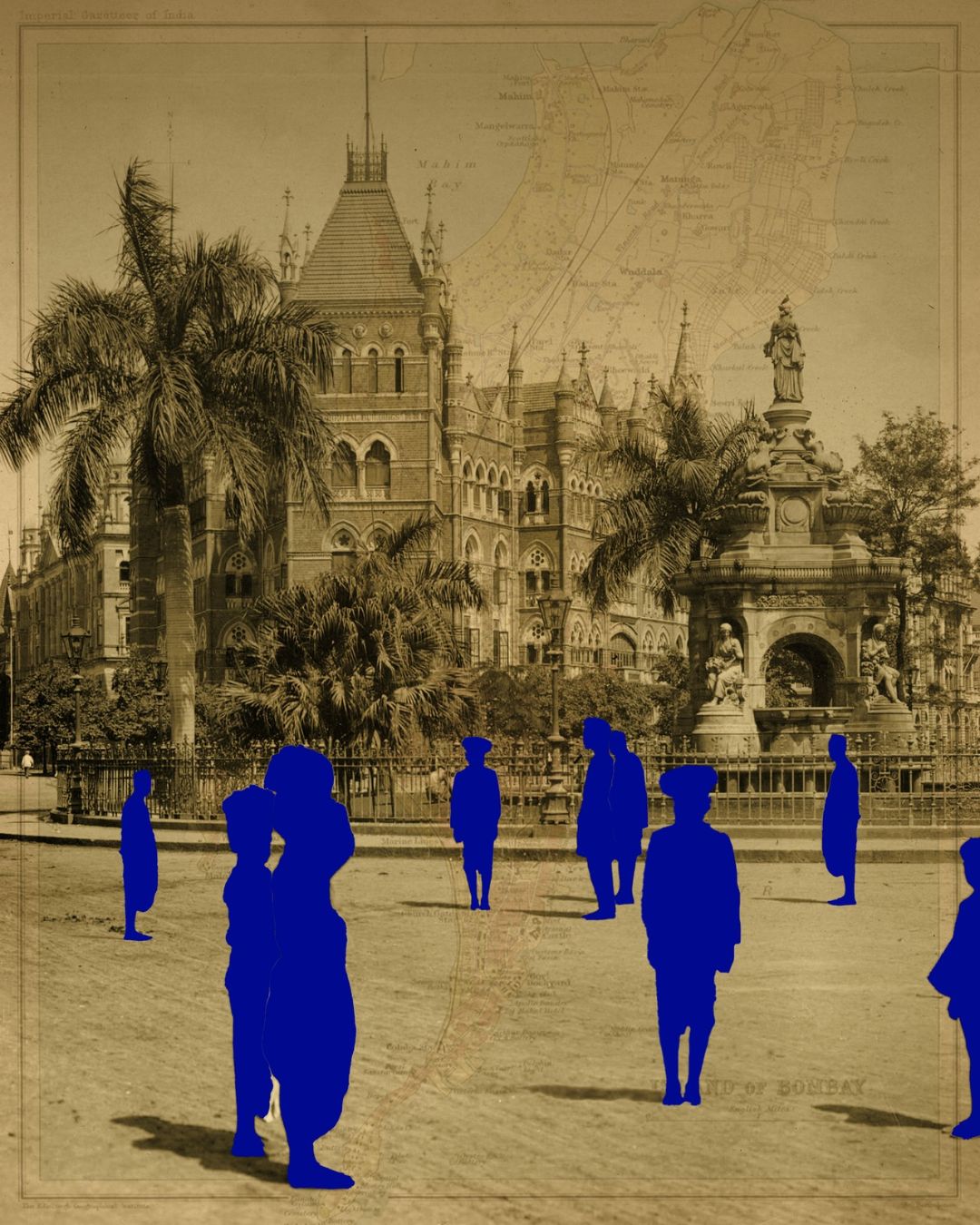
In one of the first episodes of Dalit student protest in the Foras Road BMC school in Bombay, which captured public imagination, students used the language of civic equality to contest their segregation. Curiously, the Bombay school committee labelled segregation as ‘voluntary separatism’, an evasive strategy, pushing the blame for the separation of cups onto the Dalit students.
Students as Political Actors
In 1926, the Bombay Municipal Corporation (BMC) passed a resolution that no distinction should be made in allotting school buildings or in regulating admission conditions based on caste.[1] But the subsequent debate over common pots, cups, and lotis revealed the limits of this formal commitment. In the following year, a group of Dalit students from a municipal school responded by drinking water from cups meant for caste-Hindus. Their act of resistance irked the school authorities, who barred them from the school premises the next day.
Upper castes vehemently opposed the sharing of drinking water and food with Dalits in schools, citing the fear of being polluted or even losing their caste.[2] An investigating committee clarified that the school headmaster had not violated any rules, since the two pots placed at different locations within the school were open to everyone. In practice, Dalit boys used one pot exclusively, while upper-caste students used the other. Interestingly, although the policy technically permitted access to both pots, they remained segregated in practice, and the headmaster may have been complicit without technically violating any rules. Hence, the committee observed that the Corporation or the school headmaster is barely responsible if students themselves decide to use different pots.
This episode belongs to a wider pattern in which ordinary objects regulated caste proximity. Ambedkar’s account of being served tea in a glass cup after his caste was identified demonstrates a similar practice beyond school. Taken together, these incidents show caste boundaries taking shape through routine decisions about who could share an object, occupy a space or use a public service. While serving as a member of the Legislative Council, a Brahmin owner of a nearby eatery offered him tea in ceramic cups until he discovered that Ambedkar belonged to the Mahar caste. Afterwards, he limited him to a glass tumbler, reasoning that glass could be purified by washing, unlike earthenware.[3]
‘Voluntary’ separatism
Caste discrimination in colonial Bombay operated not only through spatial exclusion, but through the micro-materialities of everyday life. Drinking cups, school benches, and water pots were used to mark, segregate, and discipline Dalits even in so-called public spaces. Coexisting with Dalits in public domains required upper castes to improvise on traditional forms of distinction to maintain social superiority. Using the administrative focus on sanitation, upper castes used the occupational roles and housing conditions of Dalits to pronounce their ‘uncleanliness’ and thus their exclusion. Another creative strategy emerges from this incident: recognising exclusion as a choice.
Turning a blind eye to segregation by calling it ‘voluntary separatism’, the upper-caste councillors pushed the blame for the separation of cups on the Dalit students. It ignored the social pressure, humiliation, and unequal consequences that made the separation appear voluntary. Mahar students’ protest exposed this contradiction. Their collective action showed they did not freely choose separate pots. In fact, they challenged a social arrangement that the school allowed to continue while denying accountability.
Calling the arrangement voluntary erased the conditions under which disadvantaged students were forced to choose. If Dalit students faced stigma or punishment for using shared objects, their separate use of a pot cannot be treated as evidence of free preference. “Voluntary separatism” therefore did political work where it displaced responsibility from the institution onto the students subjected to its caste order.
The Voice of the Counter-public
Late colonial India also saw the emergence of what Ramnarayan Rawat calls the Dalit public sphere, which tried to intervene in dominant public spaces from its inception. The November 1927 issue of Bahishkrit Bharat highlighted the apathy and double standards of certain members of the BMC schools’ committee. Bahishkrit used the language of manuski, or humanity, and samata, or equality, to recognise each individual's ‘right’ to exist, thrive, and behave in society as an equal.[4] In colonial India, educational institutions were not merely sites through which Dalits acquired qualifications; they became spaces where new political identities, collective organisations, and forms of Ambedkarite consciousness were produced.
Bahishkrit framed access to cups not merely as a physiological need but as a demand for recognition and equality within modern institutions. This forms the basis of what Sharmila Rege calls the Ambedkarite counterpublic that emerged in the 1930s. When the upper-caste teachers failed to recognise students’ rights, Dalit students assembled outside the school. About three hundred of them raised slogans of ‘Long Live Shivaji’ and ‘Long Live Ambedkar’.
The protest gained wider political life through forms of communication and organisation that carried local grievances into public debate. Meetings, petitions, and print connected experiences of caste exclusion to claims on civic institutions and the colonial state. In this instance, Bahishkrit Bharat did more than report the students’ protest; it documented the committee’s response and made the Corporation’s failure to secure equal access subject to public scrutiny. Such practices of organising helped turn an individual or local grievance into a collective political claim.
Although urbanisation did not dissolve caste hierarchy, it brought Dalits into new institutional and civic arenas where they could record and contest it. The school protest was more than a local dispute over water vessels: it became legible as evidence of how caste shaped civic life, and as a basis for demanding that public institutions answer for their practices.
To conclude, Shailaja Paik rightly observes that education emerged not merely as a ‘site’ but as a field of forces between the colonial state and the colonised and between the Indians themselves. The 1927 episode does not equate colonial municipal schooling with today’s universities or schools. It does, however, offer a useful question for contemporary movements: when an institution declares equal access, what everyday practices determine whether students can actually exercise that right, and who is held responsible when they cannot?
This brings us to the present, where the response to Sahil Wakode’s death showed how caste discrimination can be displaced from institutions onto the individual, where his death was explained through claims about personal resilience and morality, rather than through sustained scrutiny of the conditions he faced. Similarly, the 1927 school protest exposes an earlier version of this displacement. When Dalit students challenged segregated drinking cups, the committee described the separation as voluntary, transferring responsibility from the institution to the students. The contexts were different, but both episodes invite us to ask how institutions and public discourse turn caste-produced harm into an individual failing. Both the students’ protest in 1927 and today made that manoeuvre visible and insisted that the institution, not the excluded pupils, be held to account.
Footnotes
[1] Drinking Water in Municipal Schools, TOI, Oct 1927, 5.
[2] Ibid.
[3] Through Indian Eyes: Caste, TOI, Aug 10, 1927, 8.
[4] Bahishkrit Bharat, 4 November 1927, 112.