
The Ramabai Killings
Bombay, 11 July 1997
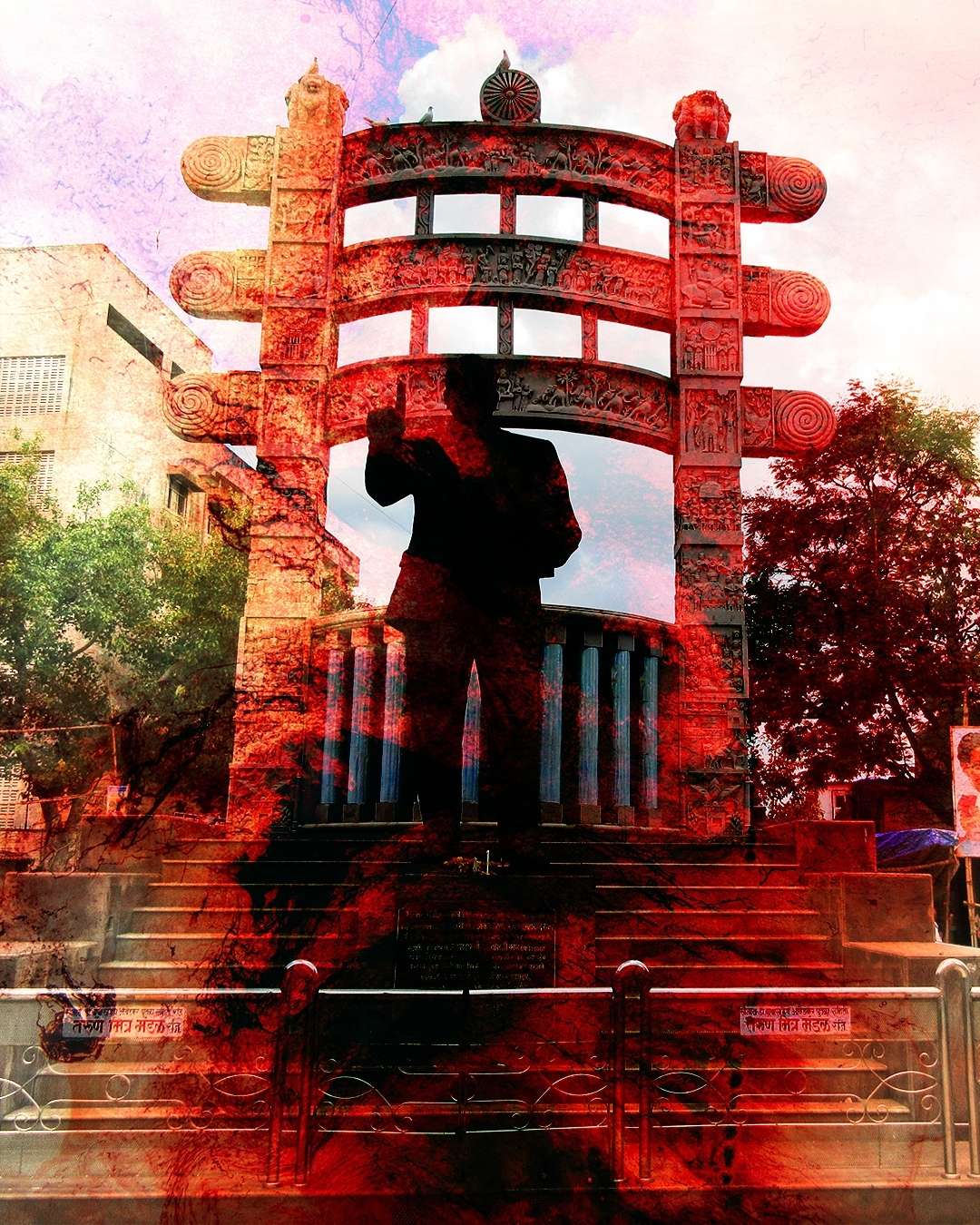
It was the fiftieth year of India’s independence when, in the early morning hours of July 11, residents of Ramabai Ambedkar Nagar – a predominantly Dalit settlement in Bombay – awoke to a violent desecration. Their statue of Babasaheb Ambedkar, a revered figure and symbol of Dalit dignity, had been insulted with a garland of sandals, a gesture signifying deep humiliation in Indian society.
When residents approached Local Beat No. 5 of the Pantnagar police – located just ten feet from the statue – to report the desecration, they were dismissed and told to register a complaint at the main station. By 7:00 a.m., the crowd had grown in anger and grief, leading to a roadblock on the Eastern Express Highway in protest.
Soon, a van of the Special Reserve Police Force (SRPF) arrived, led by Sub-Inspector M. Y. Kadam. Without engaging in any attempt to calm or disperse the protestors – without lathi-charge, tear gas, or even warning shots – the police opened fire. The shooting began on pedestrians along the service road and continued into the narrow lanes of the colony. The firing lasted ten to fifteen minutes. Ten people were killed, many shot above the waist, and twenty-six others were injured.
One of the earliest victims was Kaushaliyabhai Patare, a 45-year-old woman. A bullet passed through her body and lodged in a nearby medical dispensary. Sukhdev Kapadne, a 50-year-old social worker, was grabbed, interrogated, and shot in the back. He died on the spot. Others, including Amar Dhanawade, Vilas Dodke, Anil Garud, and Bablu Verma, were killed in front of witnesses. Bablu was just 26 when he was hit, he convulsed in the street and was left to die. Anyone attempting to help the wounded was threatened with the same fate.
Inside the colony, the bullets reached even those who had not stepped out. Shridevi Giri was hit twice in the arm. Another woman watched her husband be shot in the stomach as he stood in an alley. V. S. Khade, a senior community member, lost his nephew’s 17-year-old son who had stepped out to prevent his family from leaving home amid the commotion. He was killed before reaching his father's house.
By mid-morning, the scene grew tense. At 11:30 a.m., far from the initial site of firing, a luxury bus was set ablaze in anger. Later that day, police returned, this time using tear gas and lathis on residents, entering homes, smashing doors, and injuring many more. Women bore bruises from beatings, while residents who tried to resist the violence faced arrest or worse.
“What happened at Ramabai Nagar on July 11, 1997, was not an isolated incident, it was a reflection of a larger system of caste impunity and state-sanctioned violence.”
One of the most harrowing stories was that of Milind, a 19-year-old shop assistant. During the tear gas assault, Milind, dressed in just a towel, stepped outside and was burned severely. Blood poured down his legs. When his mother screamed for help, a policeman shouted: “Get back inside or I’ll shoot you too.” Milind was taken to the hospital but later detained without charge. At the police station, he was denied food and water, beaten with sticks, and told, “Drink your urine.” When his parents pleaded for his release, they were threatened with arrest. He was finally released the next day after a local councillor intervened. Though promised compensation and a job, Milind, like many others, received nothing.
The officer who ordered the firing, Sub-Inspector Kadam, already had multiple complaints of caste-based violence pending against him. His own superior had earlier suspended him for violating the SC/ST (Prevention of Atrocities) Act. Witnesses and human rights groups alike testified that the firing was not only unjustified, it was caste-motivated.
In the aftermath, the Gundewar Commission of Inquiry was appointed to investigate. It concluded that the police action was “unjustified, unwarranted and indiscriminate,” and that Kadam had violated both international human rights norms and Indian police procedure. He had ignored protocol: there was no attempt to disperse the crowd peacefully; the firing had not been preceded by a lathi-charge or tear gas; and in direct breach of guidelines, bullets were fired above the waist.
Yet the response of the state remained deeply inadequate. The government of Maharashtra suspended Kadam, but he was not charged with murder, despite widespread demands from Dalit activists and human rights organizations. Even the United Nations Special Rapporteur on Racism received India’s official response, which echoed the police version: that the crowd was violent, and that firing was an act of self-defense. Evidence, including an amateur video submitted by the police, was later challenged and exposed as doctored.
According to independent investigations, the luxury bus and tankers shown burning in the video were set ablaze much later in the day and far from the statue. Witnesses claimed that police brought in empty tankers themselves to fabricate a threat, attempting to justify the unjustifiable.
What happened at Ramabai Nagar on July 11, 1997, was not an isolated incident, it was a reflection of a larger system of caste impunity and state-sanctioned violence. The names of the victims, the silenced testimonies, the cries for justice – all remain part of an unfinished chapter in India’s democratic history.