
“I am not afraid of cancer. I am afraid of caste. It scares me.”
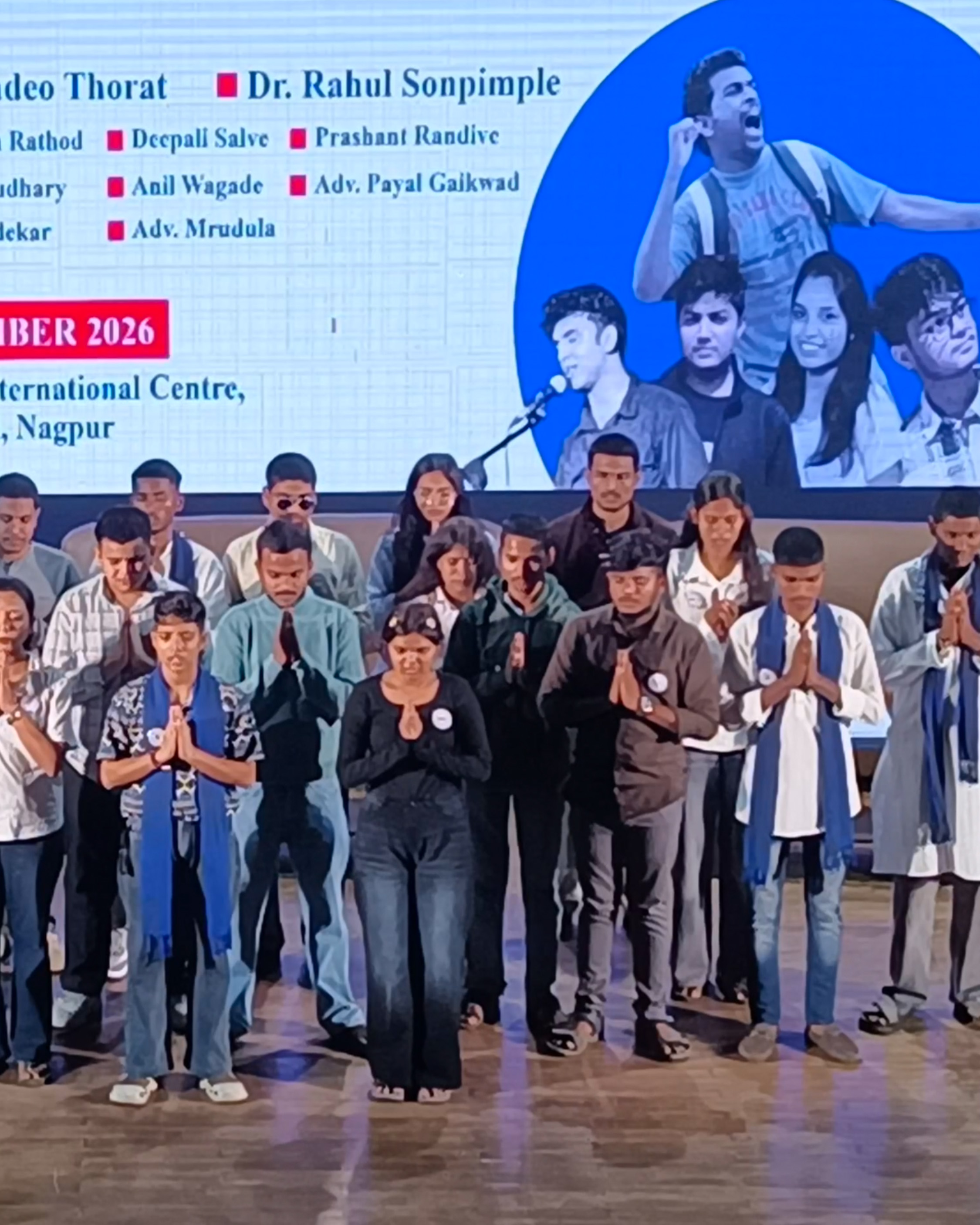
I have been carrying these words with me. They were spoken by Payal Tadvi’s mother, Abeda Salim Tadvi, at the Janata Adalat organised by AIISCA on 22nd November in Nagpur, as she stood before a gathering of people who had come to express solidarity with her and with other parents still searching for justice. As I stood backstage holding a bottle of water for her in case she broke down, I found myself asking what kind of world makes a mother fear an idea more than a disease, a social order more than the uncertainty of her own body. And what does one do when the answer to that question is not merely frightening, but familiar?
Perhaps one begins by recognising that there are forms of hopelessness which break the ordinary grammar of grief. We are accustomed to taming loss through five neat stages: denial, anger, bargaining, depression and acceptance; as if mourning were a private staircase leading back to order. Yet the despair I mean is not merely an individual wound; it is a political reckoning. Long before Elisabeth Kübler-Ross mapped bereavement, Søren Kierkegaard wrote of despair as a “sickness unto death” that persists even when the body breathes, a fracture in the self when one sees that institutions are not necessarily just, society is not compassionate, and truth does not by its own weight compel repair.
When every illusion of redress has been burned away, however, something fierce and unyielding can take root. Stripped of the comfort that history will redeem suffering or that the law will belatedly grant full humanity, the bereaved becomes a vessel of a stark, almost terrifying resolve. What endures is no longer hope as a wager on tomorrow, but an oath that outlives expectation itself.
The names of Aniket Ambhore, Rohith Vemula, Delta Meghwal, S. Anitha, Payal Tadvi, Darshan Solanki, Raghavi Ravi and Sahil Wakode belong to a history that no society committed to justice can afford to forget. Their cases differ in their circumstances, allegations and legal trajectories, and each demands its own careful investigation. Aniket’s family alleged caste discrimination at IIT Bombay; Rohith’s exclusion from university spaces became a national symbol of institutional humiliation; Delta’s family alleged sexual violence and institutional concealment; Anitha’s struggle against NEET exposed the unequal burden of educational policy; Payal’s family alleged sustained casteist harassment within medical training; Darshan’s family reported caste-based taunts; Raghavi’s father continues to pursue allegations of discrimination; and Sahil’s family has alleged caste-based harassment, with the matter under investigation. These are not merely individual tragedies arranged chronologically. They lay bare a brutal institutional reality; constitutional promises of equality remain a calculated fiction so long as the gates the world around us open only onto the same old architecture of caste humiliation.
I am reminded of the four sights that shattered Siddhartha’s sheltered world: the old man, the sick, the corpse, and the ascetic. They were never mere spectacles of decay; they were the sudden unveiling of an order whose outward calm disguised an inner rot.
In our republic, politics itself has grown senile, repeating hollow assurances with the tremor of an old man, incapable of imagining a horizon beyond inherited privilege. Our courts and administrations stand feverish and infirm, blind to the cruelty thriving beneath their robes of neutrality. And a society that watches its most vulnerable broken in classrooms and wards, yet returns untouched to its daily commerce, resembles the corpse – not because its pulse has stopped, but because its conscience has gone cold. Then, amid this ruin, walks the ascetic. Today, renunciation is not fleeing the world; it is this relentless, unyielding fight itself. It is the mother returning to the courtroom and the protest ground on trembling feet, the father refusing to let a file gather dust, the sibling carrying an unburied name into the streets, the student organising even when they know the price they will pay. In this fierce devotion to struggle, with not a shred of hope left, there burns the same fire as the ancient ascetic, walking bare-handed toward enlightenment, stripped of every attachment to reward or outcome. They have stared into the rot of power and the raw wound of loss with no comfort left to hold on to, and still they refuse to look away. They stay, they bleed, they speak, and they demand justice.
Standing backstage and listening to their testimonies, I saw those sites of suffering laid bare across the neoliberal order. Here, the Four Noble Truths shed every quietist illusion and become an ethic of liberation. To see suffering is never to make peace with humiliation, to trace its origin is never to sanctify caste as destiny, to glimpse its end is never to wait passively for history’s mercy. The path is no solitary retreat into inward calm while others are crushed outside the monastery walls. In the light of Babasaheb Ambedkar’s Dhamma, wisdom becomes the clarity to unmask power, compassion becomes the architecture of fraternity, and awareness becomes an unbreakable fidelity to human dignity.
Borrowing from Rahul Sonpimple’s concept of hopelessness built on Lenin’s return from exile, of the political clarity that emerges when the existing order can no longer be mistaken for the horizon of possibility. When Lenin insisted in his April Theses on “no support for the Provisional Government” and demanded that “the utter falsity of all its promises should be made clear,” he was naming a crucial political truth - there are moments when the task is not to reassure the oppressed that the system will eventually correct itself, but to recognise the failure of its promises and organise beyond that failure. The parents seeking justice do not stand before us because they are certain that justice will arrive soon. Nor do they stand there because they have accepted that it will never arrive. They stand in a more difficult place, the place of complete awareness. They know that justice may be delayed, distorted, denied or rendered unrecognisable by the very institutions entrusted with its protection. And still they seek it.
This is the hopelessness I wish to defend, not the hopelessness of surrender, but of a consciousness that has looked into the eyes of history and found no promise waiting at its bottom. A hopelessness stripped of consolation, yet not of conviction, one that refuses to mistake suffering for destiny or the endurance of injustice for its legitimacy. It is the recognition that the world may remain irredeemably cruel, that justice may arrive too late, or not at all, and that no metaphysical assurance exists to absolve us of this uncertainty. In King Lear, Edgar reminds us that “the worst is not / So long as we can say ‘This is the worst’” – that naming the depth of a catastrophe is itself an act of refusal. Yet, precisely here, begins the most uncompromising form of hope - it is not in the expectation that history will vindicate us, but in the refusal to let its possible failure dictate the limits of our humanity.
The Dhamma demands that we see suffering without the narcotic of illusion. Ambedkar demands that such seeing become an insurrection against the social conditions that reproduce it. And the families who continue to seek justice, even after institutions have exhausted their faith and history has offered them no guarantee, teach us something more devastating than optimism: that courage is not the consequence of believing in victory, but the ethical decision to remain answerable to justice when victory has ceased to be imaginable. They have been promised nothing. Not justice, not remembrance, not even the certainty that their struggle will alter the world. And still, they walk, with cancer in their bodies, grief in their minds, and caste lingering over their existence – closing in like Poe’s pendulum, “down, steadily down it crept” – completely hopeless, towards justice.