
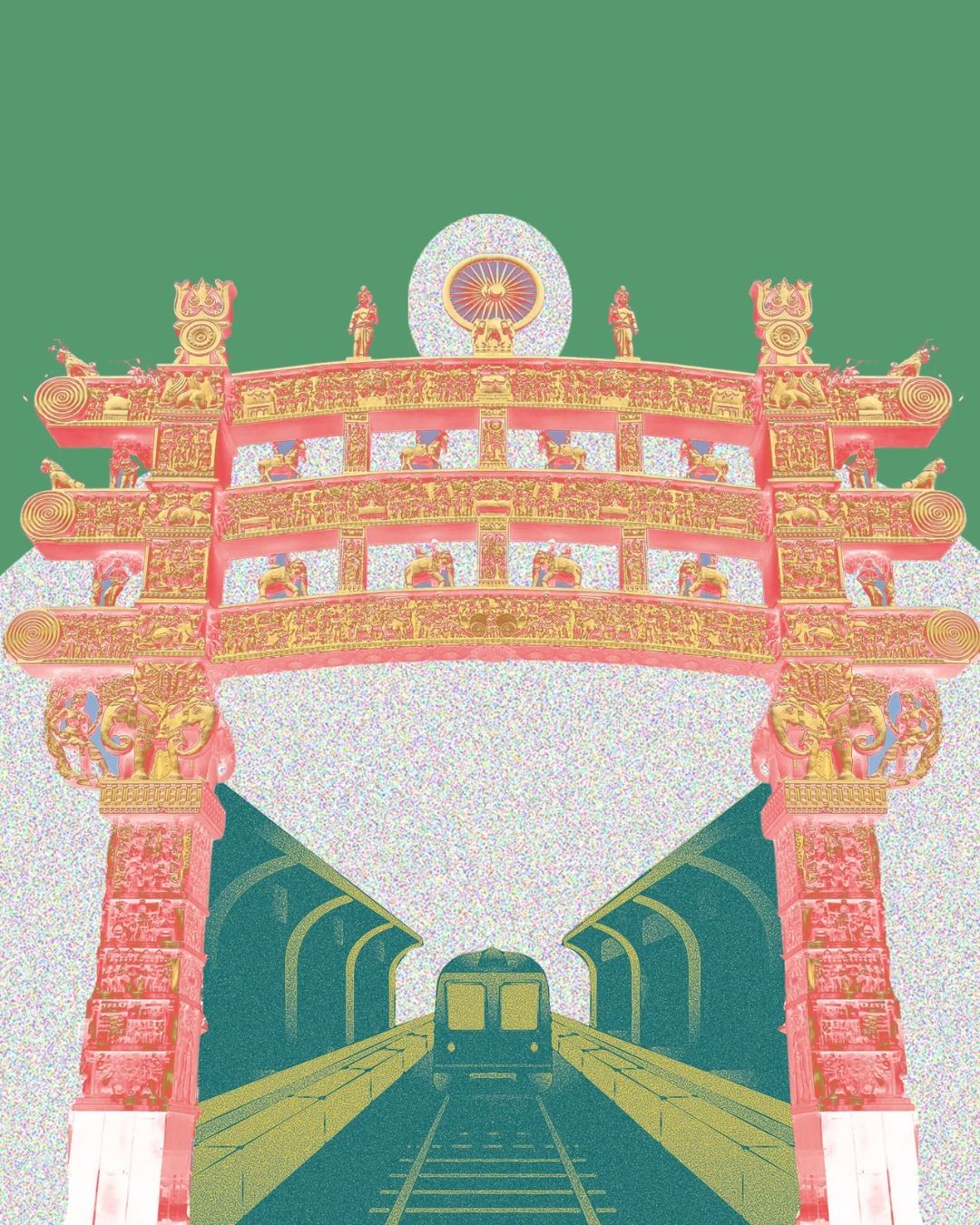
Maharashtra government initially announced that Dadar Railway Station would be renamed Chaityabhoomi, but promptly issued a correction, clarifying that it had intended to refer to the Dadar Metro station. In the interim, the announcement provoked contempt and indignation, with many denouncing the change as an erasure of Dadar’s uppercaste Marathi identity – disregarding the neighbourhood’s linguistic and cultural heritage, only to pander to the Dalit vote bank. Ironically, by altering the nomenclature, Maharashtra Chief Minister Devendra Fadnavis was doing precisely what this group claimed to uphold: purging the language of what they deemed undesirable. He wrote on X, “to ensure a peaceful and disciplined observance on MahaParinirvan Din at Chaityabhoomi by prohibiting protests, marches and demonstrations in the area, ensuring the safety and convenience of all followers.” On 6th December and 14th April, Chaityabhoomi is the most robust ground for the critique of the Hindu State. Remembering Babasaheb without critique of the Hindu State is the defanging of the Dalit movement.
Less than a month after the government ordered the detention of Dalit activists at Chaityabhoomi, following AIISCA’s call for a candlelight vigil in memory of Sahil Wakode, the same government now proposes to rename Dadar Railway Station after Babasaheb Ambedkar’s final resting place.
Bombay is the city of Dalit Panthers, Dalit mill workers who formed their own grammar of labour to address caste. We must refuse the politics of recognition and adopt a political language that addresses the material realities of our community. Much of this discourse has, instead, come to reflect the worldview of government servants, a secure but politically timid middle class, and university employees who mistake bureaucratic respectability for political thought. The desire for respectability has replaced refusal. Once these become the people setting the terms of a movement’s politics, its imagination is bound to shrink. What remains is a familiar Sarkari repertoire of statues, smaraks, commemorations and the ritual invocation of Babasaheb Ambedkar’s name, while the political force of his critique is steadily emptied out.
The problem is not merely that our political discourse has become cheap; it is that the desires we cultivate among our masses have become equally impoverished. We have gradually learned to desire precisely those forms of recognition that the existing system can comfortably provide. In doing so, we have allowed our opponents not only to manipulate our aspirations but also to shape and reproduce them. The greatest defeat of a movement is when it begins to desire what its oppressors are willing to offer. Maharashtra’s Ambedkarite movement, burdened by decades of disappointments and an internalised sense of failure, needs a resuscitation of its political imagination. Symbolic recognition is not material transformation; the celebration of icons is not the politics of emancipation; the preservation of memory is not the same as the struggle for power.
A movement that cannot question the desires it produces among its own people will eventually surrender even the power to define its political future. And that is perhaps the most dangerous position a movement can find itself in.