
On December 3rd, the machinery of the global elite will once again grind into gear to perform its annual, sanitized ritual of observation for the International Day of Persons with Disabilities. We will witness the United Nations unfurl its banners of benevolence, releasing glossy, high-resolution brochures that speak in the soothing, non-threatening tongues of inclusive societies and sustainable development goals, effectively papering over the craters of geopolitical violence with the thin veneer of bureaucratic optimism. In the glass towers of London and New York, multinational corporations will tweet about empowerment with clockwork precision, their CEOs posing for carefully curated photographs with wheelchair users to signal a virtue that exists only in the digital ether, a performance of solidarity that evaporates the moment a credit card is declined. But here, standing on the dusty, sun-baked grounds of JNU or navigating the chaotic, sensory overload of Delhi’s streets, we must refuse to swallow this sugar-coated pill that acts as a sedative to our political rage. We have a moral and intellectual obligation to look past the performative charity of the West, to tear through the veil of awareness, and to stare directly into the brutal economic and political abyss that lies beneath these celebrations. When we peel back the layers of this rhetoric, stripping away the buzzwords of inclusion, what we find is not a helping hand extended in solidarity, but a cold, hard price tag that we cannot pay. It is a system of technical colonialism that keeps the fundamental tools of autonomy locked behind a paywall that only the Global North can climb, enforcing a segregation that is as rigid as iron and as invisible to the sighted world as the wind.
We cannot honestly discuss disability in the Global South without first confronting the uncomfortable, jagged truth of how it is produced, sourced, and manufactured like any other commodity in the capitalist chain. We must violently wrench ourselves away from the liberal framework of rights and access – which presupposes a benevolent state waiting to be asked nicely – to understand what the theorist Jasbir Puar identifies in her seminal text The Right to Maim as the biopolitics of debilitation. The imperial powers of the West do not merely neglect the Global South in a passive act of omission; they actively engage in a process of wearing us down, a grinding attrition of our bodies and our infrastructures. Through endless wars that churn the soil, calculated drone strikes that rain fire from a clear blue sky, and crippling economic sanctions that starve public health infrastructures until they collapse under the weight of need, the Global North claims a sovereign right to maim populations in the South. They bomb the hospitals where we are born and the power grids that sustain our breath, effectively creating a debilitated population by design, and then, in a twist of capitalist genius that would be impressive if it were not so grotesque, they arrive as the white knights, the saviors, to sell us the prosthetic limbs, the rehabilitation services, and the medical devices needed to survive the very injuries they facilitated. It is a closed loop of violence and profit, a vampiric mechanism where the West reserves the shiny, polished identity of “Disability” – with its corresponding rights, pride parades, and state-funded access – largely for its own citizens, while imposing “Debilitation” – injury without redress, pain without acknowledgment – upon the rest.
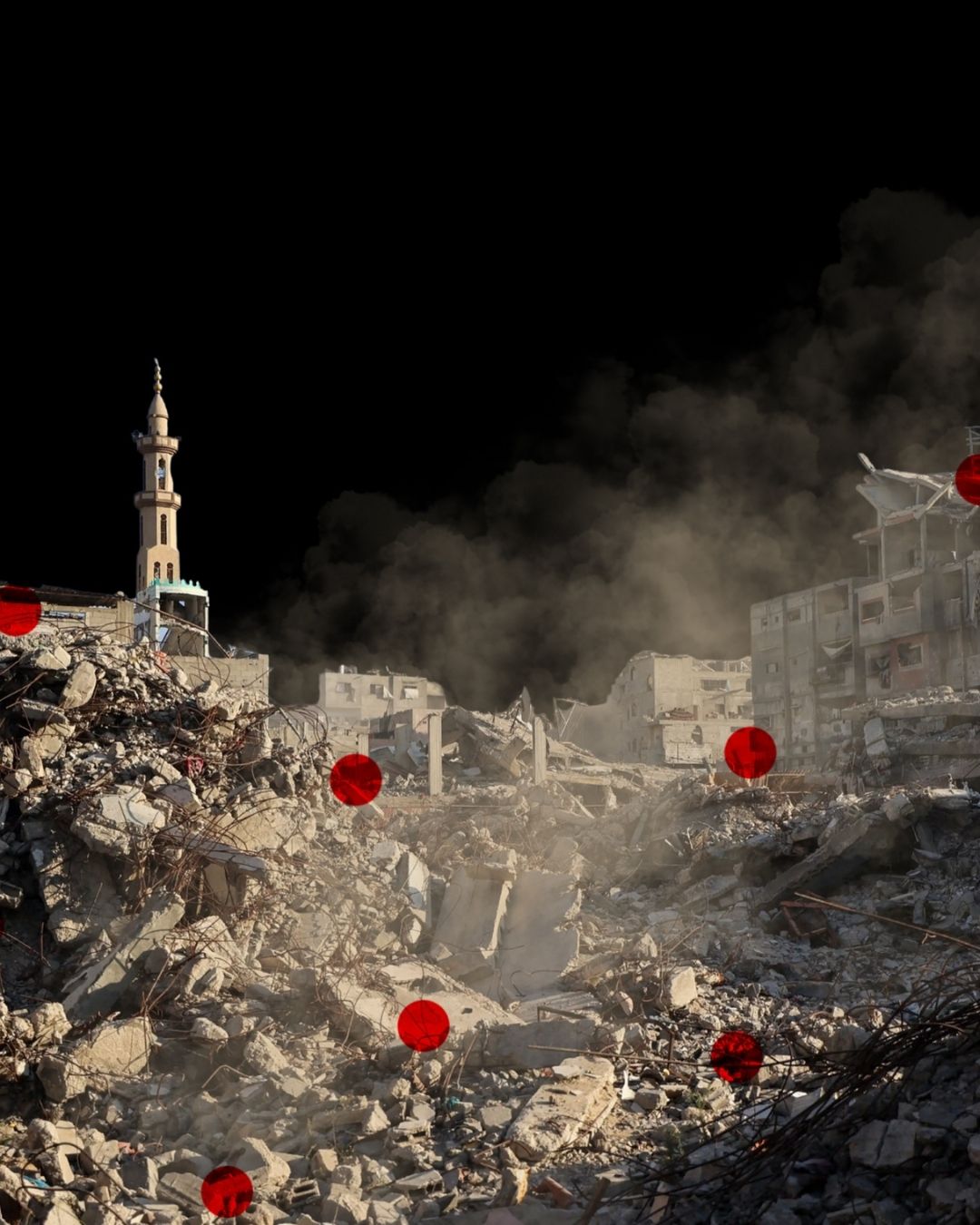
Nowhere is this production of disability more visceral, more deliberate, and more horrific than in the open wound that is Palestine. Their disability is not a tragic accident of genetics or a twist of fate; it is a calculated product, a manufactured output of the war machines of the Global North and the Israeli state. As Jasbir Puar documents, the Israeli military policy has explicitly shifted from a right to kill to a right to maim – a biopolitical strategy where shooting to cripple is not an error, but a primary tactic of settler colonial control. The sniper’s bullet is not a malfunction of war; it is a precise architect of the Palestinian body, designed to shatter the knee but spare the heart, ensuring a lifetime of immobility and dependency. The official statistics paint a picture that is not just devastating, but indicative. During the 2014 Israeli offensive on Gaza alone, the United Nations reported that while 2,131 Palestinians were killed, a staggering 10,918 people were injured, including 3,312 children. These are not just statistics; these are thousands of human bodies permanently altered by high-velocity bullets and flechette shells designed to shatter bone and shred tissue without granting the release of death. This created a sudden, massive population of amputees and people with long-term mobility impairments in a land where the streets are rubble. According to the Palestinian Central Bureau of Statistics and the Ministry of Social Affairs, by 2011 there were already at least 113,000 Palestinians in the West Bank and Gaza living with a disability, a number that has only grown as the machinery of occupation grinds on. This is the doctrine of “will not let die” in action: a strategy to keep a population alive but in a permanent state of injury and debilitation, effectively foreclosing any possibility of resistance or a livable future. It is a starvation diet for the body and the soul, where caloric intake is calculated to keep a person breathing but never thriving.
Yet, the West watches this production of disability with a scavenger’s lack of shame, turning its gaze away from the cause and focusing benevolently on the symptom. After funding the bombs and the drones that crush the spines and blind the eyes of Palestinian children, the Global North returns as the benevolent savior, managing the outflow of “accessible aid” to the very same place they helped destroy. They send prosthetics to replace the limbs they blew off; they send rehabilitation experts to treat the trauma they inflicted. This is not charity; it is a speculative rehabilitative economy where the debilitated body becomes a site of profit for the humanitarian industrial complex. They reduce a person to a state of dependency and then demand gratitude for the crutches they provide. This cycle of maiming and aiding is the ultimate expression of imperial power – the power to break a body and the power to sell it the tools to limp forward. In May 2024, USAID announced a $50 million “Gaza Health Recovery Activity.” The Irony: The solicitation explicitly lists “Services for people with disabilities (prosthesis, assistive devices)” and “physical rehabilitation” as key intervention areas. The Artificial Limb and Polio Centre (ALPC) in Gaza, the primary facility for amputees, has historically relied on imports of prosthetic limbs and raw materials “mainly from Germany.” The centre was dependent on German manufacturing for the plastics and resins needed to mold limbs. This creates a perverse trade relationship where German industry profits from the high-tech weaponry that severs limbs, and then German medical industry profits from the high-tech materials needed to replace them. The “benevolent” medical export is contingent on the “destructive” military export.
This dynamic of exploitation is mirrored, albeit less violently but no less systemically, in the specific economics of blindness technology closer to home. We are constantly told that Braille is literacy, that technology is the great equalizer that will bridge the gap between the sighted and the blind. Yet, there exists a Silicon Curtain that divides the blind of the West from the blind of the Rest, a wall built not of concrete, but of affordability. Consider the refreshable Braille display, the device that acts as the pencil and paper for the blind world. A standard 40-cell display is not a luxury item; for a blind scholar, a programmer, or a student attempting to navigate the complexities of this world, it is the equivalent of a computer monitor. Without it, we are functionally illiterate in the digital age, cut off from the primary means of production and knowledge. In the United States, a device like the Freedom Scientific Focus 40 Blue costs thousands of dollars, a sum that in the American economy is almost entirely absorbed by state insurance, vocational rehabilitation programs, or university grants. The American user rarely, if ever, reaches into their own pocket to pay the full market price.
But when this same device crosses the ocean to India, the price remains legally and economically tethered to the US dollar, often costing between three and a half to five lakh rupees. There is no adjustment for Purchasing Power Parity, no concession to the economic reality of the Global South. The industry is strangled by a monopoly of giants – specifically Vispero, the parent company of Freedom Scientific, and HumanWare. These “Big Three” corporations set their prices based on what the US government and insurance lobbyists will pay, effectively exporting a First World tax to the Third World student. This confirms the scholar Helen Meekosha’s critique in her work Decolonising Disability, where she argues that the “Global Disability Marketplace” forces disabled people living in the periphery to purchase goods and services from industrialized Northern countries, creating a permanent trade deficit in the very tools we need to live. For a student at JNU, demanding lakhs of rupees for a reading device from Vispero or HumanWare is not a market transaction; it is an act of economic violence. It ensures that technology remains the exclusive privilege of the global elite, while the rest of us are left to scavenge for autonomy in the margins.
This disparity creates a class apartheid within the disability community itself, particularly when we look at the emerging field of artificial intelligence. Devices like the Envision Glasses, AI-powered spectacles that can read text, describe environments, and identify faces, are marketed as revolutionary tools for independence. Yet in India, the professional editions of these devices retail for over two and a half lakh rupees. While the West celebrates this as a triumph of innovation, for the vast majority of blind Indians, including those of us in higher education, it is nothing more than science fiction. We are taunted with an autonomy we cannot buy, trapped in a one-way transfer of wealth where the South buys the North’s technology, but the North ignores the South’s knowledge and context. We are expected to be grateful for the opportunity to gaze at these tools from afar, while our own capacity to navigate the world is held hostage by foreign profit margins.
So how do we survive in a world designed to price us out of existence? We survive through resistance, often in ways that the legal frameworks of the West deem criminal. The industry-standard screen reading software, JAWS – another product of the Vispero conglomerate – costs over a thousand dollars for a professional license, a price point that is laughable in its cruelty for an average Indian user. This is why the Global South runs on NVDA, the NonVisual Desktop Access, a free, open-source alternative built by the community, for the community. When blind students in the Global South use cracked software or share license keys to access the expensive tools they cannot afford, the West calls it piracy. I call it decolonial resistance. We are refusing to pay the imperial rent for the basic human right to read a screen. We are rejecting a marketplace that extracts value from our disability while offering nothing but debt in return.
Finally, we must critically dismantle the Charity Model that so often accompanies these observances. When the Global North is done with its technology, where does it go? Helen Meekosha warns us that the South is treated as a pollution haven, a dumping ground for the excesses of capitalist production. They dump their e-waste on us, sending over their battery-dead, heavy, obsolete Braille writers and first-generation note-takers, and they call it aid. They get the tax write-off, and we get the trash that clogs our landfills and poisons our environment, all while being told to smile for the camera. This World Disability Day, let us reject their pity and their cast-offs. Let us reject the narrative that we are unfortunate victims waiting for Western benevolence. We are the survivors of a global economic system designed to debilitate us, whether through the pricing of a Braille display in Delhi or the sniper fire in Gaza. True disability justice will not come from a UN grant or a shiny gadget from Silicon Valley. It will come when we dismantle the structures of imperialism that price our autonomy out of reach and bomb our bodies into submission, demanding a world where our vision, our limbs, and our lives are not held hostage by their greed.