
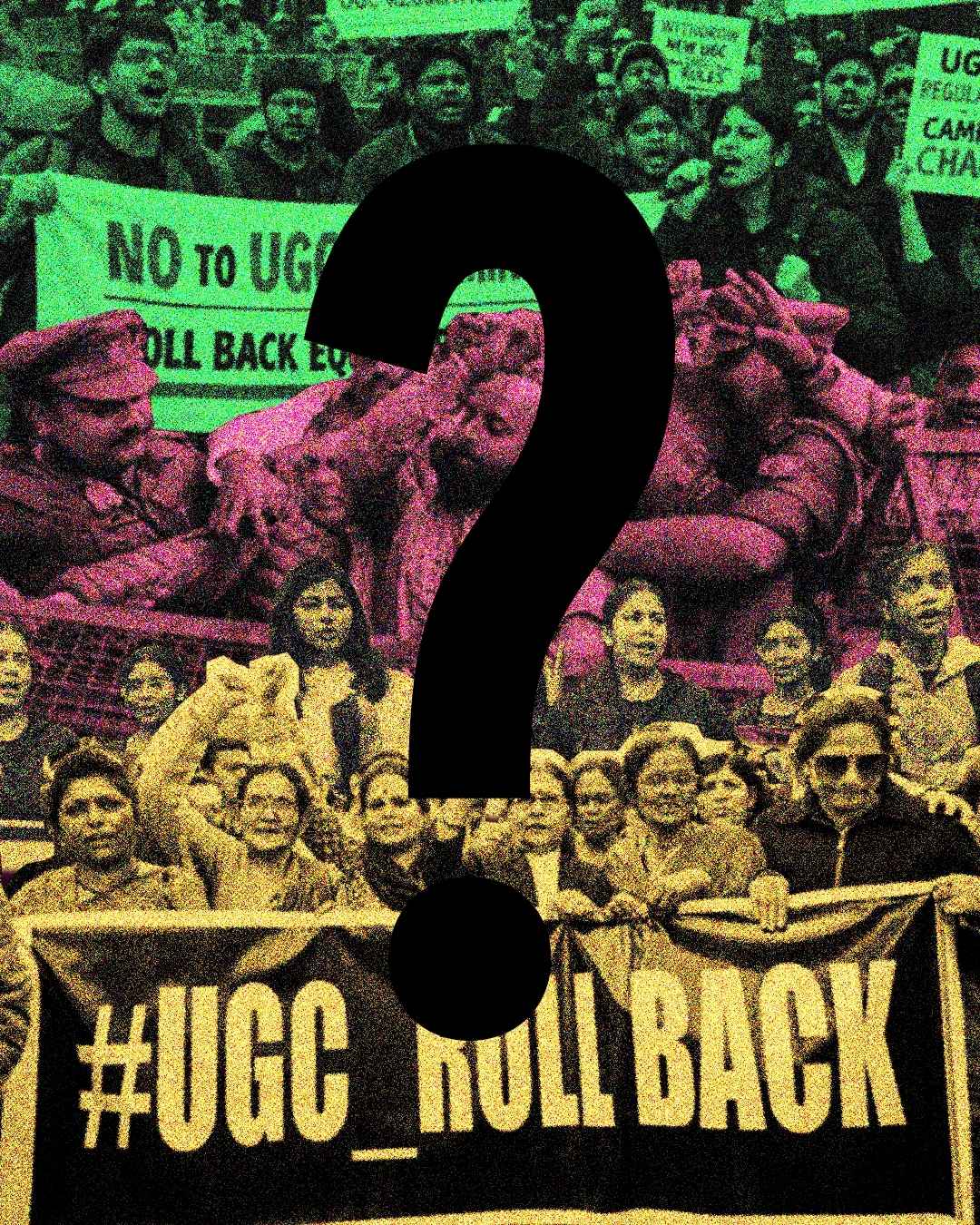
Much-needed UGC anti-discrimination regulations have brought the anger of the upper castes out. But why are they so angry? It is difficult, but also not so difficult to understand their anger as the dominant social group historically has remained opposed to egalitarian values and the spirit of justice. Thanks to Rohith Vemula and Payal Tadvi’s mothers, dedicated lawyers and activists who forced the regime to come out with the regulations. People in higher education very much know what happens to these rules in the higher educational institutions where upper castes rule the roost.
The protest also shows that Savarnas have not only naturalized the hierarchies and discrimination, but they see any interference to change it as discriminatory. Any progressive measures give them an imagined sense of marginalization. It gives them an insurmountable sense of suffering. So much so that a savarna poet Kumar Vishwash cried it out, sharing the poem of Ramesh Ranjan, “main abhaga 'savarn' hoon mera, rounya rounya ukhad lo raja” (I am the unfortunate Savarna, pull out every hair of my body). Kumar’s sentiment shows how miserable the savarnas feel even in their privileged position. While he performed crying poetry, tearing apart the heart of savarnas, his other brethren went ahead abusing others, including Modi with his caste name. In one stroke, the Hindu Hriday Samrat was reduced to the caste identity of Teli? What does this savarna anger show? Why did the Hindutva leader who takes all smaller offences to mobilize his electorate remain silent after being abused by savarnas? The UGC Rule 2026, at best, recognizes the prevalent discrimination in higher education. Savarna’s protest is against the very recognition.
It is not surprising that with the anti-discriminatory rule of the UGC, the savarna groups felt so hurt that some of them are ready to give up their dream project of Hindutva. Some of them even said that they will convert to Muslims. Suddenly, those who were conducting the DJs of Hindutva, those who were preaching the sermons of the Hindu-rashtra, those who were advocating unity in the name of Fatherland, Motherland, pure blood-hood and ancient brethren started mobilizing in the name of Savarnatva (brotherhood of the upper castes). Savarnatva is a term used by scholar Y.S. Alone to talk about the caste-syndrome in which the caste savarnas use hate, anger, violence to perpetuate their psychotic perversion.
In a matter of days, the most sacred nationalist project of bringing all the Hindus together against Muslim others was out. It is true that Savarnas felt truly hurt. More so because they did not expect anything like this from the Hindutva regime. Neither Hindutva must be sure of this reaction that hardly matters to two percent of the population. It was so disheartening for Savarnas to see Hindutva not safeguarding their elementary interests. From media anchors to Hindutva intellectuals, from Anjana Om Kashyap, Sai Deepak, to Anand Ranganathan and even some progressive YouTubers and Congress leaders started talking in the language of savarna victimhood. They all cried foul. Savarnas unity was always unparalleled in this country when it came to their interests; it went a step ahead this time.
Perhaps it was the first such major fallout of the savarnas from the Hindutva project after the Modi regime came to power in 2014. It shows several cracks together. First of all, it has exposed the false unity of the caste Hindus. It revealed the real fractures of the Hindu rashtra. It has also shown why savarna has been supporting the Hindutva till now. It also suggests why Hindutva must necessarily keep the Savarna interests supreme to work on the project of Hindu nationalism.
“The day 'subalterns' will ask for schools and spaces in the universities, Savarnas will come in your way.”
Savarnas are almost saying that the national interest is fine but the Savarna interests are the supreme. In other words, everyone's interests can be sacrificed (for example, adivasis should sacrifice their life and livelihood for development) but not the caste savarna interests. They are almost saying that if the project of the Hindu nation has to go ahead, the savarna interests must be kept as a priority. No one should dare to touch their hierarchies. And till the time, Hindutva serves their interests, till the time Hindu rashtra fulfills its desire, till the time, they rule the roost, they are with the nation and Hindutva. The day Hindutva tries to dislodge them from their privileged positions, they will not only withdraw their support from the Hindutva project. They will be the ones to turn against them.
The massive upper caste-led uproar is also an eye-opening experience for the members of Dalit-Bahujan-Adivasi and other such marginalized communities who face discrimination in higher educational institutions on an everyday basis. Leave the radical changes, savarnas are not even accommodating. They are not ready to give up their privileges. They are not ready to give up their status as Savarnas. They cannot be entrusted; they cannot be trusted. They cannot be the partners of any egalitarian project. When it will come to the righteous interests of Dalit-Bahujan and other marginalized sections, caste savarnas will stand against them in all colours. So what should be the possible points of resistance against this savarnas's Brahminical backlash?
Hindutva, Savarnatva and Samaanatva
What do Savarna protests reveal in this context? One perhaps does not need complex analysis. Their approaches and positions are open out there. That is: Higher educational institutions belong to us. There is no discrimination at all. Even if it happens, it happens more with us than with others. Savarnas want to say that they are the victims of social justice. At this point, I suggest that we need to think in relation to what Babasaheb Ambedkar suggested, "the governing principles of human relationship’ in democracy. While SC-ST-OBC or the Dalit-Bahujans, Adivasis become a subject position in relation to their social locations. We need to argue from the governing principles.
The governing principles of Hindutva advocate the supremacy of Hindus; the governing principle of Savarnatva wants to prevail over its own supremacy. What are the governing principles that Dalits-Bahujans and other marginalized communities are going to advocate against, the governing principles based on hierarchy and supremacy? For these groups that have been, but against this Brahminical backlash, we need to reiterate the principle of equality, which can be termed as Samanatva (supremacy of equality and justice). Samanatva is not a given principle; it is the principles of politics, a project of the future in which one wants to participate with the fundamental conditions of equality and justice. Many savarnas are making this point that it is not the caste savarnas but the OBC who perpetuate violence against the SC-ST communities. Yes, there are hierarchies, there are differences. There are fractures. But on the principles of politics, they are willing to participate in the politics of samaanatva.
It is the principles of samaanatva that are going to counter both the hegemony of savarnatva and the dominance of Hindutva in the long run. While the Hindutva and Savarnatva connections are obvious, what is also exposed is the mask of subaltern Hindutva. Hindutva will make temples for your local deities. Savarnas do not mind you dancing in the Ram Navami procession with swords, but the day "subalterns" will ask for schools and spaces in the universities, Savarnas will come in your way.
Come to the principles of politics. Come to the principles of Equality and Justice.