
Caste society, by its very nature, forecloses the possibility of imagination for the oppressed. It does not merely exploit—it depletes. It empties the oppressed of the very capacity to desire something different. It denies the absence, the gap, that makes a subject political. And yet, it is precisely this gap—between what is and what could be—that gives birth to political subjectivity.
Contrast this with the dominant post-Ambedkarite Dalit discourse today, especially in academic and bureaucratic spaces. It is a discourse marked by caution, restraint, and detachment. Babasaheb Ambedkar has been turned into a constitutional saint, but his radical spontaneity has been neutralized. His fire has been contained within the safe boundaries of legality and liberalism.
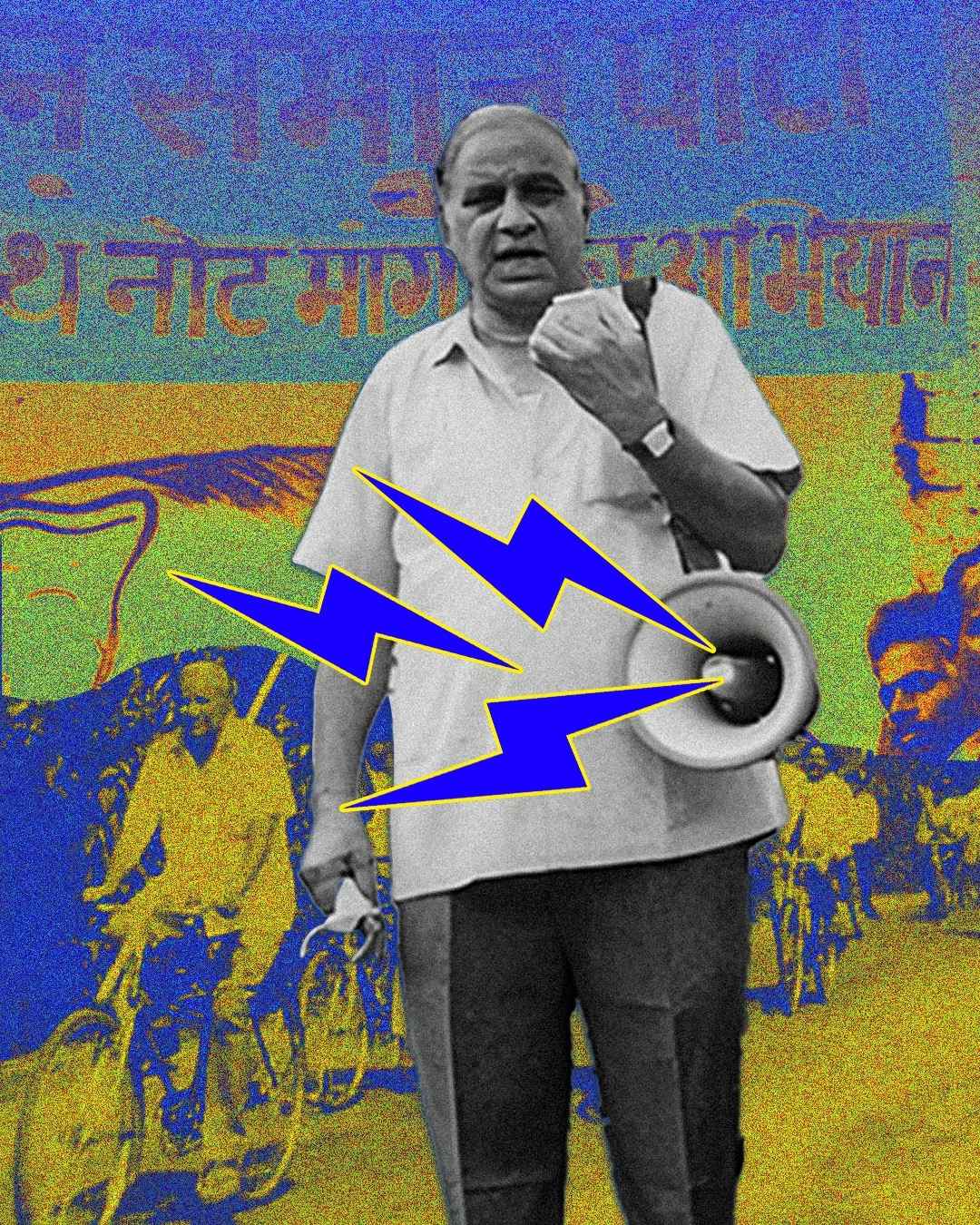
Kanshi Ram Sahab understood this with clarity. He recognized that the bureaucratic culture of BAMCEF—dominated by secure, middle-class Dalits—had settled into a comfort zone. What it lacked was risk, desire, and confrontation. Kanshi Ram broke from this culture of passivity. He rejected the idea that change could come only through gradual reform within the system. Instead, he launched a direct political challenge to upper-caste hegemony, giving rise to a Bahujan subjectivity rooted in assertion, not appeal.
“He understood that without fantasy—without a vision of something radically different—there can be no political movement.”
He understood that without fantasy—without a vision of something radically different—there can be no political movement. Where others spoke of dignity, he spoke of dominance. Where others waited for justice, he built structures to claim it.
Today, in the absence of such a figure, what remains is flux—not the productive, dialectical flux of contradiction and struggle, but the inertial drift of a movement that has lost its inner fire. It speaks, but does not dream. It organizes, but does not construct. It reacts, but does not transform.
To recover the political, we must recover the lack. To act, we must desire. And to desire, we must once again risk the fantasy of a different world. Kanshi Ram dared to do that. The question now is—who will dare again?