
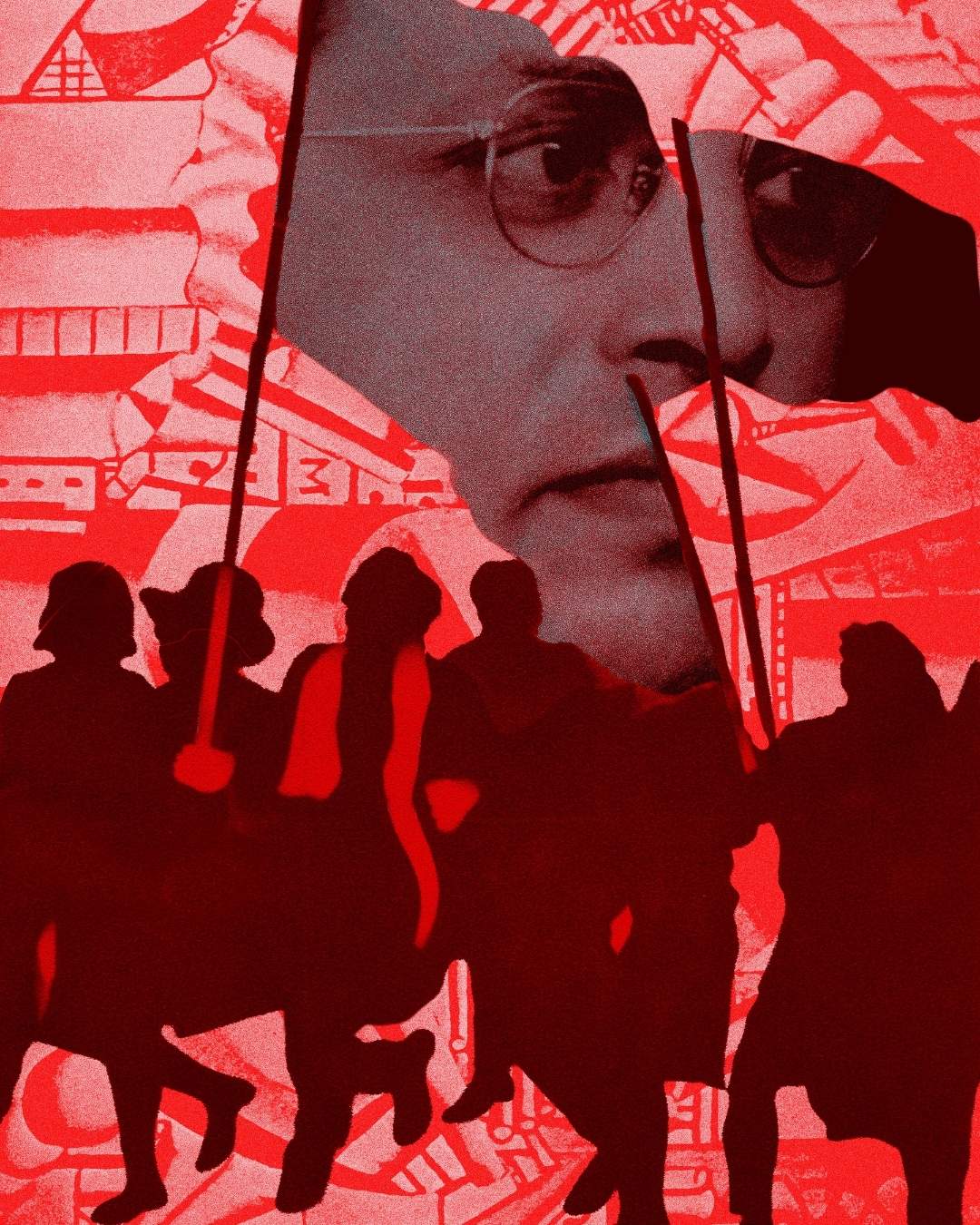
Dr. Ambedkar has occupied centre stage over the past decade in popular and academic writings as well as in the cultural arena. His birth anniversary has become a global phenomenon, and events linked to his social and political interventions have acquired new meanings in contemporary times. One such remarkable shift is the celebration of Ambedkar’s crucial role in the field of labour on May Day. While this correction is long overdue, it is vital to recognise that it is not merely about acknowledging that Ambedkar also addressed the labour question. Rather, Ambedkar’s engagement with labour provides a powerful analytical framework for examining past and present understandings of work in South Asia. It exposes a distinct “grammar of labour”, a system where rigid social hierarchies dictate the terms of economic exploitation. In popular discourse, the categories of caste and class are often viewed as distinct. For a long time, the anti-caste movement was dismissed by ‘radicals’ as a middle-class or bourgeois movement. Talking about the caste question was seen as inferior, while class was considered a superior category of analysis. In fact, it is still common to find scholars and activists arguing that Ambedkar merely addressed the “caste question” and ignored the “larger” “class question”. Furthermore, some voices still insist that while the caste question needs to be addressed, the class question ultimately demands resolution. While there are very few takers for a purely class analysis today, scholarly writings around the world have already moved beyond frameworks such as intersectionality, aligning more closely with Ambedkar’s approach.
Caste and Class
The question of labour in South Asia is intricately linked to the caste system and its role in shaping the economy. During the early decades of the 20th century, Ambedkar forcefully highlighted caste-based labour market discrimination within the modern cotton textile mills in Mumbai. Marxists and modernisation scholars expected that the arrival of modern industrial capitalism and urbanisation would make social identities such as gender, caste, race, and religion irrelevant. However, for the entire 140 years of its existence, caste shaped occupational choices within the cotton textile mills. For instance, Dalits were confined to the lowest-paying jobs in the ring and spinning departments and were actively prohibited from the better-paying, prestigious weaving department. During the weaving process, each time the weft bobbin needed to be replaced, workers had to wet the thread with their saliva to tie the knot. The Maratha caste workers argued that working with Dalits in the weaving department would result in ‘pollution.’ The prohibition of Dalits at times took violent forms. One Dalit worker who had disguised himself as a Muslim to work in the weaving department was physically beaten when his identity was revealed.
The trade union movement paid little attention to the discrimination experienced by Dalits in modern industries. In the mid-1920s, Ambedkar founded the Bahishkrit Hitakarini Sabha and intervened on wide-ranging questions. This period coincided with the historic Mahad Satyagraha of 1927, a movement for equal access to public water that laid the foundation for organised Dalit politics. Ambedkar’s labour activism in the textile mills was carried out through his association with the Bombay Textile Labour Union, which was formed in 1925 by moderates such as N.M. Joshi and R.R. Bakhale. During the famous 1928 Bombay Textile strike, Ambedkar highlighted the discrimination faced by Dalits in the weaving department. However, this received no positive response from the Communist leaders. It was only when Ambedkar threatened to dissuade Dalit workers from joining the strike that the strike committee included the Dalits' demand to work in the weaving department on its list. However, when this demand came up for discussion, the mill owners argued that it was the workers who discriminated against Dalits, and not them. This was evident after the 1928 strike, as the Maratha workers protested the recruitment of Dalits.
Rural Bondage
One of the most overlooked aspects of Ambedkar’s interventions is his opposition to bonded labour in the countryside. Ambedkar organised struggles against the Mahar Watan and Khoti systems in rural areas, challenging the caste-based occupational order. The Khoti system was a form of land revenue arrangement prevalent in the Konkan region. It exploited small and marginal farmers and perpetuated forced labour by exacting four times the required amount of tax to be paid to the colonial government. The Khots (landlords) were predominantly Chitpawan Brahmins, alongside a few high-caste Hindu Marathas and Muslims. The tenants, on the other hand, were Marathas, Other Backward Classes (OBCs) such as Kunbis, Bhandaris, and Agris, and among Dalits, a few Mahars. Ambedkar’s close associate A.V. Chitre founded the Shetkari Sangh, which stood for the eradication of the Khoti system. Ambedkar organised agitations and conferences in the early 1920s against the Khoti system. Later, he introduced the Khoti abolition bill on 17 September 1937 in the Bombay Legislative Assembly. In fact, Ambedkar was the first legislator in the provincial assemblies to introduce a bill for the abolition of serfdom among agricultural tenants.
The Mahar Watan was land granted to the Mahars as an entitlement within the village socio-economic structure. This entitlement was offered in exchange for extensive, exploitative, and obligatory services from the Mahars. Ambedkar stood for the abolition of these rural economic structures of servitude deeply embedded in the caste system. In fact, Ambedkar argued that the campaign against untouchability would not be complete without fighting these structures. In 1928, Ambedkar introduced a bill to abolish the Mahar Watan in the Bombay Legislative Council. He proposed that the government recognise the Mahar Watandars as public servants and suggested that the villagers pay their remuneration. While non-Brahmins initially supported the bill, they increasingly became hostile towards it, apprehensive about who would perform the demeaning, stigmatised labour of the Mahars.
The Grammar of Labour: Brahminism and Capitalism
If Ambedkar warned against a 'grammar of anarchy' in a constitutional democracy, his lifelong interventions revealed an equally entrenched 'grammar of labour' in the economic sphere. This grammar of labour demonstrates that the exploitation of workers is governed not merely by the capitalist pursuit of surplus value, but also by the rigid social codes of Brahminism. It enforces a strict “division of labourers” rather than just a division of labour, actively weaponising pollution and purity to restrict occupational mobility. To understand this grammar is to recognise that dismantling capitalist exploitation is impossible without first dismantling the social indignity woven into its very fabric.
“This grammar of labour demonstrates that the exploitation of workers is governed not merely by the capitalist pursuit of surplus value, but also by the rigid social codes of Brahminism.”
While Ambedkar acknowledged that capitalism was the enemy of the working classes, he argued that Brahminism was an equally important enemy. He defined Brahminism not merely as the dominance of a specific community but as the ideological framework that inherently negates the spirit of Liberty, Equality, and Fraternity. Also, unlike the Communists, he did not opine that the destruction of the capitalist order would automatically remove the perils of the caste system. For Ambedkar, the removal of social discrimination was an essential condition for fighting against capitalism. The battle against capitalism, Ambedkar argued, was only possible by introducing parity in the labour market, ensuring Dalits had equal access to it. One of the ways to achieve this was by replacing caste-based recruitments influenced by Brahminism with market principles that negated them. This would resolve caste and religious antagonism among workers, which had been a barrier to working-class unity.
Ambedkar also challenged the narrower focus of “class” on material relations or economic exploitation alone. Ambedkar argued that non-economic modes of domination and exploitation are equally vital, as they feed into capital-labour relationships. Moreover, he argued that non-economic modes also deprive people of the basic goods essential to the constitution of a confident self, a life of mutual recognition, and participation in collective affairs. This deprivation was starkly visible beyond the factory gates in Mumbai’s working-class chawls (tenements), where Dalits faced spatial segregation and were routinely denied access to common amenities.
Constitutional Methods
As a member of the Bombay Legislative Council, Ambedkar consistently raised a wide range of labour issues. He established the Independent Labour Party (ILP) in 1936 with an agenda to fight for the social, economic, and political rights of the working class. The ILP also stated that it did not represent any single caste or religion, and that there was no difference between touchable and untouchable, Brahmin and non-Brahmin, Hindu and Muslim. Following its success in the 1937 provincial elections, the ILP remained at the forefront of opposition to the Industrial Disputes Act of 1938. The said Act made conciliation compulsory, and workers were to be penalised with six months' imprisonment for participating in illegal strikes. While opposing the bill in the Bombay Legislative Assembly in 1938, Ambedkar argued that to punish workers for participating in a strike was “nothing short of making the worker a slave.” And, “slavery”, Ambedkar stated further, “was nothing else but involuntary servitude.” Outside the Assembly, the Ambedkar-led ILP opposed the bill by successfully organising a one-day strike on 7 November 1938, and he welcomed the support extended by the Moderates, Communists, and Socialists for this agitation. While Ambedkar fought for workers’ right to strike, he also argued that it was important to take into account workers' financial capacity before a strike was called. It is precisely for this reason that he also did not support some strikes. As a Labour Member in the Viceroy’s Executive Council during the Second World War, Ambedkar introduced several labour welfare measures, which had a profound impact on the formulation of labour policies in the post-Independence period. Ambedkar’s interventions on the labour question thus have much to offer contemporary India, as caste, gender, and religion continue to influence individuals’ life choices. Recognising and dismantling this enduring grammar of labour remains the vital first step toward achieving genuine economic and social democracy.