
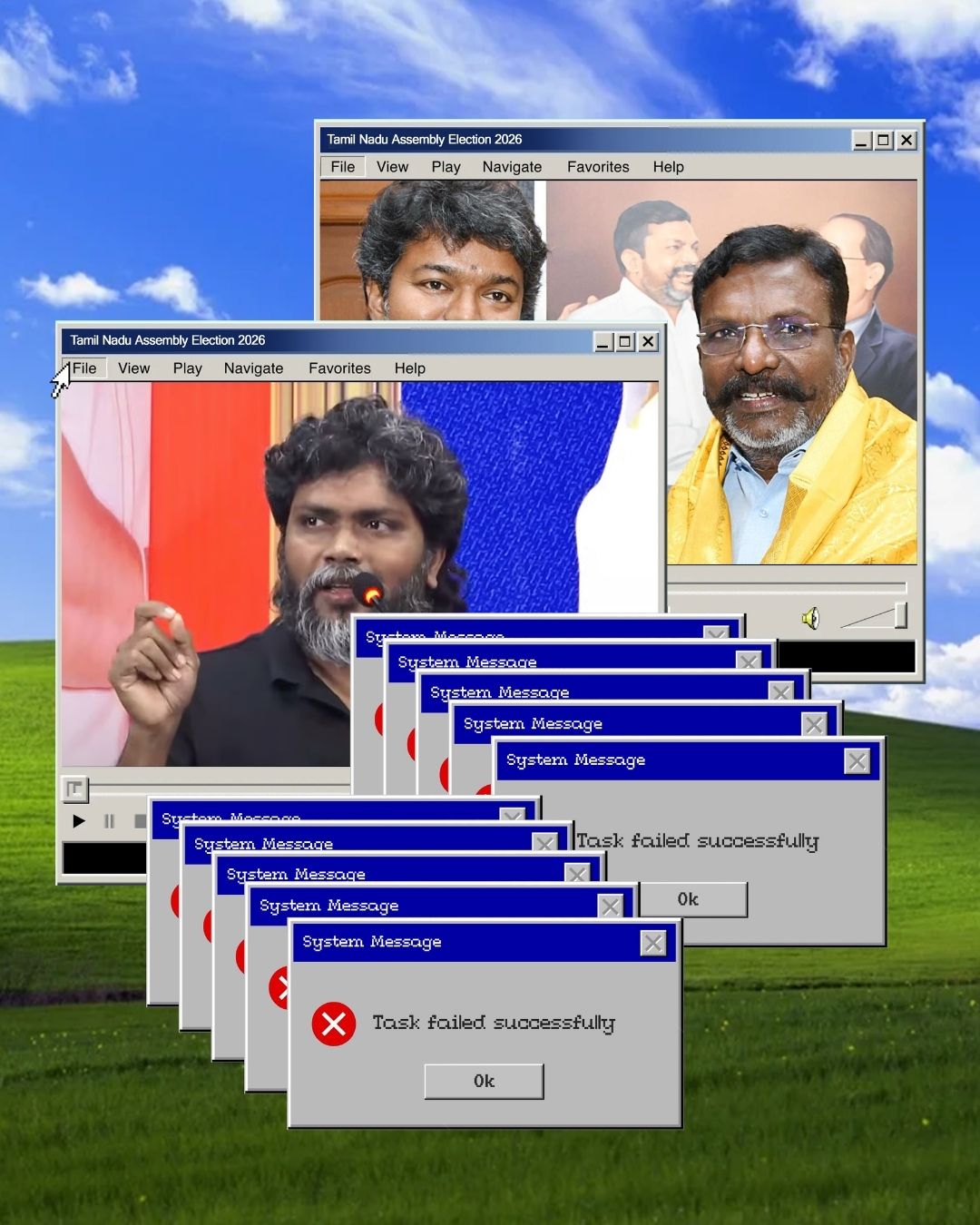
The 2026 Tamil Nadu Legislative Assembly elections marked a profound structural shift in the state’s political landscape. The long-standing political duopoly that had defined Tamil Nadu for a half-century was disrupted, paving the way for a multiparty coalition government. However, this period of electoral instability revealed a much more problematic condition of the modern public sphere. Generally, digital platforms are lauded as democratising spaces that give voice to the voiceless and enable the free flow of information. However, the recently concluded assembly elections laid bare the darker reality of this digital realm. It demonstrated that the internet is far from a post-caste utopia. Digital spaces uphold caste rather than overcoming it. It is not limited to cyberbullying but coalesces to a structural problem called digital casteism. Various studies have explored how caste bias and discrimination travel through the digital spaces in gig economy platforms, matrimonial sites and even freelance photographic websites. A research report on online caste hate speeches also reveals how Dalit activists, scholars and individuals are susceptible to hate speech for their Dalit-centric views.Tech giants like Facebook, X, and YouTube do not have the mechanisms to regulate casteist hate speech. This negligence to disregard the regional context-based discrimination by tech companies has created an environment for hate speech with zero accountability. Today the internet serves as a sophisticated arena for the digital disciplining of Dalit political agencies.
During and after the 2026 elections in Tamil Nadu, social media witnessed a targeted, vitriolic backlash directed specifically at Dalit institutional and cultural voices. This reaction indicates that dominant political spaces in Tamil Nadu tolerate Dalit assertion only when it remains subordinate to established political alliances, and any deviation from this role is met with retaliation aimed at reinforcing traditional hierarchies and the idea of graded inequality. To understand this dynamic in the context of Tamil Nadu elections, I exhibit the digital casteist bullying directed at two foremost entities advancing anti-caste narratives in Tamil Nadu: the Viduthalai Chiruthaigal Katchi (VCK), led by Thol. Thirumavalavan, and the socio-cultural Neelam Organisation, founded by Director Pa. Ranjith.
It is well understood that the Dravidian Movement was successful in challenging the Brahminical dominance prevalent in the state and empowering Other Backward Classes towards upward social, political and economic mobility. Unfortunately, this Dravidian social justice did not extend to Dalits in Tamil Nadu. Vaasanthi, in her book Cut-Outs, Caste and Cine Stars (2006), elucidates the failure of the Dravidian Majors to achieve substantial upliftment of the Dalit community despite their social justice rhetoric. The premise of this book revolves around the insider experience of a journalist throughout the years of Karunanidhi’s and Jayalalitha’s rule. It makes the argument of personality politics, charismatic leadership and how the dravidian movement led to sanskritisation and also brought in a new social configuration that has made dominant caste politics prevalent. (which has made Dalit assertion marginalised). The non-Brahmin movement displaced Brahminical hegemony in favour of intermediary-caste dominance. Hence, the political rhetoric has typically functioned to ensure that this Dravidian ideology of progressiveness is kept intact and united against the all-encompassing Brahminical Hindutva for the time being, by maintaining respectable electoral performance and political dominance at the expense of real Dalit welfare.
The VCK is an anti-caste party with roots in the Dalit Panthers. It contested the 2026 elections as part of the DMK-led Secular Progressive Alliance, winning two of the eight constituencies it contested. The party’s entry into electoral politics in 1999 was linked to addressing Dalit issues in the mainstream by drawing upon Dr Ambedkar’s idea that Dalits must not remain a subject community and that political power is the master key to open every lock. Despite being in alliance with the two Dravidian parties from time to time, VCK has never achieved its core agenda of sharing power in governance. In the post-poll scenario, when the Tamizhaga Vettri Kazhagam (TVK) sought support to form a government, the decisive leverage lay with the VCK. In a multiparty coalition scenario, political leverage by any party is standard practice.
However, when the VCK attempted to exercise this strategic agency, the dominant-caste reaction was visceral. Rumours of VCK negotiating for a Deputy Chief Minister post with the TVK sparked outrage. Social media platforms were flooded with hateful casteist rhetoric with no concurrent evidence, invoking casteist remarks like Kothadimais (Bonded Labourers) and referred to Thol. Thirumavalavan and his party as plastic chairs for negotiating seats with just two MLAs and claims that reduced Thirumavalavan to “DMK stooge” going against the people’s mandate. The VCK leader later clarified that the delay was due to its engagement in intra-party democratic deliberations as it navigated its alliance prospects, ideological commitments, and the decision of whether to join the cabinet or to extend external support.
When the TVK government was eventually formed and the VCK finally joined the cabinet, accomplishing its long-term agenda of power-sharing in governance, the online caste bullying only intensified. This time, it arrived from both ends of the ideological spectrum: the DMK ecosystem and the BJP. Right-wing influencers weaponised Thirumavalavan’s past campaign speeches to brand him anti-Hindu for his critiques of Sanatana Dharma. Simultaneously, the DMK ecosystem aligned with these right-wing tactics, portraying VCK’s strategic autonomy as betrayal. Vulgar comments compared the VCK to animal loyalty, reiterating traditional caste roles, and prominent leaders like A. Raja even compared the party's political manoeuvre to an “extramarital affair.”
This digital policing also extended to Neelam Social, founded by Pa. Ranjith, which served as a socio-cultural institute asserting anti-caste politics and Dalit rights. Ranjith found himself in the crosshairs after extending support to Porkodi Armstrong, wife of the late BSP leader K. Armstrong, who contested on an NDA ticket. Ranjith’s support stemmed from a fundamental act of Dalit solidarity and a demand for justice following Armstrong's murder. Despite Ranjith’s public clarification reaffirming his commitment to anti-caste politics and the fight against majoritarian BJP-RSS Hindutva at a Neelam-organised program, these digital political ecosystems actively chose to discard his nuance. This reflects how Congress and Socialist reformers used to demand Dalit subordination for broader agendas during the Indian National Movement, while ignoring caste discrimination and violence. Similarly, DMK-supportive influencers, social media pages, YouTube channels, and a few Leftist political influencers active in the digital space immediately framed Ranjith’s support as a betrayal of Dravidian politics and social justice. Echoing the historical tendency of dominant and upper caste progressives always trying to dictate terms to Dalit leaders, they branded him as another sell-outs of the RSS, ‘Kaavi Sanghi’, ‘Dalit Sanghi’ and reduced his movement to ‘identity politics’ in a demeaning manner.
The backlash against Neelam Social (directed towards Pa. Ranjith) intensified when the organisation praised TVK for disrupting caste-based voting patterns and elite dominant caste candidatures. This support for TVK was translated into another compromise on the principle of real social justice. Dominant voices ever since have eagerly weaponised pejoratives such as ‘opportunism’ and ‘identity politics’ to delegitimise Neelam’s efforts. Neelam has actively engaged in areas like journalism, cultural events, and cinema, upholding Ambedkarite politics and anti-caste narratives. It has democratised these spaces with its Dalit-centred upliftment, ideological narratives and material support for almost a decade in Tamil Nadu. Pa. Ranjith has vehemently voiced concern over the neglect and discrimination practised towards Dalits in Tamil Nadu under the DMK government, as evident from the number of caste violence and honour killings in the state. This consistent negligence from the Dravidian party was also widely reflected in the handling of the Armstrong murder case. Hence, owing to his personal connection to Armstrong and his family, along with his adherence to anti-caste politics, this political support reflects a tendency to extend commitment towards Dalit rights and solidarity, rather than shy away from it. The matter carries significant political nuance and Ranjith's balanced approach for social justice was reiterated in Neelam forums, following criticism from his support to Porkodi.
This weaponisation in the digital space extends beyond individual attacks, allowing to police Dalit ambitions and assertions while maintaining a facade of ideological purity. The veneer of progressivism quickly dissolves in practice, as these critiques on social media frequently default to caste slurs rather than academic or ideological dialogues. Digital violence is thus seamlessly integrated with pseudo-progressive rhetoric to reinforce traditional social hierarchies. The events of the 2026 Tamil Nadu Legislative Assembly elections exposed a form of ‘conditional comradeship’. This idea seeks to define the limits of dominant-caste allyship, mirroring the very paternalism Ambedkar fought against throughout his life. Solidarity is offered to Dalit communities only so long as they remain in the passenger seat of the political vehicle.
The moment a Dalit political entity like the VCK attempts to take the wheel and negotiate independently, comradeship is swiftly revoked. It becomes glaringly clear that the digital violence deployed against these actors is not a random outburst of internet toxicity. It is a calculated, deeply entrenched mechanism of Brahmanical dominance trying to assert digital discipline and punish subaltern mobility, thereby preventing the true annihilation of caste. Therefore, this reinstates much of the academic literature that emphasises the understanding that modernity transcends caste is a modern myth. It rather adapts to it and takes a newer form to reinforce relations of graded inequality. It is also important to regulate such practices in the digital space by acknowledging caste discrimination alongside other factors such as race and gender. Dr Murali Shanmugavel, researcher at Data and Society, suggests building a caste-sensitive platform across social media by promoting more caste-sensitive conversations, increasing Dalit representation in technology and platform development, and ensuring algorithms are caste-sensitive to tackle these problems.