
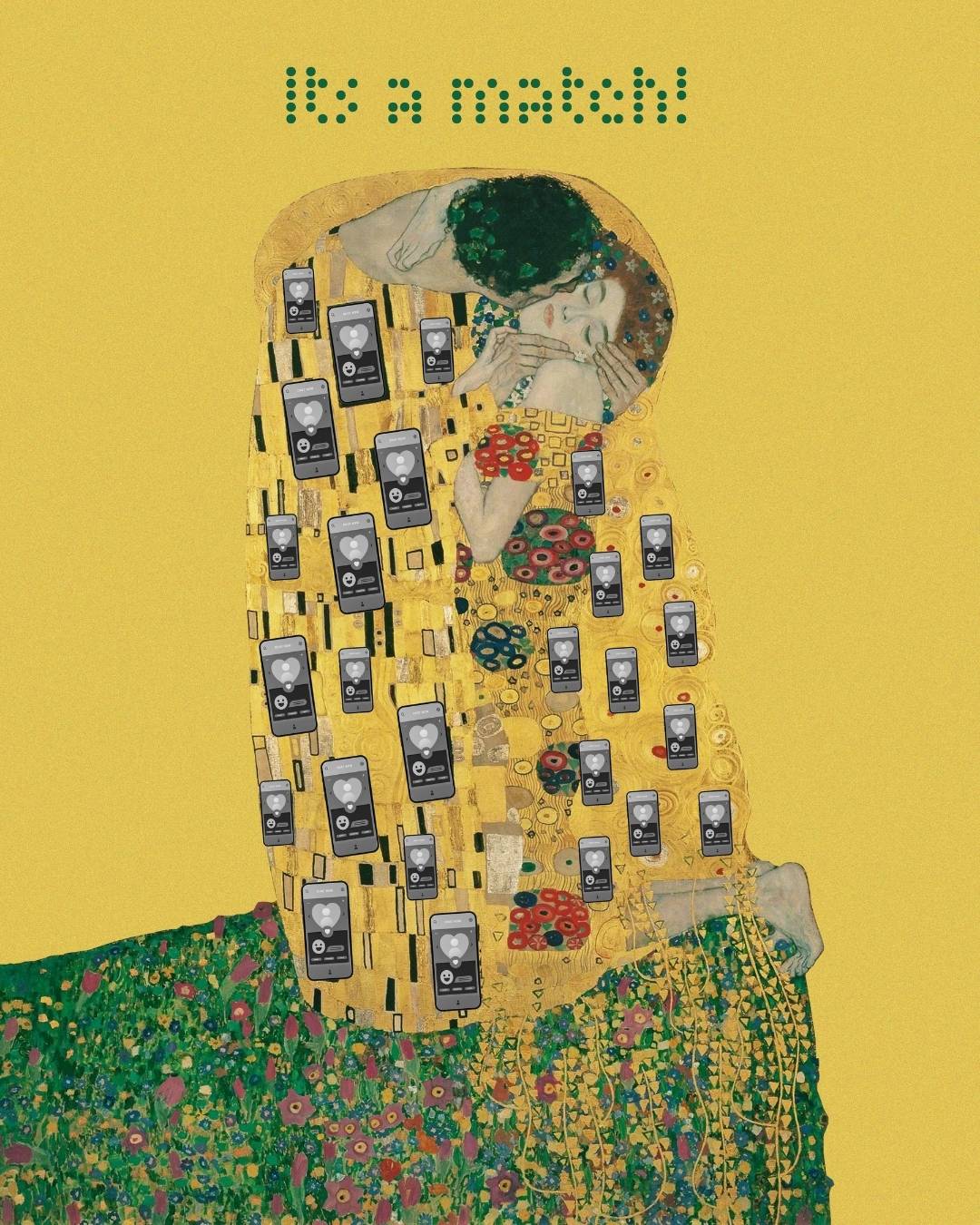
“The early Internet was magical,” Kanika says. We are sitting at a cafe in Mysuru, Karnataka, where she moved to over a decade ago for work. Originally from a neighbouring state, Kanika has found a home in the small town that she has witnessed turn into a “city”, with its growing population, IT companies, malls, and steeply rising land value and expanding real estate. “You could be just a username back then. You could be totally anonymous, which is not possible now. It kept on improving till 2013-14… until social media really took off. And then on Facebook you could see everything about the person you met in a Zorro comics community,” she says, rolling her eyes.
What she says is at odds with what I have been hearing in my fieldwork for my doctoral study on matchmaking in Mysuru – that people would much rather know everything about someone they meet online. Kanika, however, prefers the anonymity of the old internet. She is 43 years old and has seen a few shifts in the way people relate to one another on the internet. During the COVID 19 pandemic, she installed a dating app because her friends said it was a good way to find a companion. It was Hinge that she installed and still uses sporadically. Kanika has also had a profile on a matrimonial app for a few years in her early 30s. It was something she managed herself unlike a lot of people on such apps whose parents manage the account. Kanika soon found that she was assumed to be everything other than respectable if she chose the ‘managed by self’ option, and if she did not reveal her caste or say which ones she preferred for matches. “I don’t even want to say what kind of terrible messages I got. They think this one is open for anything. So, I changed it to ‘managed by mother’ and anyway, my parents were handling it too. They even filled up the caste columns,” she recalls.
The details in marriage brokerage platforms are familiar to many: height, complexion bracket, sub-caste or division, sub-group, monastery (mutha in Karnataka), family deity, time of birth (to check how aligned the birth charts are). All the details with which we are expected to relate with people and imagine a marriage. Many of my interlocutors in Mysuru, including Kanika, laugh at how these details can be parameters at all. But unlike Kanika, others quite like knowing different aspects of a profile they see online: the beliefs of the persons behind the dating profiles (from substance use to child rearing), what kind of media they consume, or, as has been reported widely lately: who do they vote for? Much has been written about how political beliefs drive swipes on dating apps. X and sub-reddits are rife with conversations on how religion and caste determine the possibility of a second date. These conversations are interesting because they seem to assume that caste-religion is anachronistic to dating apps. Or to dating. Or to apps.
Caste, on the other hand, has been shown to reconfigure itself to fit modern contexts, and continue to determine opportunities and resources in many aspects of life. In fact, the rise of the Hindu Right and its resolutely brahmanical ways, has meant a more unapologetic display of religious fundamentalism; of prejudice against the religious-other, the Muslim; of brazen upper caste pride, all in online spaces too.
Meanwhile, anti-caste ideas, in the last decade or so, have permeated analog and digital spaces of different kinds. So also, the minority assertions that were heightened during the protests against CAA in 2019-20 or the SIR more recently. So, the onslaught of pride and prejudice is rightly met with resistance. So, perhaps this is why it becomes important to proclaim publicly one’s (and know the other’s) ideologies and beliefs, and in a sense, these apps are public.
It is at this moment in time that many of my younger interlocutors, in their 20s, have taken to matchmaking apps. What then is happening to these identifying elements, and identities? And when most information is shared visually in text or image form, what happens to the way identities are discerned or sensed? When other senses are not put to work – when we are not able to listen to one’s English fluency (or style of regional language), smell what the neighbours are cooking, taste what a colleague brought in her lunchbox, what happens during online encounters? These questions form the basis of my research, a few reflections on which I share in this essay.
Identities optimised
Even though, for Kanika, the loss of anonymity is personally annoying, for 25-year-old Ila, it serves an important purpose. Once when out at a restaurant with a young man from Bangalore who she had been texting for a few weeks, the man made what he thought was an innocent comment: “I feel scared here ‘cause there are so many Muslims”. Although she resolved it at the moment by pointing out: “They’re a minority. Have you thought about how they feel everywhere?” she tells me: “His comment is just stuck in my mind now. What if the marriage broker matches me with a boy like him based on caste, stars and job filters that he thinks are best.” The filters she talks about are based on standardised identity labels. They are, as her matchmaker (another one of my interlocutors) says, standardised (through caste names made universal for the entire state, through spellings) and “optimised” to find the ideal match. The matchmaker is always sure to remind us that these labels and filters are based on his technical and data analytics education. Ila and other young people, however, find it insufficient to commit to a second or even first meeting.
Ila, who I met at a Scheduled Caste Matrimony Convention along with her parents, works in Bengaluru while her parents continue to live in Mysuru. Even though she is not entirely sure about marriage yet, she has been cooperating with her parents on the marriage broker route and meeting families over the weekends in Mysuru. After a few meetings with different families, however, her patience seems to be waning and not because she is unable to find a perfect match, but because expressing herself in front of whole families can be tricky, especially in the endogamous setup from a small city where, by definition, there are no strangers; where families know of one another.
The clearly prejudiced remark by the Bangalore boy is not the only one that is sticky in Ila’s stories. Another time, out with a man from Uttar Pradesh – let us call him Amit, Ila was asked if she eats meat. There was no other exchange of caste related information, though there were several about class and English language fluency. When she returned the question to him, the man who was much more comfortable in Hindi than in English, was meticulous enough to say: “I’m vegetarian at home but non-veg outside. I’m Brahmin, I mean.”
It is clear here that caste identity (if not ideologies, beliefs and habits) was illegible for the most part, and certainly where a matchmaker was not involved in making it more legible through optimal filters. Surnames or class markers did not allow decoding caste identity. Amit resorted to discerning Ila’s caste through particular questions, and let on his own verbally. I tell Ila an unoriginal joke: “How will you know if a person is Brahmin?” How, she asks. “They’ll tell you,” I say, and we laugh.
Exposed to big city culture
Ila and I have sat in different cafes in Bengaluru for our interviews and she, like my other interlocutors, believes it is impossible to find a place in Mysuru that is private enough for this kind of conversation. “Everyone knows everyone there,” they all tell me routinely and double, triple check how anonymity works in my research. In Bengaluru, however, Ila is calm. She does not have curfews and says she can wear the kinds of clothes she actually wants to wear.
Even though Ila has a candid relationship with her parents, she prefers not to debate some things with them. “I don’t get it but they have to match stars” she says about birth charts and I have to clarify with her if she means it ironically. “I actually have no idea about it, what else is it?” she asks. The sentiment towards parents is similar to what I hear from Raghav, a 27 year old businessman in Mysuru. But unlike Ila, Raghav understands what the matching of stars entails. He is a regular at his Madhva Brahmin family’s get-togethers and rituals, and has an interest in their mutha. At the same time, he thinks his parents let him experience a world that they, oddly, expect him to break from if and when they ask him to settle for arranged marriage based on astrology. “But they don’t have the same exposure that I do, I don’t blame them,” he explains. “I went to Bangalore, came back… I was a different person there. I’ve been raised with all kinds of comfort and media. But here, I can’t be that… not even online, not even on dating apps. I can’t let people see me on it.”
Even with all these restrictions, Raghav prefers meeting people in person, to be able to pick up on cues he cannot pick up just from his phone screen. To him, and to others in my study, it matters what the person smells like, what they order at a restaurant, what facial expressions they make looking at the bill and so on. Perhaps waiting to see what one orders is more tasteful than asking through words what one’s dietary preferences are. “But I have to be careful to take them some place safe… I mean where I won’t run into someone I know,” he reminds me, since privacy is still important for him.
The idea that dating is taboo in Mysuru is too recurring for me to ignore as background information. I press on about Raghav’s internet and media history, and if anything has changed in the town that he grew up in. Though Raghav’s family had access to the internet as soon as dial-up broadband was available at the household level in the country, it was uncommon then even in affluent homes in Mysuru. Bengaluru became a hub of IT companies and call centers in the ‘90s and soon a reputation followed of an “IT culture” (associated with cyber cafes, diversity in workplaces, modern attire, leisure). In the 2010s, as multiple service providers offered internet connection as well as mobile phones at competing low rates, data packs slowly reached most cities and towns. Mysuru is seen by many of my interlocutors as always playing catch up with the kind of material transformations of these decades. Raghav elaborates: “The cafe we’re sitting in right now used to be Cafe Coffee Day–the first one in Mysore. All these things were so late here… McDonald’s, Subway.”
In bigger cities, the early emergence of such commercial establishments, so also the later developments of Oyo rooms and the like that accepted local ID cards, perhaps enabled a different “culture”, one more conducive to the market of dating. This is not to say dating app companies do not care about Tier 2 cities like Mysuru which give the impression of lagging behind in this arena. But dating app usage is still mediated by class a lot more here than in big cities which offer a wider range of affordable supporting environments. Consequently, Mysuru has a lot less users.
Passing through
With fewer users in Mysuru itself, most people keep their preferred distance for matches to a radius of more than 160 kilometers to cover Bengaluru and nearby cities. They are still disappointed with the results, but for quite the opposite reason. “It’s like everyone is on these apps now” is a refrain I hear often, alongside “Any random person is on Tinder,” “Hinge is much better… the quality of people is better.” For Raghav, especially, being seen in non-exclusive spaces – whether a cheap local bar, or an app that everyone is on – would mean being perceived as too unsophisticated for his family and business reputation.
This idea of a disappointing ‘everyone’ made its way into my conversations with the founder and a product manager of a locally founded dating app. They told me how the competing app Hinge had a beautifully organic, word-of-mouth marketing in India which worked “almost like invite-only.” This is what is attributed to the better quality of profiles when compared to other apps like Tinder. “When Hinge got all this insane amount of money for marketing, the quality fell,” they said, suggesting that it was just like any other non-exclusive app now.
Exclusivity is similarly valued in marriage brokerage platforms too. Even when it is practically impossible to have fewer users and still make it profitable, matchmakers reminisce about a time when their mothers used hard copies of biodatas and could “just sense” a good match. “For each person, my mother would suggest only 2-3 profiles. And somehow it would work out in just those options. There were no computers back then!” one of them told me. With about 11,000 profiles on her matrimonial app, all belonging to three or four Brahmin sub-groups from Karnataka alone, the matchmaker feels there is a crisis in the world of marriage-making. When she talks about her mother’s time, there is a sense of loss of the near and immediate, or what could still be regulated manually.
These conversations remind me of what writer and scholar Sara Ahmed says about ‘passing’ in her work on affective economies, or the way in which emotions circulate between bodies. Ahmed is writing in the context of race and anti-immigration discourse (in the US, Britain and Australia, particularly), and is invested in showing how, in a certain discourse of the “bogus” asylum seeker, it is never possible to accurately tell the difference between a bogus and a genuine asylum seeker. This possibility of not identifying the difference is important to the discourse. It means that the bogus figure might “pass into the community” appearing as a particular kind of subject. It allows the nation to keep looking for signs of difference, justifying “violent forms of intrusion into the bodies of others”. Since the bogus figure is detached from actual bodies (or referents) and made to stick to other kinds of bodies through repeated stories (like the figure of a thief or terrorist, an ethnic group) they are read as a potential cause of injury “in advance of their arrival” (within the borders of the nation).
On the internet, or specifically, on matchmaking apps, the creators of the apps (and indeed data harvesting entities of all kinds) may be happy with the conflation of identities and identifying data points. And so, if caste or other identifying markers refuse to be legible, it may not be a concern for governance, which as cultural studies scholar Nishant Shah argues, is not interested in the affective states of individuals, or the narrative forms of identity and expression. But the information in the data points may be insufficient for other individuals to categorise and to fix people. This is especially stark when confronted with the illegibility of identity – since difference is not swiftly discerned or sensed by vision alone.
For Raghav, or the boy Brahmin boy Amit who asked Ila if she ate meat, the match-seeking experience online is perhaps filled with the anxiety of encountering the other; a profile passing as someone within the community, passing through it. Matching then is always with caution since it is difficult to sense difference on a non-exclusive app, or without the assistance of a matchmaker’s filtering. The loss of anonymity in the latest iteration of the internet then is, for them, something to be celebrated. In a sense, even if the internet allows different kinds of encounters, matchmaking seems to be the space where caste-religion is most standardised in order to be made legible.
References
- [1] One could read Satish Deshpande’s chapter ‘Caste Inequalities in India Today’ in his book Contemporary India: A Sociological View; Ramesh Bairy’s Being Brahmin, Being Modern Exploring the Lives of Caste Today; Balmurli Natrajan’s The Culturalization of Caste in India; C. J. Fuller and Haripriya Narasimhan’s Tamil Brahmans: The Making of a Middle-Class Caste; Ajanta Subramanian’s The Caste of Merit; P Thirumal’s Dominant Bodies and Their Ethical Performances; David’s Mosse’s The Modernity of Caste and the Market Economy
- [2] Read Sahana Udupa’s Digital Hate: The Global Conjuncture of Extreme Speech
- [3] Nitya Vasudevan and Chinmayi Ramaiah, in their paper Bangalore: Migration, Boundary-drawing and the Worlds of Work based on their larger research on the ‘digital everyday’ of young women in Bengaluru, trace the changes that the city saw in digital infrastructure and how it shaped subjectivities.
- [4] Read Nishant Shah’s Identity and Identification: The Individual in The Time of Networked Governance where he discusses the Aadhaar project to argue that the project creates a techno-social framework where the machine function of identification is attached to the human expression of identity. In this logic, “the identity of the person being enrolled and registered is almost insignificant and has value only in how it would now always identify the individual through the credentials or information provided.”