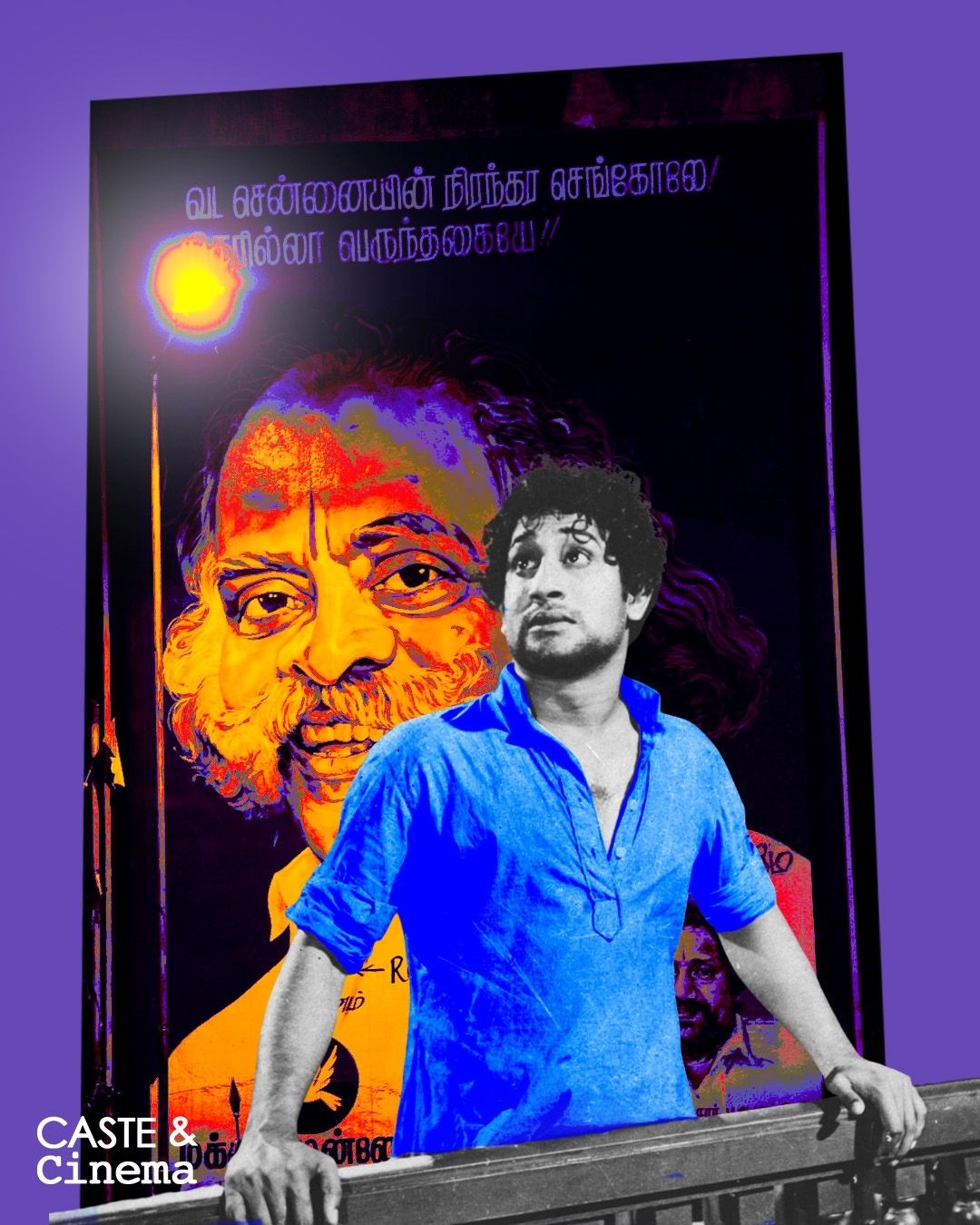
Whose Truth? The Anti-caste trajectory in Tamil Cinema
By Aravind B
Published on 05/01/2026
Anti-caste political discourse has been a rising phenomenon in Tamil cinema since the beginning of the twenty-first century. One of the areas where anti-caste political discourse can be observed is in the Tamil films released since the 2010s. This essay reviews selected films created by the Dalit and Savarna film makers’ use of film language to achieve anti-caste political discourse in the context of how the Dalit protagonists were shown in the Tamil films. The essay will addresses the question of how the anti-caste political discourse of selected Tamil films by the Dalit and Savarna film makers is related to the anti-caste ideology developed by Dalit intellectuals like Iyothee Thass, Dr B R Ambedkar, and Periyar E V Ramasamy. These films show how the anti-caste political discourse was used by the Dalit and Savarna film makers to show their perspective to the larger society based on their ‘lived experience’.
Politics in Tamil cinema during initial years
Post-independent India in Tamil cinema, caste issues in Tamil society were critiqued. But the way these early Tamil cinema questioned the caste issues were based on the philosophical critiques of the caste system. For instance, Parasakthi (1952) critiqued the religious order which forms the basic structure for the caste system. The impact of the Dravidian movement on Tamil cinema during the 1950s to 1960s tackled the caste system in a subtle manner, which never questioned the social order based on caste through Ambedkar, and Periyar’s lens. The 1970s and 1980s Tamil cinema explicitly showcased the issues of caste in rural Tamil Nadu. But 1970s and 1980s Tamil cinema showcased the caste issues through the perspective of the caste Hindu, especially the Other Backward Caste (OBC). The filmmaker of this decade is Bharathiraja, who questioned the caste issues and the social order mainly between the OBCs and the upper caste (including Brahmins). But the perspective and the role of Dalits who form the major part of the Tamil rural society was completely absent in those Tamil films released in the 1970s and 1980s.But the 1990s Tamil cinema brought back the regressive Tamil society social order in Tamil cinema. With the Mandalisation of Politics – Rise of OBCs role in Indian electoral politics, Tamil cinema reflected the caste pride of the OBCs of Tamil Nadu. The intermediate OBCs caste showcased their caste pride by supporting the hierarchical caste system and advocated for the need for stable Tamil society and uphold justice. The films developed from 1970s till 1990s in Tamil cinema were created and developed by the filmmakers from the OBCs and the upper caste.
Tamil cinema in Twenty-first century
At the turn of the twenty-first century, Tamil cinema was impacted by the LPG (Liberalisation, Privatisation, and Globalisation) reform in the Indian economy in the early 1990s. The later period of the twentieth century and period of twenty-first century Tamil cinema first explicitly showcased the Dalit characters as protagonists in the films such as Villadhi Villain (1995) and Bharathi Kannamma (1997). The writer-directors of these two films are Savarnas – Sathyaraj (well known Periyarist in Tamil film circle) and Cheran. But the Dalit characters in these films do not explicitly showcase the real lived reality of the Dalits. In Cheran’s Bharathi Kannamma (1997), both the protagonist and the antagonist are Dalits, here the protagonist (played by Ra.Parthiban) supports his upper caste landlord, while the antagonist is a rebel who fights for the rights and dignity for the Dalit labourers working under the upper caste landlord. The Savarna filmmaker like Cheran’s perspective of the Dalit should be that they should support the social order and should know their places. Further, one should note here the Dalit protagonist will die in the Bharathi Kannamma (1997) to safeguard the dignity of his upper caste landlord.
2000s Tamil cinema
But the early period of twenty-first century Tamil cinema, saw the Dalit characters were written in assertive tone by the Savarna film directors. One particular example, we could observe in the film Thendral (2004) directed by Thangar Bachan, a Tamil Nationalist, writer, and OBC from northern districts of Tamil Nadu. In his film Thendral (2004), Thangar Bachan showed a minor Dalit character who was wrongly convicted of murder and sentenced to death. This minor Dalit character through a short montage song explained about his livelihood including his personal character. Here the film valourises the Dalit character’s hereditary job (he plays Parai, a drum instrument) as an Tamil identity. But from the lens of anti-caste intellectuals like Iyothee Thass, Ambedkar, and Periyar, this caste based occupation should be abolished. But the filmmaker who is a Savarna subscribes to his view of upholding the hegemony of the caste system and romanticising the hereditary job. Likewise, Thangar Bachan other films also showcase the lives of the poor livelihoods of OBCs (the community which he belongs) in his subsequent films, but the Dalit characters were hidden or their livelihood is masked and shown as livelihood of OBCs of northern districts of Tamil Nadu.In the 2000s decade, a prominent Savarna filmmaker S P Jagannathan, influenced by the communist movement started to address the issue of caste in Tamil cinema. His films such as E (2006) and Peraanmai (2009) plots were sieved with the communist ideology, but it showcased the Dalit characters– explicitly in Peraanmai and implicitly in E (2006). The Dalit protagonist (plays a NCC officer) of Peraanmai was shown in subtle form and highlighted the caste discrimination faced by the Dalit character in the modern socio-political environment. But the assertiveness of the Dalit protagonist of Peraanmai was shown only through action elements through serving his country from the foreign terrorist elements. The Peraanmai’s Dalit protagonist failed to show his anti-caste assertiveness while he was subjected to caste discrimination from higher officials and his students. This showed the Savarna filmmakers like S P Jagannathan, though they stood with the anti-caste progressive politics, their showcase of Dalit characters was shallow.
Since 2010…
Later in the 2000s an important filmmaker Vetrimaaran entered the Tamil cinema, through the film Polladhavan (2007). Vetrimaaran, a Savarna filmmaker due to the influence of his family (his mother is a literary writer), has a strong affinity with the anti-caste progressive politics. In his first film Polladhavan, the protagonist’s socio-economic location, the audience could understand he is from a marginalised location. But, as the usual template in Tamil cinema, the protagonist's identity is kept ambiguous – he could be a Dalit or Savarna, based on the socio-political location the protagonist of Polladhavan hails.The early 2000s saw the rise of story focussed around regions of Chennai, especially Northern part of Chennai as dungeons of illegal activities like prostitution, drugs and rowdyism. But the socio-political census shows the northern part of Chennai is dominated by Dalits. So most of the Savarna filmmakers knowingly or unknowingly characterise the stereotypical villains in their films hails from North Chennai. The Savarna filmmakers films like Dhiil (2001), Thamizhan (2002), Thirumalai (2003), Dhool (2003), Ghilli (2004), Thirupaachi (2005), Sivakasi (2005), Anniyan (2005), Pokkiri (2007), Kanthaswamy (2009), Theri (2016), Dhuruvangal Pathinaaru (2016), Sarkar (2018), Sketch (2018), and many more films. In the above films they showcase the villains doing their dirty works hails from Northern Chennai. Vetrimaaran’s two films Polladhavan and Vada Chennai (2018) were set against these backgrounds. As explained earlier, even in Vada Chennai, the protagonist’s identity is kept ambiguous – he could be dalit or Savarna. But in Vetrimaaran’s Visaranai (2016) the dalits character’s identity was explicitly shown.In Visaranai (2016), the Dalit characters were shown as the illiterate labourers, who is the film’s protagonist (played by Dinesh) and another Dalit character is an upright sub-inspector of police (played by Samuthrakaani) who plays a pivotal role. In the film the Dalit characters do not have an independent choice of their own, they were subjected to the caste discrimination by the state apparatus. Since the origin of Tamil cinema, if the protagonist or pivotal character is a Dalit he tends to die at the end of the film. Even in this film Visaranai (2016), both Dalit characters were killed by the state apparatus. From Madurai Veeran (1956 film played by MGR) till Visaranai (2016). Similarly films by Suseenthiran like Vennila Kabadi Kuzhu (2009) and Maaveeran Kittu (2016) have explicit Dalit protagonists. But same as the Visaranai (2016), the protagonist Dalit characters die at the end in these two films. The portrayal of the Dalits by Savarna filmmakers who always have this tendency to kill them at the end is a million dollar question that still needs an answer.In Vetrimaaran’s Viduthalai part 1 & 2 (2023, 2024) showcased two spectrum of Dalit characters– a power hunger police sub-inspector Amudan (played by Director Tamizh) and upright honest police sub-inspector Velmurugan (played by Sardar Sathya). Vetrimaaran on the Viduthalai part 2 (2024) climax makes the dalit sub-inspector Amudan as the one who shot the main character Perumal Vaathiar (played by Vijay Sethupathi), a revolutionary who fights for social justice through armed rebellion. Thus showcasing to the audience that Dalit character in order to achieve their personal goals will lose morality. This unintentional or intentional portrayal of this Dalit character will create a stereotype of Dalit officers in reality to the common audience/society. This insensitive portrayal can be observed in major of Vetrimaaran’s Dalit characters in his filmography. Likewise, the recent film Nandhan (2024), by Savarna filmmaker Era Sarvanan portrays the protagonist Dalits as illiterate, slave to their landlords and deprive them of basic human dignity and showcase them in a ‘Dalit victimised’ phenomenon. Thus, these portrayals of Dalits in Savarna filmmakers as henchmen, illiterate, drug and alcoholic addicts, power hunger, slaves to their master, created a strong stereotypical prejudiced opinion about Dalits to Savarna society.
Rise of Dalit filmmakers in Tamil cinema
Since the 1990s the Dalit movements in Tamil Nadu created and questioned the dominant narrative in the Tamil cultural sphere. Thus the portrayal of Dalit characters in Tamil cinema explicitly rose since the twenty-first century. But the dawn of the Dalit movement’s impact in Tamil cinema is post the introduction of Pa Ranjith in Tamil cinema. Pa Ranjith’s every film from Attakathi (2012), Madras (2014), Kabali (2016), Kaala (2018), Sarpatta Parambarai (2021), Natchathiram Nagargiradhu, Thangalaan (2024) has a Dalit protagonist. The stark difference of the Dalit character in Pa Ranjith’s film was that he showed the assertive character of the Dalit, rather than portrayal of victimisation of the Dalits shown by the Savarna filmmaker discussed above. Due to the impact of Pa Ranjith’s film making, later Vetrimaaran films like Asuran (2019) show the assertive nature of the Dalit protagonist.Dalit filmmakers like Pa Ranjith’s Dalit protagonist character has more authenticity than the ones portrayed by the Savarna film makers. For instance, Attakathi (2012) and Madras (2014) countered the stereotypical portrayal of North Chennai people by the Savarna filmmakers. These two films showcased the Dalit people their livelihood, their dreams, their aspiration, Dalit assertive politics, which the Savarna filmmakers failed to address or choose not to address. Likewise, Pa Ranjith’s protegee S Jayakumar’s Blue Star (2024) also breaks the stereotype of North Chennai and shows the real livelihoods of the Dalits in northern districts of Tamil Nadu. The common thread in every Pa Ranjith filmography was that it never deviated from Ambedkar, and Periyar’s vision of annihilation of caste and assertion of the Dalit identity. Tamil cinema history first showcased an ordinary protagonist (not macho-hypermasuline) of a Dalit youth in Pa Ranjith’s first film Attakathi (2012). Similarly, Dalit politics – self-respect and human dignity for Dalits shaped by the Dalit movement is subsequently shown in Madras (2014), Kabali (2016) and Kaala (2018). Post Independent in Indian cinema, how Parasakthi (1952) was considered as the benchmark film for Dravidian movement, likewise the Madras (2014) could be considered as the benchmark film for Dalit movement.With Pa Ranjith impact in Tamil cinema and his taking up of the Dalit narratives, which subsequently became mainstream successful cinema in Tamil film industries. This phenomenon led to a flux of anti-caste filmmakers from both Dalit and Savarna background entering the Tamil film industry. One prominent Dalit filmmaker among them is Mari Selvaraj. Mari Selvaraj as a writer in his autobiographical work Marakavee Ninaikerane, showcased his talent as an exemplary Dalit writer of modern age. His films such as Pariyerum Perumal (2018), Karnan (2021), Vaazhai (2024), and Bison (2025) showed the lives of the Dalits in the Tirunelveli-Tuticorin district of southern Tamil Nadu. Tamil films made from the 1970s to 2000s created a perspective among the Tamil audience that the area south of Madurai belonged mainly to one specific Other Backward Class (OBC) and showed their lifestyle– Bharthiraja films belong to this genre. However, Mari Selvaraj films countered this misconception by showing the southern regions also have a Dalit culture, where people lived in dignity. Pariyerum Perumal, Karnan, Vaazhai, and Bison film shows the Dalit communities in southern districts of Tamil Nadu fight for dignity and self-respect against the caste Hindus and the state apparatus in these regions.On comparing the Dalit characters portrayed by the Savarna filmmakers as discussed earlier and Dalit characters portrayed by the dalit filmmakers shows the difference as follows. First, Dalits portrayal by Savarna filmmakers are superficial, lacks depth, clarity and just to serve the imagination of the caste Hindu societies, whereas Dalit character portrayed by the Dalit filmmakers are rooted with the ideals to fight for their rights and basic human dignity, showcase their own independent culture, not subservient to dominant hindu culture. Second, Dalits are portrayed and stereotyped as selfish, naive, illiterate, criminals, and slave mentality by Savarna filmmakers, whereas Dalit filmmakers show the Dalit characters as dignified human being, the socio-political reasons behind the use of violence to attain the self-respect and dignity from the caste Hindu. Though there are many ally directors to anti-caste philosophy like Vetrimaaran, S P Jaganathan, and Susintheeran, who are brought up in the ideals of Ambedkar, and Periyar. They failed to capture the nuances of the lifestyle of Dalits. This is because the conscious Dalit filmmakers like Pa Ranjith, Mari Selvaraj, S Jayakumar, Athiyan Athirai and other’s ‘lived experience’ from the environment where they grow is reflected in their films. But the Savarna filmmakers like Tamizharasan Pachamuthu’s Lubber Pandhu (2024) and Pari Elavazhagan’s Jama (2024) showcased the Dalit livelihood in a dignified manner. Future Savarna filmmakers should note Tamizharasan Pachamuthu's Lubber Pandhu. The film skillfully uses sports to call for a united "bhaujan" community by offering a self-critique of the OBC community and also the film never compromised the dignity of the Dalit community.