
Tac Logo
Caste as the limit of Cinema

Caste as the limit of Cinema

By Shripad Sinnakaar

Editorial
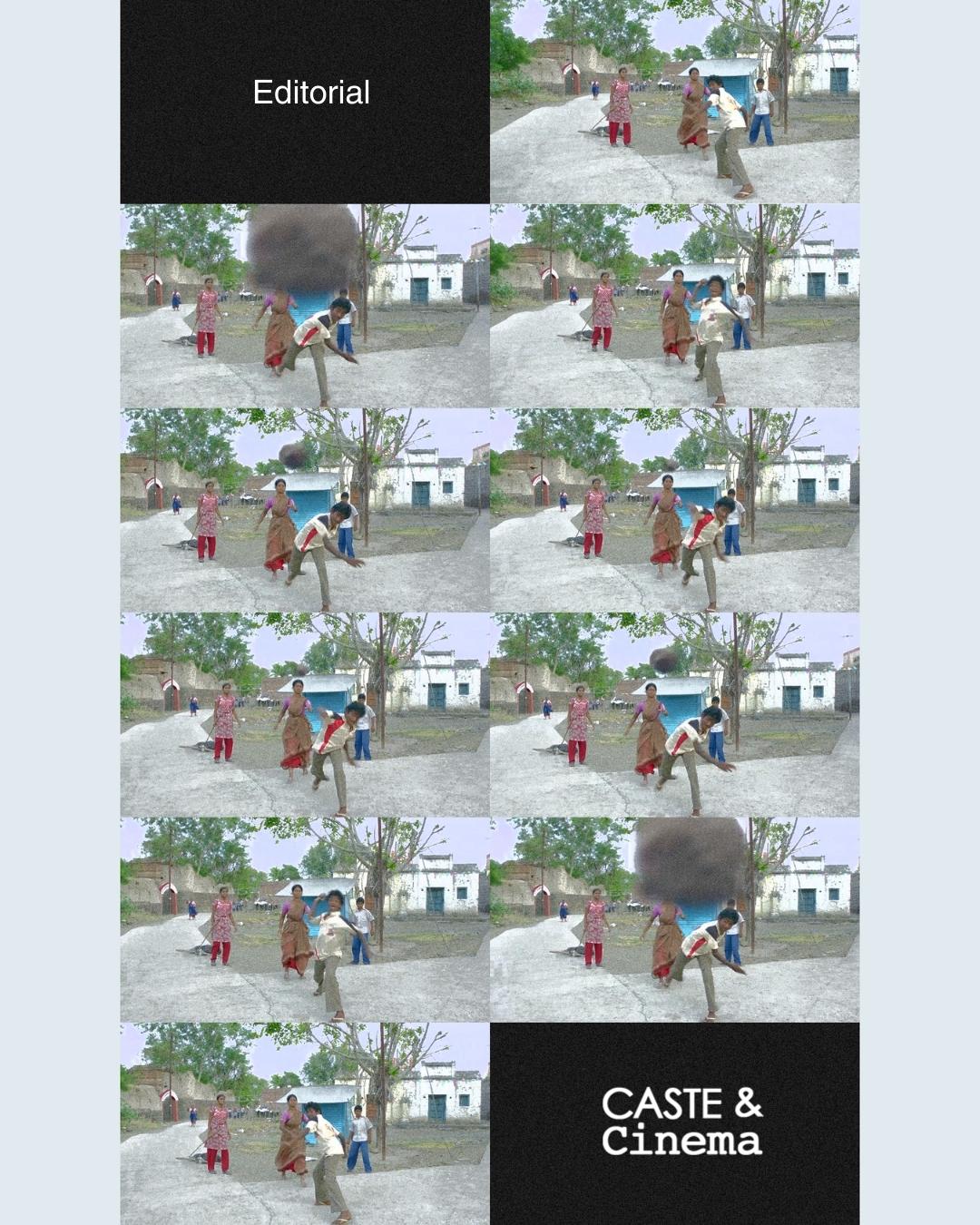
In the climax of Nagraj Manjule’s film Fandry (2013), the protagonist, Jabya – the black sparrow having escaped him that represented a transcendence of caste – pelts a stone at an upper-caste man who had relentlessly humiliated him for his caste occupation. The act of stone-pelting has been interpreted in varied ways. The most common among them had been that he broke the fourth wall, hurling the stone at the audience who had been voyeurs to his humiliation. But such reading of the ending would only confer Jabya a heroic dimension in his rebellion, if we assume the audience to be a Savarna. But such a scene, when read through a schema of caste atrocities that often follow a simple act of defense, is suffused with dread. The film’s ending did not seem like a breaking of the fourth wall, rather it felt like a veiling of the atrocity that would have followed. Not every viewer would read the stone as being directed at herself, but instead perceive the act itself as deficient for what it conceals: the violence that generally precedes such acts of defiance, revealing the limitations of cinema as a medium.
Even though it is unclear what characterizes a film as anti-caste, this ambivalence is useful for the questions one can pose. Is it the emancipatory ambition that structures the theme, subtext and plot of the story? Or is it the passive representation of a social life of caste?
"How much can the elasticity of a plot reify hope through filmmaking when the ending of the film appears fixed?"
The subtext of the films like Vada Chennai (2018), Madras (2014) Lalbaug Parel (2010) and Kaala (2018) demonstrated their respective directors’ commitment to the right to land for the people – the rowdies of the slums, the working class of mill, and so on. How much can the elasticity of a plot reify hope through filmmaking when the ending of the film appears fixed – the honour killings in Nagraj’s Sairat (2016), Vetrimaaran’s Oor Iravu (2020), Saailu Kampati’s Raju Weds Rambai (2025), and Dibakar Banerjee’s Bees-gara (2020)? If cinemas on caste have its fidelity to the reality of anti-caste organising – say for instance the reclaiming of dignity by Dalits – the way the plot of the film progresses has political use. How do we read the storytelling in Mari Selvaraj’s films Maamannan (2023) and Bison Kaalamaadan (2025) in context to DMK politics? What do we make out of movies like Kantara (2025) whose story incorporates hinduisation of Bhoota Kola – a ritual rooted in Dalit and Tribal culture, performed majorly by Pambada, Parava, Koopalam, Paanara, Koragas, or Nalike castes – while presenting it in an extravagant, high-budget cinematic form? Because saffronisation enables many concessions from the Censor board, distribution of film. How do anti-caste films survive within this populist ecosystem? After all, Neeraj Ghyawan’s Homebound (2025) – inspired by real event – came with a disclaimer clarifying the inviolability of the BJP Government in Covid-19 pandemic, claiming that it bore no responsibility for the death of a Dalit migrant character – if he was purely fictional, then so was his caste oppression?
This issue, through critical essays and reviews, foregrounds the complexity of representing caste in Indian cinema. Arvind B situates Dalit filmmakers within the historical trajectory of Tamil cinema from the post-Independence era. Harsha Sai traces how dominant-caste communities such as the Kammas continue to whitewash caste in Telugu cinema. Lokesh Bag dissects Savarna hypocrisies in the reception of anti-caste films. Apeksha Singegol and Ektha Garthi Hiriyur critique the lack of narrative solidity afforded to Dalit women characters, examining how loosely and instrumentally their arcs are written. Pritika M., in her essay, writes about the fairness with which animals are portrayed in Mari Selvaraj’s films. Dev Baraya, in his essay, traces various cinematic movements, comparing Fernando Solanas’s Third Cinema with anti-caste cinema. Among the reviews, Anagha Rajesh revisits the Malayalam film Vanaprastham (1990), starring Suhasini Maniratnam and Mohanlal, reading it as a meditation on the permissible boundaries of desire in an inter-caste relationship. David Sathuluri, in his critical review of RRR (2022), urges us to globalise caste as an oppressive system akin to race. Kaushiki Ishwar reviews Shyam Benegal’s Ankur (1974) as inaugurating a cinematic realism that sought to represent rural India with honesty and moral complexity. Vimala Reddypogu, in her essay Fields of Domination, reviews Dijo Jose Antony’s Jana Gana Mana (2022) through Pierre Bourdieu’s concepts of field and symbolic power. Sangeetha R critiques the 2024 film Meiyazhagan for popularising narratives of benevolent OBC landlords and generous patriarchs, while Priyanshi Madhukar, in her review of the series Made in Heaven (Season 2, Episode 5), decodes the cinematic aesthetics of the Dalit face.

Shripad Sinnakaar

Shripad Sinnakaar is a poet from Bombay.

Enjoyed this article?

Share it with your friends and colleagues!