
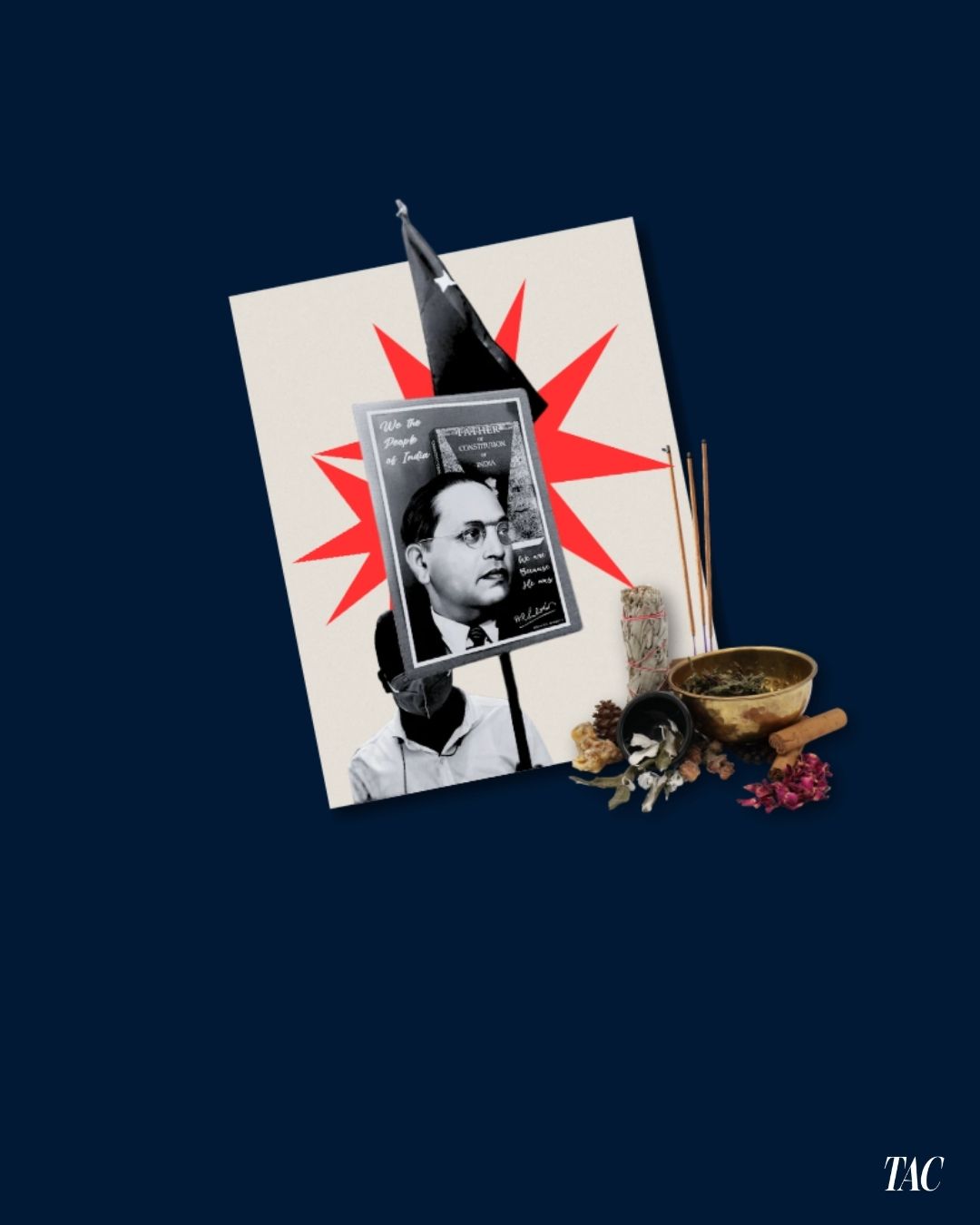
Jawaharlal Nehru University (JNU) has long been a site of radical student politics, where slogans such as Brahmanvad Murdabad are frequently raised in opposition to Brahminical dominance and caste oppression. These slogans, rooted in Ambedkarite thought, seek to challenge the hierarchical structures that perpetuate social discrimination. However, a fundamental contradiction emerges when individuals who proclaim adherence to Ambedkarite ideals continue to invite Brahmin priests for marriage ceremonies and religious rituals. This practice inadvertently reinforces the very structures they claim to oppose. The paradox is not merely a matter of personal belief but signals a deeper ideological and practical inconsistency within caste resistance movements.
The Layers of Brahminical Influence
To understand this contradiction, it is crucial to distinguish between Priest Brahmins, Secular Brahmins, and Ambedkarite ideology.
1. Priest Brahmins are those who uphold the caste system through religious rituals and hierarchical traditions. They play an instrumental role in maintaining the oppressive social order that Ambedkarites seek to dismantle.
2. Secular Brahmins, while distancing themselves from religious orthodoxy, continue to enjoy caste-based privilege. Many engage in progressive politics without actively challenging the deep-rooted structures of caste in social and institutional spaces.
3. Ambedkarites reject both ritual Brahmanism and caste-based social dominance, advocating for the annihilation of caste, as envisioned by Dr. B.R. Ambedkar (Ambedkar, 1936).
These distinctions are essential in understanding how caste operates not only in religious spaces but also in social, cultural, and political dimensions.
The Contradiction: Ambedkarites and Hindu Rituals
Ambedkar’s philosophy was rooted in the total rejection of Brahminical Hinduism, which he viewed as inherently oppressive and hierarchical. In his seminal work, Annihilation of Caste (1936), Ambedkar explicitly calls for a complete break from Hindu social structures and religious customs. He argued that caste is deeply embedded in Hindu religious traditions and that true liberation requires rejecting these practices entirely. However, many self-proclaimed Ambedkarites continue to partake in caste-based religious customs, including marriage ceremonies officiated by Brahmin priests and participation in Hindu festivals that reinforce caste hierarchies. This inconsistency raises a critical question: Can one claim to oppose Brahmanism while simultaneously upholding its structures through personal adherence to its customs? The answer lies in understanding the broader implications of cultural and ideological rupture.
Cultural and Social Rupture: A Necessity for True Liberation
Ambedkarite politics demands not just economic and political empowerment but also a profound cultural and social rupture from caste-based traditions. This involves:
1. Rejecting Brahmin priests and Hindu rituals: If Brahminism is the ideological backbone of caste oppression, then engaging with its religious institutions, even in a personal capacity, legitimizes its authority. Ambedkar himself rejected Hinduism and converted to Buddhism on 14 October-1956, along with thousands of his followers, as a symbolic and practical break from the caste system (Zelliot, 2001).
2. Challenging the dominance of Secular Brahmins: Even those Brahmins who do not participate in religious orthodoxy continue to benefit from caste privilege. Ambedkarite politics must extend beyond religious critique and address institutional casteism in academia, government, and social spaces.
3. Redefining cultural practices: A genuine break from Brahminism involves adopting alternative cultural and social practices that do not reinforce caste hierarchies. This means promoting Buddhist weddings, inter-caste marriages, and community-driven rituals that do not require Brahmin mediation.
The Hypocrisy of Selective Rejection
One of the key criticisms of contemporary Ambedkarite movements is their selective rejection of Brahminism. While many activists passionately oppose Brahminical dominance in political and academic spaces, they fail to reflect the same principles in their personal lives. This selective rejection weakens the movement by allowing caste-based traditions to persist under the guise of cultural identity. Ambedkar himself was clear in his rejection of Hindu customs. He argued that Hinduism, as structured, is incompatible with the principles of equality and social justice (Omvedt, 2004). Therefore, participating in Hindu rituals while advocating for caste annihilation creates a contradiction that must be addressed within Ambedkarite discourse.
Moving Towards a Cohesive Ambedkarite Praxis
For Ambedkarite ideology to remain a powerful tool for social transformation, it must evolve beyond slogans and political rhetoric. True commitment to caste annihilation requires:
1. Consistency between ideology and practice: Activists must align their personal choices with their political beliefs. This means rejecting Hindu rituals, Brahmin priests, and any cultural practice that reinforces caste hierarchies.
2. Promotion of alternative traditions: Encouraging Buddhist cultural practices, Ambedkarite wedding rituals, and community-based ceremonies that do not require Brahmin mediation.
3. Institutional reforms: Fighting for representation and policy changes that challenge the privileges enjoyed by both religious and secular Brahmins in academia, politics, and employment.
Ambedkar’s vision for caste annihilation was not limited to slogans or political protests; it was a call for a fundamental rupture from Hindu social structures. The contradiction of opposing Brahmanism while upholding its customs must be critically examined within Ambedkarite movements. True liberation requires a holistic rejection of caste, including its cultural and religious manifestations. Only through a consistent and uncompromising approach can Ambedkarite politics fulfill its revolutionary potential and dismantle the structures of caste oppression.
References
- Ambedkar, B.R. (1936). Annihilation of Caste.
- Omvedt, G. (2004). Ambedkar: Towards an Enlightened India. Penguin Books.
- Zelliot, E. (2001). Ambedkar’s World: The Making of Babasaheb and the Dalit Movement. Navayana.