
Tac Logo
From the Street to the Screen: Struggle for Visibility, Legitimacy and Spatial Justice

From the Street to the Screen: Struggle for Visibility, Legitimacy and Spatial Justice

By Abhijay Rambabu

Published on 04/14/2026

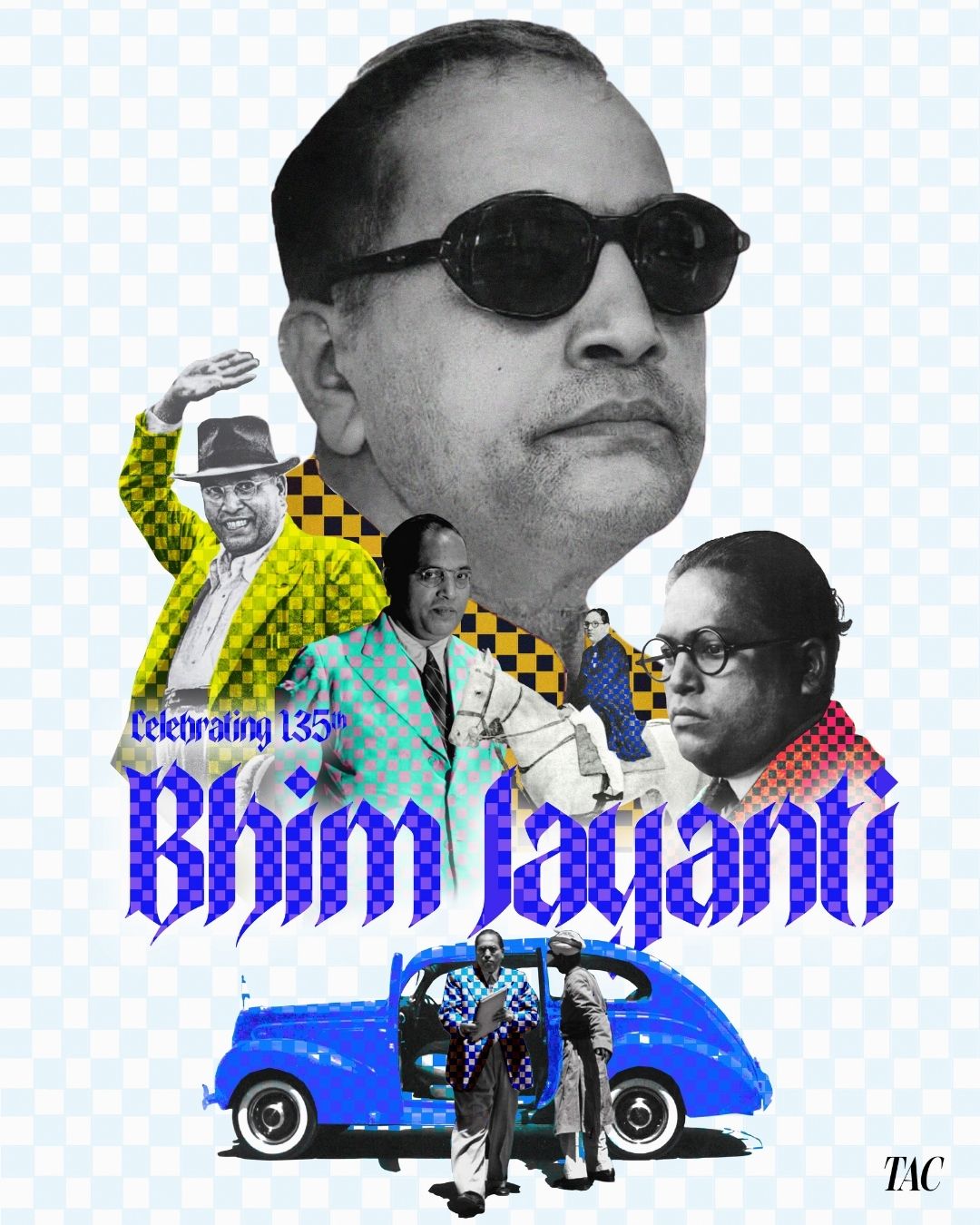
Every year, Ambedkar Jayanti transforms streets across India into sites of celebration and assertion. Processions, music, portraits, banners and slogans mark not just commemoration, but also the access into historically denied spaces for Dalits. As such, these acts are not just decorative. Rather, they represent a refusal to be invisibilised – the reclamation of the streets in a society where space itself is structured along caste lines is a profoundly political act.
Interestingly, in today’s digital world, this assertion does not end on the streets. It travels. It appears on screens, most visibly on social media, where Ambedkarite expression turns into posts, reels, stories and hashtags. At first glance, this may seem like a simple extension of the festivities of Ambedkar Jayanti from the physical to the digital. But what unfolds on social media platforms is not just a celebration – it is a struggle for space and visibility in itself.
Digital platforms in India are not neutral; much like physical spaces, they are structured unequally, by invisible hierarchies of algorithms that decide whose voices are heard or ignored and whose content is engaged with or rendered invisible. A key mechanism in this process is what Safiya Noble (2018) terms algorithmic oppression – the algorithms that drive social media platforms are not separate from society. They carry the same structural inequalities, except in code. Dominant Savarna voices do not disappear online. They are amplified through platform logics – through what trends, what circulates, what becomes aesthetic and what gets branded ‘chapri’ or labelled ‘gawar’.
The internet serves as fertile ground for the digital reproduction of caste through a dialectical process of continuity and transformation into new forms online. This process represents an extension of the offline social order, remapping caste into digital terms. As Dr BR Ambedkar observed in Annihilation of Caste, “a Hindu’s public is his caste”. I argue here that the publics of Indian social media are structured along caste lines – as a result, visibility and discourse are produced largely by the same groups who dominate physical and lived spaces.
Savarna dominance in digital spaces operates through the politics of legitimacy. Here, Dalit assertion is often viewed as unnecessary, read as aggressive and dismissed through ridicule, thus producing a persistent pattern of degradation that denies seriousness and authority across contexts. What is at stake, then, is not merely visibility, but rather recognition on equal terms. This makes Dalit engagement a pertinent site of struggle for digital spatial justice – a battle for the right to legitimately occupy digital spaces without humiliation or erasure. It is here that the celebration of Ambedkar Jayanti on Instagram begins to unsettle these hierarchies as collective, repeated assertion transforms marginalised presence into central visibility, asserting legitimacy on its own terms.
In the context of this digital landscape, digital celebrations of Ambedkar Jayanti are not simply commemorative acts. They are small yet significant interventions that reclaim social media spaces that are democratic in name only. In today’s times, on Ambedkar Jayanti, phones are out as much as flags are. Someone is filming a bike rally with blue flags cutting through traffic. Someone else is taking a slow-motion video as flowers are thrown into the air. A group pauses mid-procession to get the “perfect” reel – music already chosen, transitions already in mind. By the time the crowd disperses, the first posts are already up.
Scroll through Instagram that evening, and the street reappears – albeit differently. Clips from small towns sit next to videos from big cities. A local procession you’ve never heard of suddenly has thousands of views. A portrait of Dr Ambedkar, lit up in blue, is reposted across hundreds of accounts. Hashtags pull together posts from places that will never meet physically, but nevertheless exist together on the same timeline. A reel of a procession is not just a memory – it is a way of saying: we were here, and we will be seen here too.
On one level, these acts can be seen as an attempt to document an event. But at another, they are also symbols of insistence. To post on Ambedkar Jayanti is to enter a contested digital arena – there is also risk in the visibility it brings. Assertion is often met with discomfort, sometimes hostility. What is celebratory for one group becomes excessive for another. Luckily, Ambedkarite assertion has never been about comfort. If anything, the screen makes this tension more visible: the pushback, the appropriation, the attempts to dilute what is being said.
And yet, people keep posting, reposting, commenting, circulating, engaging, claiming – occupying the very digital spaces that so cleverly seek to marginalise them. This persistence is not simply participation. It reveals an attempt to reshape the very terms under which presence and legitimacy in digital spaces are understood. The shift from the street to the screen is not a shift away from material politics. It represents the continuation of material politics across a different terrain, one where visibility is continuously contested against digital structures that are designed to contain it.
If the street has long been a site of caste struggle and the battle for visibility, legitimacy and spatial justice, the screen now complements it. The digital, here, emerges as a parallel arena, giving these struggles a new, if contested, space to rearticulate themselves. What unfolds on these platforms during Ambedkar Jayanti is not a departure from physical struggle. It is the reconfiguration of physical struggle in digital spaces that appear democratic to the naked eye, but remain structured by the logics of humiliation and exclusion.
To post, to engage, to circulate, and to insist on recognition on equal terms in these spaces, then, is to be a small part of a politics that is at once familiar and constantly negotiated. From the street to the screen, thus, Ambedkarite assertion represents the continued struggle for the reclamation of historically denied space, agency and legitimacy, not merely an act of visibility.

References:

  • Ambedkar, B. R. (2019). Dr. Babasaheb Ambedkar: Writings and Speeches. (Vol. 1). Dr Ambedkar Foundation, Ministry of Social Justice & Empowerment.
  • Noble, S. (2018). Algorithms of Oppression. New York University Press.
Abhijay Rambabu

Abhijay Rambabu is a sociologist with a keen focus on digital, urban and environmental sociology. He researches and writes upon these topics, in addition to his academic interests in feminism, culture, gender and caste. He is currently at the University of Hyderabad.

Enjoyed this article?

Share it with your friends and colleagues!