From Prohibition to Presence: Ambedkar, Public Space, and Counter-Memory
By Sheel Ratn
Published on 04/14/2026
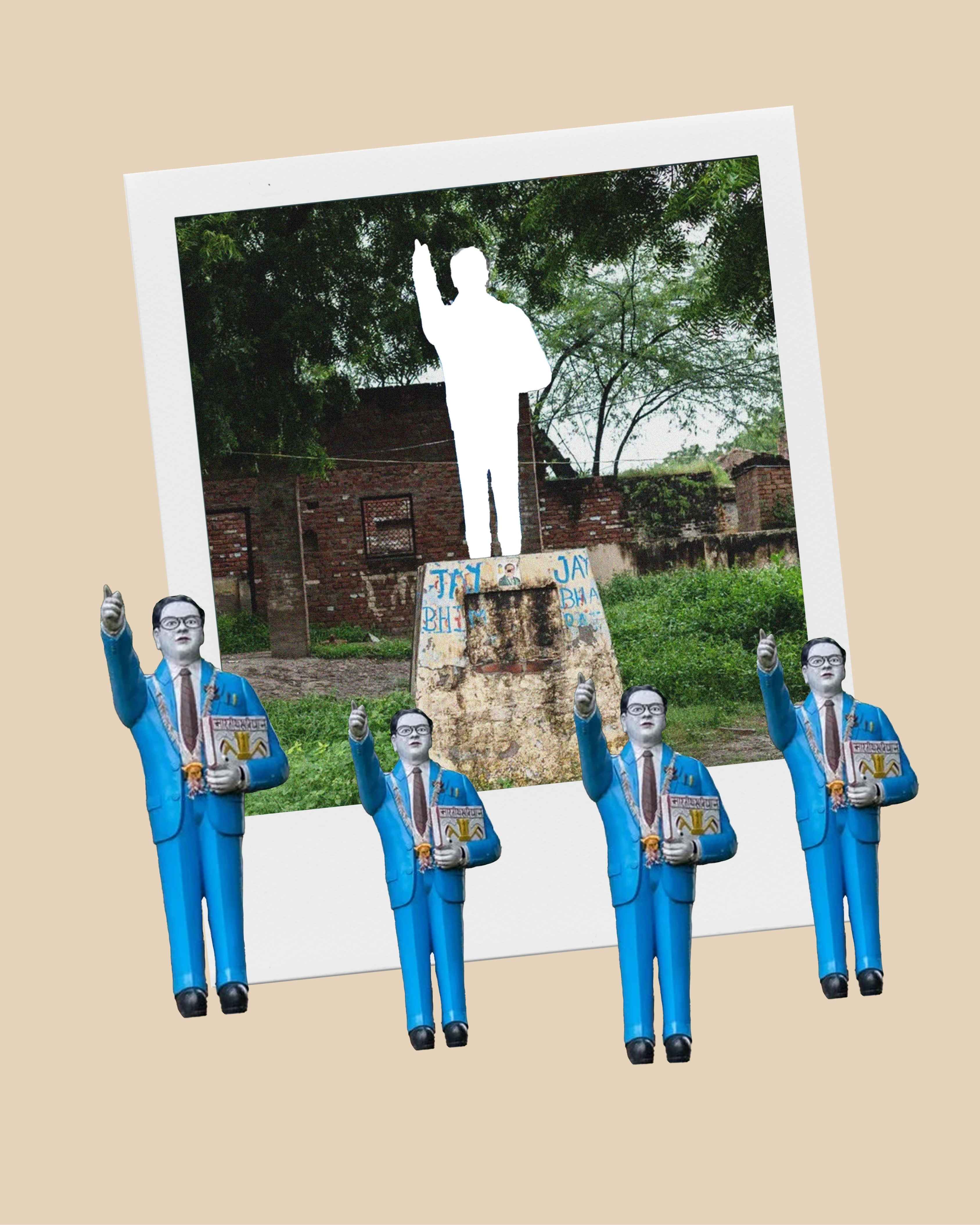
It’s been 90 years since Babasaheb Ambedkar wrote in Annihilation of Caste, “turn in any direction you like, caste is the monster that crosses your path”. This observation reveals deeply violent and dehumanising ways in which public space in Indian society has been organised. Doxalogically speaking of public space, it means an individual is free to roam around, see and be seen, to exist and let others exist, and to practise their rights within the ambit of the Constitution. Jürgen Habermas, a renowned Western Philosopher, has also conceptualised the public sphere as a domain of social life where private individuals gather to discuss matters of common concern driven by reason. However, such a conception presumes conditions of social equality, be it in terms of participation or accessibility, that were historically denied to Dalits within the Indian context and history.Historically brahamanism have imposed rules and prohibitions/bandi of various types in order to animalise the very being of Dalits and made them untouchables, some of them are the prohibition of the sense experience of time-space by erasing their history and banning of any record, be it oral or textual that provides a person a sense of past, present and the future and by confining the experience of an individual and community to a very limited place, not allowing them to experience anything other than the occupation which has been defined and designated for them. Sparsh Bandi or prohibition of touch, Javal Yenyachi Bandi or prohibition from approaching, Drusha Bandi or prohibition to be seen in public space and Gao Bandi or prohibition from entering villages except at 12 or before sunrise. These restrictions and prohibitions are enough to suffice that savarna dominance, particularly under brahmanical authority, operated through the systematic exercise of spatial power, regulating movement, visibility, proximity and presence of dalits. Public space, therefore, never remained neutral but was historically constituted through hierarchically organised practices that sought to discipline bodies and confine existence within caste-defined society rather than shared civic belonging.Yet, despite the long history of spatial prohibition and regulated presence it was Babasaheb Ambedkar since the early twentieth century who stood and fought for reclamation of manuski (Human personality/Dignity) of dalits, be it Mahad satyagrah or Kalaram Satyagrah and not just these satyagrahas but even the presence of Babasaheb, his writings, speeches, his political & social visits, him being the chairman of drafting committee and becoming first law minister of the Independent India, his very presence altered the so called ‘public space’ and paved the path for ontological emancipation, epistemological reconstruction and axiological transformation for the dalits of this country.Now the question that lingers is if modernity in Post-Independent India has generated any new territorial spaces which could give Dalits a sense of dignity, equality and belonging, amidst the neoliberal policies and rural to urban migration. In order to understand spaces for Dalits in cities, there are two processes to understand. Either to be part of the city, we adjust to live in societies where, every day, under the garb of brahmanical conformity, we get sanskritized and get influenced by the Hinduized way of living – thereby negotiating our equality, belonging, and memory. While on the other side, Dalit settlements in urban spaces often replicate the marginality of village geographies – which in Achiile Mbembe’s terms these are called as necrosettlements – where Dalits are forced to live in conditions that slowly expose them to death, disease, violence and abandonment, across many landscapes we get to see spaces like these where marginalised communities are made disposable and even their survival becomes uncertain because of the structural neglect by the savarna citymakers.Yet, even within these landscapes of abandonment and structural neglect, Dalit settlements are not merely spaces of suffering. They are also the spaces of assertion, memory, and collective presence. One of the most visible expressions of this transformation is the installation of statues of Babasaheb Ambedkar and Gautama Buddha in bastis, chowks, and public intersections. These statues are not just any ornamental objects, rather they function as spatial markers of dignity, counter-memory, and belonging, capable of rupturing the historical spatial power of savarnas marked by exclusion and marginality. These public statues show a stocky man, usually dressed in a Western suit and tie, holding a book under his arm. The book represents the Constitution of India, the depiction of which symbolises the fact that Babasaheb was not simply a Dalit leader, but a national leader who tirelessly worked to create equality among human beings. These public statues of Babasaheb converted the marginal landscapes into sites of visible presence and gave dignity to the Dalits while challenging the existential injustice that they face. The presence of statues of Babasaheb and Buddha across every public intersection must also be understood as practices of counter-memory. These statues do not function merely as commemorative objects but as critical spatial markers that recall histories often marginalised or obscured within dominant brahmanical narratives. The historical marginalisation and appropriation of Buddhist sites and symbols under Brahmanical traditions resulted in the gradual erasure of visible markers of Buddhist presence from many landscapes across India. In this context, the installation of Buddha and Babasaheb’s statues in Dalit settlements needs to be read as a deliberate reinscription of suppressed histories into public space. Together, these figures transform landscapes of neglect into sites of belonging and assertion and serve as an existential imperative even in the face of adversity.Such practices resonate with what Milan Kundera once described as the enduring struggle of man against power is the struggle of memory against forgetting. The continued presence of Ambedkar and Buddha statues interrupts the possibility of historical erasure and recalls Babasaheb Ambedkar’s own assertion that the history of India is, in many ways, a history of conflict between Buddhism and Brahmanism. In this sense, these statues may be understood as living sites of counter-memory and what may also be described as forms of axiological disobedience, challenging dominant spatial order and asserting alternative histories of dignity and belonging.The significance of these statues becomes even more visible every year on 14th April at the birth anniversary of Babasaheb Ambedkar, when these spaces transform into vibrant gatherings, processions, and collective remembrance. In the kind of dominant culture of rituals and prayers that people celebrate in India, standing in long queues for temples and offering prayers, Babasaheb’s movement have given us the culture to stand in long queue to access books and engage in discussions, if one visits Chaityabhoomi in Dadar, Maharashtra the visuals are enough to make anyone mesmerize and inspire of how people celebrate and remember their emancipator, this is one of the place where every year at Ambedkar Jayanti, lakhs of rupees of Ambedkarite literature have been bought by people. This celebration of Ambedkar Jayanti itself at Dadar, which is considered to be the central hub of Mumbai, disrupts the brahmanical spatial hegemony and reclaims the public space as well as the public memory of Dalits. Even my act of writing and getting published through this platform on the internet is an act of reclaiming public space in the age of tech feudal lords.