
Tac Logo
Cultural in Dr Babasaheb Ambedkar and Dalits

Cultural in Dr Babasaheb Ambedkar and Dalits

By Upendra Sonpimple

Published on 04/14/2026

“Lord Beema

The Emancipator-Spartacus

The Philosopher-Socrates

The Law-giver-Aristotle

The Orator-Demosthenes

The Samson of Intellect

The Nation's Architect

The New-Epoch Builder

Lincoln-Lenin-Ambedkar”

— (Eleanor Zelliot, 1992, p. 54)

The verses indicate the poet's deep reverence for Ambedkar, finding Ambedkar among world figures who are remembered as powerful symbols of resistance, leadership, and challenged authority. Dr Bhimrao Ramji Ambedkar (1891-1956) is an emancipatory figure, a revolutionary, intellectual, and liberator of the marginalized sections of India, particularly the ex-untouchable caste. His followers, out of compassion, respect, and love, call him Babasaheb.
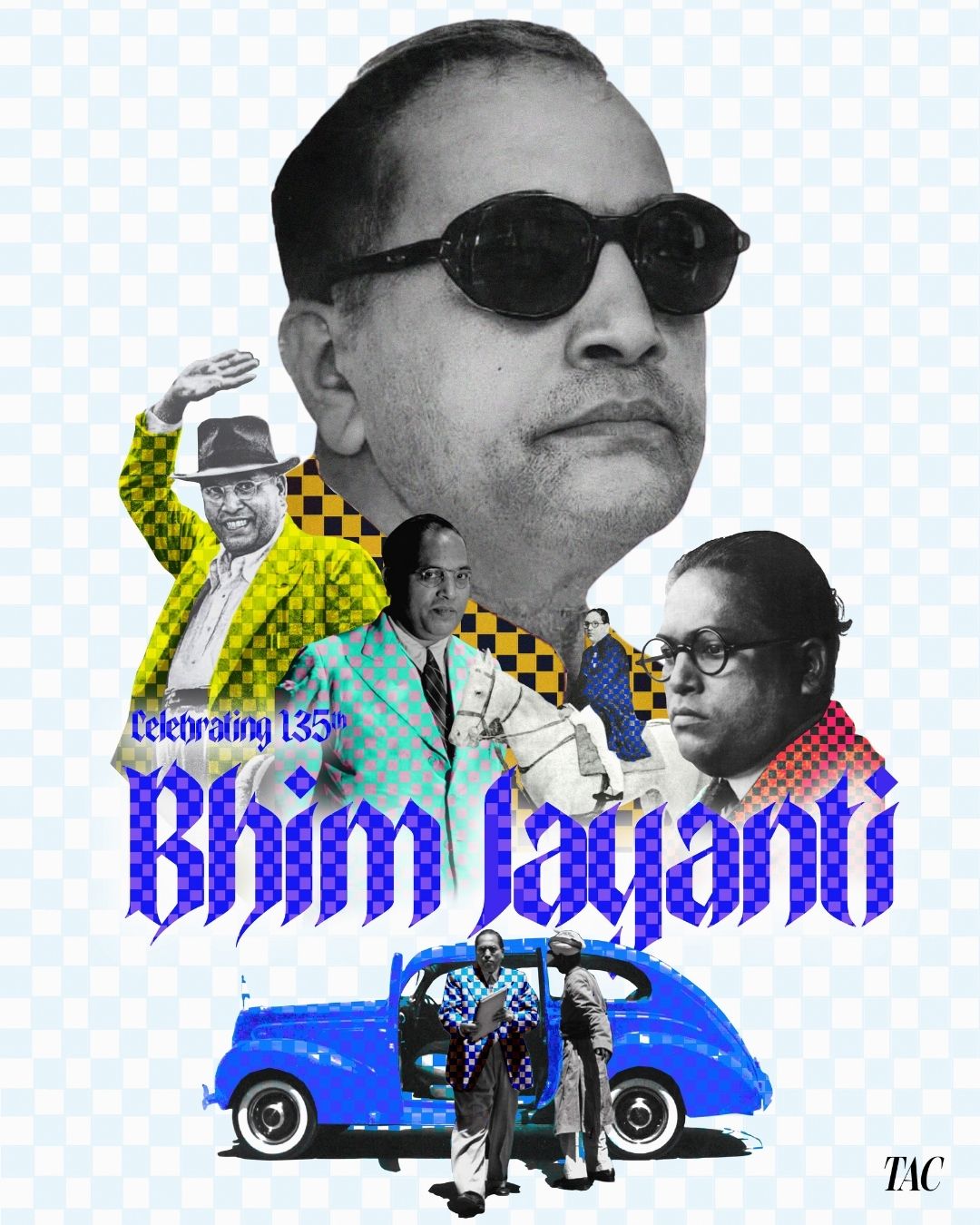
On 14 April 2026, India will celebrate the 135th birth anniversary of Ambedkar to commemorate the work and legacy of their leader. Ambedkar is an unrivalled social and political leader of the 20th century and continues to hold his intellectual and political influence and impact amongst a large section of the country.
The essay is a brief introduction to Ambedkar’s intellectual, pragmatic, and symbolic presence in contemporary India. Underlining the significance of Ambedkar's cultural symbols vis-à-vis his practical, relevant social-political activism, which goes beyond symbolism to become a decisive figure in the anti-caste movement in Maharashtra (India) for ex-untouchable castes. In the last three decades, the body of literature produced on Ambedkar has been spectacular. One cannot neglect Ambedkar and his theory of caste while studying the social movement in India. There may be no language left in which Ambedkar has not been translated. The post-Ambedkar movement saw the emergence of the Dalit literary movement in Maharashtra and other Indian states. The Dalit Literary Movement resonates with anti-caste cultural values and roots its transformative message in the intellectual legacy of Ambedkar, which began in 1920. Ambedkar is loved and adored by his followers in much the same way he is hated and despised by upper-caste Hindu orthodoxy. The values and ideology that Ambedkar carried throughout his life are often misinterpreted and repackaged to serve the political interests of upper-caste political parties and civil society organisations. In a competitive environment, the Dalit organisation and political parties claim authenticity by following his ideology, claiming his true descent with or without tracing Ambedkar's bloodline.

Ambedkar as authority

Ambedkar's symbolism embodies cultural values that lead ex-untouchables to assert their autonomy and a casteless collective. In the post-Ambedkar universe, Dalits are endowed with commemoration of his life struggles. Erection of Ambedkar statues, naming libraries, schools, colleges and Buddha Vihara’s after his name. Blue flags with Ashok chakra and Panchaseel flags have become the cultural flag of the Ambedkarite movement. The myths, folklore, poetry, music, and theatre groups are created to spread Ambedkar's ideology and aid the Dalit movement and protests across India, such as supporting the implementation of the 2026 UGC Equity Regulation Act and opposing the amendment to the SC/ST Atrocity Protection Act. His death and Birth anniversary have become the site of social and political protest. One can see a separate annual Ambedkarite calendar in Dalit households, distinct from the mainstream secular calendar, which evokes the memory of anti-caste reformers and their significance for Dalits, blending their past with the present. The cultural memories of Ambedkar, in his eulogy, became a part of the Dalit lifeworld, where the child born in a Dalit Buddhist family, the Palana song evokes Ambedkar and Buddha at childbirth. The song at weddings, and the death of Dalit individuals in Dalit neighbourhood – Ambedkar represents an emotional and cultural entity in the everydayness of Dalits in Maharashtra.
The post-Ambedkar movement's deification of Ambedkar as a godlike figure centralizes the function of Dalit culture. These cultural values in Durkheim’s work led to the creation of “collective effervescence”, which shapes the community's emotional and cognitive affiliations. Influence associations of the community as collective endurance that empowers the community around singular cultural symbols centred on Ambedkar. A culture that transcends traditional caste norms and creates an autonomous, alternative culture in opposition to Hindu and Brahmanical culture. Although it has not erased the trace and influence of Hinduism (not as religion but as tradition comprising caste norms, rules and cultural labour) on Dalits. The deification of Ambedkar has distinct rational and emotional cultural values that counter pagan Hinduism. Hinduism, in its variety and supernaturalism regarding gods, is devoid of a single authority of the gods and of the congruity between Brahmins and power. Hinduism for Dalits descended into complete silence in history, if there is any. The invisibility of pursuing the supernatural or engaging with spirituality: scholars like D. R Nagaraj argue against Ambedkar's rational adoption of Buddhism accused of keeping Dalits away from the past and memories of Hindu religion, yet he does not define what the supernatural and spirituality mean for Hindus, or what means were available for ex-untouchables to access Hinduism and Brahminical gods, as prescribed in Vedic rules and spiritual absorption in worshipping them. Historically, the worship and rituals were dominated solely by Brahmins, Vaishyas, and Kshatriyas. In that the Brahmins were priests, and the other Dwija (twice-born) castes were worshipers and protectors of religion and caste hierarchy. In the 13th century, through the bhakti movement, marginalized communities, such as the Varakari and Lingayatism sects, challenged the cultural dominance of Brahmins and Brahminical Hinduism. They protested the ritual authority of Brahmins in the religious sphere. Ambedkar's adoption of Buddhism is often associated with a rational outlook; however, his renaissance of Buddhism situates Ambedkar and Buddha within a historical and counter-cultural plurality against Brahminical culture and the unique cultural development in the Dalit lifeworld. Ambedkar became a cultural authority, which led the community to economic advancement and asserted their social and political presence.

Protestant Ethics in Ambedkar’s Buddhism

Protestant ethics in Europe emerged as a protest against Catholicism and Christian orthodoxy, giving birth to Individual liberty, freedom and social justice, influenced by the Enlightenment period. As a Western-educated Ambedkar serves as a role model for the community's aims of economic advancement. In the post-Ambedkar period, Dalits influenced by the Weberian protestant ethics and following the three Ambedkar’s Maxims Educate, Agitate and Organise highlight the primary epoch of modern being. That lies in strengthening the community with education and economic mobility. According to Zelliot, Ambedkar seeks to create an elite among the Dalit to serve as a model and attract a following for economic empowerment, instilling the value of “payback to society.” The message was well received, and the caravan continued in the post-Ambedkar period; the educated Dalits flocked to the opening of schools and colleges. Some of them were already opened by Ambedkar himself, such as Siddharth College in Mumbai and Milind College in Aurangabad. Educational Institutions became spaces where Dalits without Caste limitations could access modern education across various fields, including science and technology. The reservation in the government sector allows them to participate in the large public sector and become a viable source of funding for the Dalit movement, including BAMCEF and the BSP, which have been examples of Dalit mobilisation in the post-Ambedkar movement in Maharashtra and India.
The educated Dalit sought to approach Buddhism in its new avatar to reinforce modern values. The emergence of Trilokya Bodha Maha Sangha Gana and other Buddhist associations enables Dalit middle class to practice Buddhism in relation to Ambedkar, to engage with British and Asian Buddhism, which is allied with Ambedkar’s Buddhism in its ritual, spiritual, and philosophical aspects, and to distinguish it from Hinduism, thereby asserting anti-caste cultural values. In Nagpur, the construction of the dragon palace with the help of Japan's Ogawa Society transcends geographic boundaries, connecting Buddhist organisations outside India. It helped Dalits share Buddhist values with the rest of the world. At a cultural level, Ambedkar's symbols and his ideology nurture and guide the social world of Dalits. The theological association of Dalit Buddhism has been transformative, in which the Buddha and his teachings not only inform Dalits as they navigate suffering and exclusion of accessing religion. That translates worship into protecting the community and into self-sacrifice to safeguard the community's dignity and self-respect. It makes a community believe in the utopia of Ambedkar “Prabudha Bharat” — a society without caste and hierarchy. Such ideals are inevitable for the community, where Buddhism brings back the pride they once had before the counter-revolution of Brahminism in India.

Ambedkar’s Pragmatism

Dr S. R. Stroud argues about the influence of John Dewey’s pragmatic philosophy on Ambedkar's construction of Buddhism as a rational faith and caste as an anti-social institution. According to Ambedkar, equality may sound fictional, but at the level of principle, it governs society. The ideal of equality is a principle that influences individuals' actions to assert personal liberty, whereas, for Ambedkar, Hinduism is a set of rules that embody slavery and control over social conduct.
In contrast to Buddhism, Ambedkar did not prescribe any rules for the community to follow, but at a principal level, it leads individuals to aspire to future equality, which he called for in “Prabudha Bharat” (Buddhist India). After the Poona Pact, reservations in politics for Dalits became an attraction for the upper caste, luring Dalits into their fold and helping them succeed in their Hindu nation-building project. According to Anupama Rao, Ambedkar made the Dalit political community in the colonial construction of the modern state. In the post-Ambedkar movement, the emergence of the RPI and the BSP has capitalized on Ambedkar's ideology to acquire political power, Kansiram and Mayawati are rightful examples of materializing political power through social movement.
Ambedkar's own emphasis on social and economic reform, before the political reforms, focused on bringing social democracy to society. The Dalit movement has thrived on the anti-structural nature of caste mobilization, where Brahmanical Hinduism and its orthodoxy dominate the public sphere. Ambedkar believed that annihilation of caste is possible while rejecting the authority of the Hindu Shastra, which inspires the community to pursue revolution against caste as a social ill and sickness that denounces equality, liberty, and freedom. For him, the establishment of an egalitarian society renders the destruction of caste and Brahminical Hindu shastras. The social and political means to achieve this goal solely become the responsibility of the marginalized who face caste violence and exclusion on an everyday basis.

Ambedkar and the Dalits

The presence of Ambedkar should not be considered merely symbolic; there is always a possibility that these symbols can transcend into mobilization, creating a new movement. Dalit communities refer to him as an emancipator, but there is a need to accept Ambedkar struggle as a young Dalit Boy to a Constitutionalist, Scholar and Revolutionary. Dalit acceptance of the singular authority of Ambedkar (aligns with his Buddha). Dalits should decline looking back to Hinduism for salvation and reformation. Mahatma Gandhi suggested that the upper caste remove the stigma of untouchability while participating in the life and work of the untouchable. However, including Gandhi and the upper-caste Gandhians who follow the footsteps of Hindu orthodoxy in both politics and social life, the Poona Pact was, in effect.
Dalits have understood that their problems cannot become the problem of the upper caste, and therefore, stigma, violence and empowerment are a responsibility of Dalits themselves. In contemporary Maharashtra, the Hindu orthodoxy and Brahminism have become a deceptive phenomenon to sabotage the protest and mobility of Dalits. Dalits need Ambedkar more than ever, and without him, change is unimaginable. If that purpose remains important to Dalits, they should accept Ambedkar as someone who can take them out of the circle of oppression as a cultural, political, and socio-economic singularity.

References

  • Ambedkar, R.B (1979). Dr Babasaheb Ambedkar writings and speeches, vol. 1. Government of Maharashtra. Pune.
  • Durkheim, E. (2016). The elementary forms of religious life. In Social theory re-wired (pp. 52-67). Routledge.
  • DR Nagaraj and Schmalz, M.N., 2012. The Flaming Feet and Other Essays: The Dalit Movement in India.
  • Rao, A. (2009). The caste question: Dalits and the politics of modern India. Univ of California Press.
  • Stroud, S. R. (2023). The evolution of pragmatism in India: Ambedkar, Dewey, and the rhetoric of reconstruction. University of Chicago Press.
  • Zelliot, E. (1992). From untouchable to Dalit: Essays on the Ambedkar movement (p. 267). New Delhi: Manohar.

Upendra Sonpimple

Upendra Sonpimple is a Phd candidate in sociology, University of Edinburgh, Scotland, U.K.

Enjoyed this article?

Share it with your friends and colleagues!