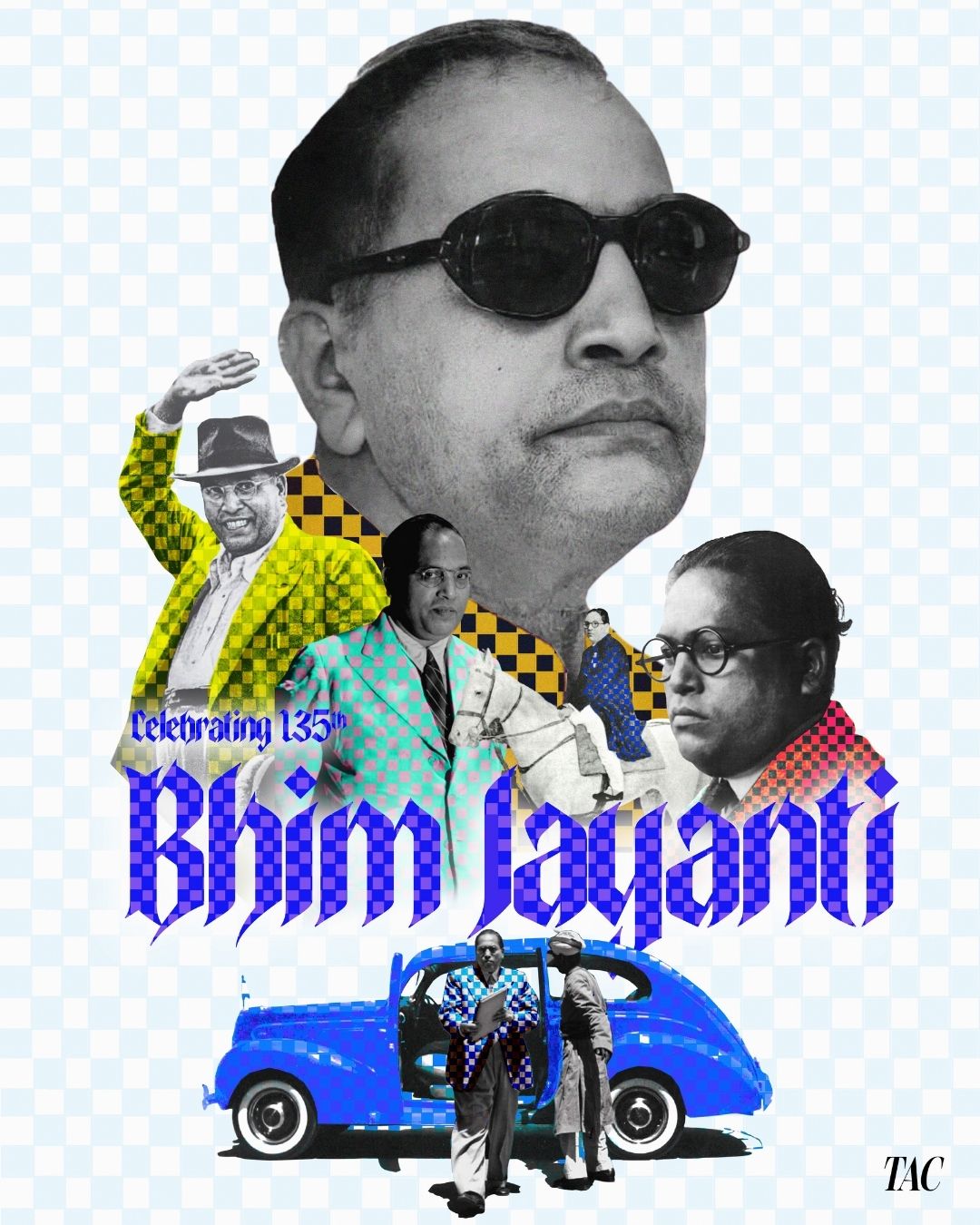
For the past few years, a debate keeps recurring annually every April 14th in the Ambedkar circles I am part of: Should BHIM Jayanti (birth anniversary) be celebrated through dancing, or through reading? Much like Dr Babasaheb Ambedkar’s declaration, "I have no homeland" What, after all, do we truly possess? How many among us actually own land or material assets? In such a context, when the community takes to the streets—gathering in settlements and at every crossroads on the birth anniversaries of our great leaders—it serves as a powerful declaration: These streets belong to us.Dancing signifies unity, infuses energy, and teaches the next generation about our great historical figures. As Dr. Babasaheb Ambedkar famously urged: Educate, Agitate, Organize. Dancing serves to organize the community, for those who are engaged in the struggle have the greatest right to joy. Jayanti – the birth anniversary celebration – is a fusion of ideology and enthusiasm. Dancing embodies our collective identity; through bands, processions, and slogans, the community takes to the streets, and the youth come to realize who their true heroes are. In Dalit and Bahujan localities, this constitutes a moment of profound self-respect – and who are you to deny them that right?These groups draw inspiration from these BHIM Jayantis (birth anniversary celebrations); here, the act of "dancing" serves a purpose. It is through the processions honoring Buddha, Phule, and Ambedkar that a ten-year-old child encounters and comes to understand these figures for the very first time. This festival sows a seed.Whether it was the Non-Brahmin Movement, the Dalit Panthers, or the Namantar Andolan (Name Change Movement) – processions were everywhere. They were accompanied by pamphlets, speeches, and night schools. When Babasaheb administered Diksha (initiation) to five lakhs follower at Deekshabhoomi, there was a grand pavilion, but there were also the 22 Vows. Celebration and philosophy were seamlessly interwoven. Dancing keeps our memories and history alive – it fosters emotional bonds and creates a visible sense of community. The birth anniversaries of great leaders serve as a source of cultural identity and collective energy. When a band plays in a settlement or village – accompanied by Bhim Geete (songs of Bhim), blue flags, and streamers – even a small child instinctively recognizes: “These are our people.” For the Dalit-Bahujan community, this visibility is crucial, for a society that has been suppressed for centuries, simply feeling that the path ahead belongs to them is, in itself, a monumental achievement. Our identity is forged through slogans, songs, and the act of coming together. It instills the profound realization of not being alone, indeed, celebration serves as the very fuel that sustains a movement. When children – barely eight or ten years old – shout Jai Bhim! during a procession, it is indelibly etched upon their young minds who their true heroes are. If we were merely to read books and remain confined within our homes, the wider society would never realize that these ideals and thoughts remain vibrantly alive.Dr. Babasaheb urged us to Educate, Agitate, Organize. While reading constitutes a form of learning, organising often necessitates taking to the streets. In that context, dancing and raising slogans serve a vital purpose. The established upper caste elites – who preach that birth anniversaries should be celebrated through reading rather than dancing – offer such unsolicited advice because they perceive a threat whenever the Dalit-Bahujan community mobilizes and unites on the streets. Celebrating these birth anniversaries is our “cultural right.” For centuries, our festivals were suppressed; now, if we beat our drums, it is deemed “inauspicious”this constitutes cultural Brahmanism. A look at history reveals that the established groups did not want Ambedkar Jayanti to be designated a national holiday, nor did they wish to grant permission for processions – when held despite everything have been historically faced attacks. This implies that they did not want us to dance, to celebrate – and reading was an even more distant prospect. It is not for outsiders to dictate how the Ambedkarite community should celebrate its festivals – whether through dancing or reading, we are fully capable of deciding this for ourselves.On April 14th, television channels and newspapers invariably focus solely on DJs, gulal (colored powder), and traffic jams. Yet, at Dikshabhumi and Chaityabhumi, hundreds of thousands of students set up bookstalls and purchase books – a reality that rarely makes the news. The media portrays the community only while they are dancing, while deliberately obscuring the fact that they are reading. This constitutes a specific agenda, it presents merely a half-truth. To the established powers, a society that both dances and reads is perceived as the greatest threat. Babasaheb empowered the community through the 'pen' (intellectualism), while the community infused that spirit with celebration. Brahmanical forces fear the convergence of the pen and celebration, their true stratagem lies in driving a wedge between the two. This fractures the movement in essence, their objective is to perpetuate the conflict between “reading” and “dancing.”Now, if Bhim Jayanti were not celebrated at all, what would happen? The “powerhouse of self-respect” would shut down. Every year on April 14th, Dalit settlements come alive with all-night awareness programs followed by morning processions. When a twelve-year-old boy was asked who Babasaheb was, he replied: “He is the one because of whom my father can stand tall – without having to address a 'Sahib' with a subservient 'Ji'.” He did not receive this answer in school, rather, he found it within his settlement – through the commemorative wall posters, speeches, and songs of the Jayanti celebrations. If the children do not come to know our heroes, the sense of whose legacy we carry will die out – the very place where the battery of self-respect gets recharged will cease to exist, and a generation will emerge believing that no one of greatness ever rose from amongst us.A society devoid of self-respect does not demand its rights, it merely begs. There is one day in the year when the entire street – the entire community – comes together for a common cause: raising funds, erecting a marquee, understanding the specific problems facing individual households, and engaging with the police and local councilors. All of this takes place under the banner of the Jayanti. In a democracy, being visible means being “counted.” On April 14th, when hundreds of thousands of people take to the streets of a city bearing blue flags, it sends a clear message to everyone – from legislators and Members of Parliament to the District Collector: This community is organized, do not provoke it. It is a law of nature that if a void remains, someone will inevitably fill it. If the Jayanti celebrations cease, other movements—such as the Kanwar Yatra or the Dera sects—will step in to take their place. The children of the settlement, forgetting the chant of "Jai Bhim," will begin to chant “Bola Bam,” “Jai Shri Ram,” or “Dhan Dhan Sadguru.” Ten years later, if these very children are asked whether they desire affirmative action (reservation), they will simply reply, “It is God's will.” If Jayanti ceases, the slavery will once again infiltrate the community. A struggle spanning five hundred years can be completely reset in a mere ten.