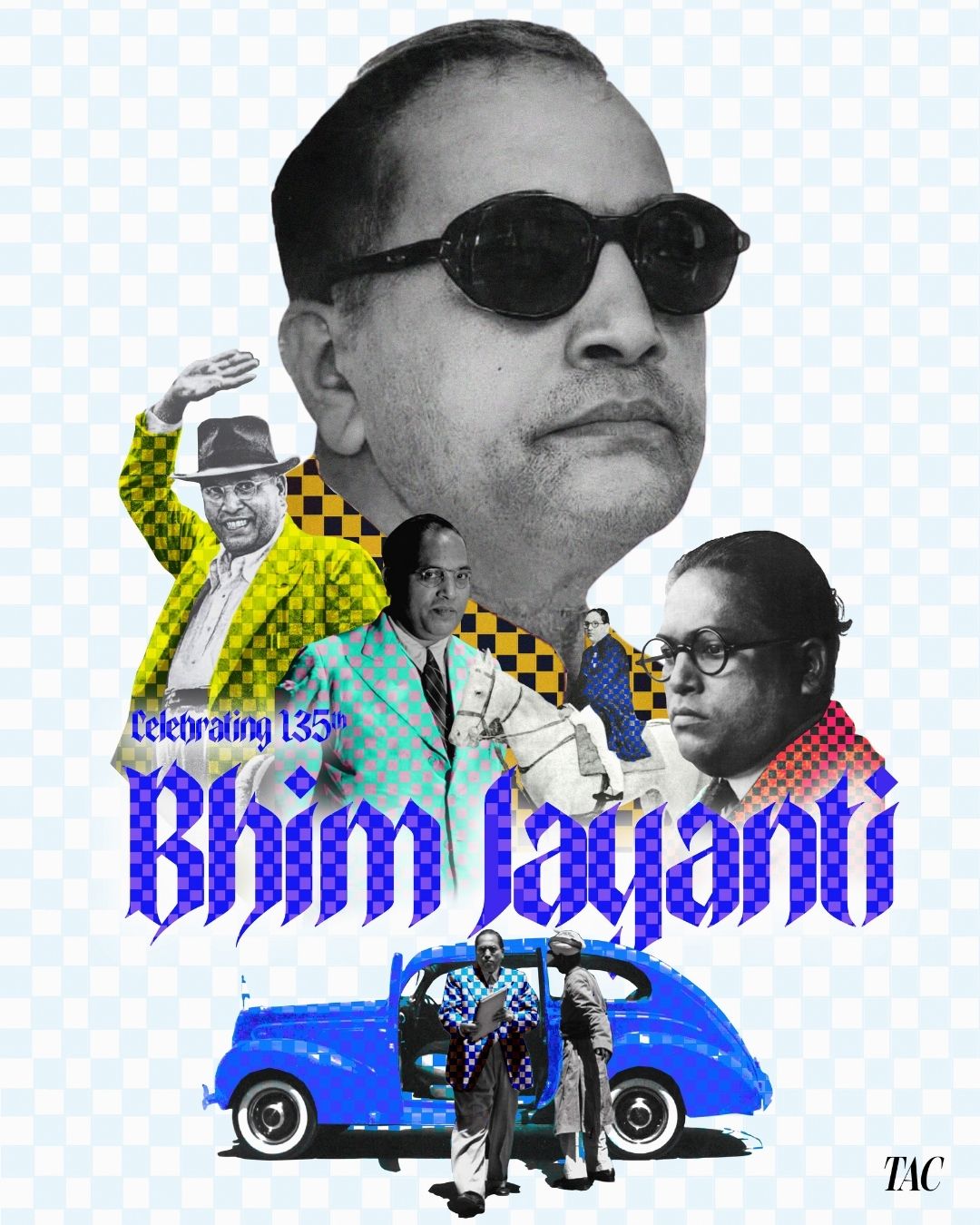
If Babasaheb Ambedkar said “Chembur majha bale qila” (Chembur is my unassailable fort), then Siddharth Colony is the vantage point of it. The expanse you see from here is the density that makes up this colony. It is hardly imaginable the lives and days in the contours of these 1RK rooms – at times it is monotonous, constrictive, the trajectories of desire take unexpected deadly turns, there is a degree of meanness that is hard to measure: how much of our actions is implicated by our conditions? In all of this there is an unmatched grace and self-regard, that seems to be possible only in our poverty, even if it is walking out through the lanes with a bucket to the public toilet. Bhim Jayanti is a festival of this long tradition self-regard in the times where from the Government to the intimacy caste dictates the person we are allowed to become. That it is through the birth and life of our Baba that we are liberated and dignified. Jayanti is an emotion that pulls the entire densely packed slum in the stretch out on K.N. Gaikwad Marg road that narrowly cuts the Colony.In this so-called ghetto, the happiness in the brightness of our celebration unmakes the dirt associated with that word and its meaning is transformed in blue and white – as if colours and lights are indistinguishable in the DJ that plays the bass so loud to Anand Shinde. The singularity of people is derived from our coming together. The organization of Bhim Jayanti reflects grassroot democracy in action. Multiple mandals (community groups) exist within the colony, and each year a mandal takes responsibility for organizing the celebrations. Young boys and men step forward, plan logistics, gather funds from residents, and ensure everything is arranged with care and dedication. Preparations begin many weeks in advance, turning Bhim Jayanti into a week-long festival. Each day is filled with activities that nurture talent and build community spirit: dance competitions, singing performances, rap battles, and wall painting events that reflect Ambedkarite thought. These are not just cultural programs; they are platforms of expression where art meets social consciousness.One of the most beautiful moments of the celebration is when young girls dressed in blue – often sarees – perform dances in every lane of the colony. In their performances, Babasaheb’s philosophy is set in motion – it is like witnessing a truant of migratory birds, even though delayed due to centuries of untouchability, the beauty has its own pace of arriving eventually, this beauty inherited and passed down by our mothers and their mothers and theirs. And now there is a dance. Disco on the street.The annual rally is another highlight, with a new theme each year. Last year, the upper-caste residents of societies raised complaints about the noise pollution. In response the colony decided to infuse traditional instruments like Halgi, Mridangam, Sambal, and Dhol along with DJ. Our celebration continued peacefully and with dignity. Bhim Jayanti in my Colony is a reminder that celebration is not about resources, it is about people. In contrast to nearby elite neighborhoods, where festivals may be more structured but less participatory, Siddharth Colony’s Jayanti stands a living memory of Dr Babasaheb Bhim Rao Ambedkar.14th is the blue in its most lively and celebratory shade.