
Tac Logo
Ambedkar Jeyanthi in Tamil Nadu

Ambedkar Jeyanthi in Tamil Nadu

By Hugo Gorringe and Karthikeyan Damodaran

Published on 04/14/2026

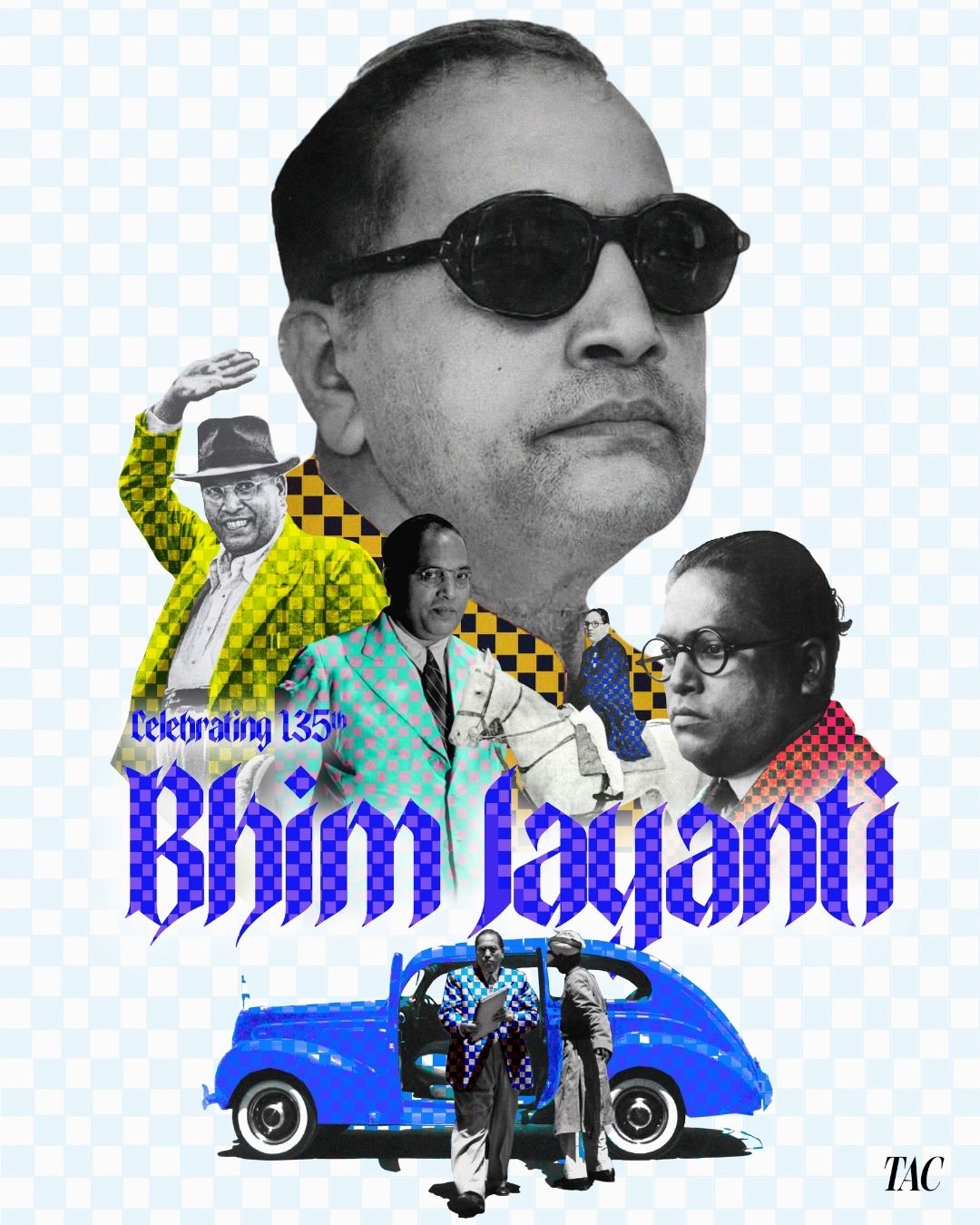
As in many places across the world, April 14th in Tamil Nadu sees political parties, institutions and individuals gathering round representations of Ambedkar to pay homage. Statues are garlanded and bathed in milk, portraits are adorned with flowers, speeches are made and celebrations held. In Dalit settlements, loud-speakers play Ambedkarite songs and community events are organised. Ambedkar Jeyanthi, in these respects, is similar across the country and illustrates Ambedkar’s pan-Indian significance. These celebrations, however, have particular histories and trajectories in different places. Unpacking why Ambedkar has gained such prominence in the South and charting the installation of statues, highlights the central significance of symbolic politics to Dalit assertion and reclamation of space.
It is important to note that the veneration of Ambedkar was not inevitable in a state dominated by linguistic cultural politics. In this context, the pre-eminence of the non-Tamil Ambedkar needs to be explained. E. V. Ramasami or Periyar – the leader of the Self-Respect Movement and pioneer of Dravidian politics – was an outspoken ally who expressed solidarity with Ambedkar in his contests with Gandhi over separate electorates. Kudi Arasu – the mouthpiece of the Dravida Kazhagham – translated and serialised his Annihilation of Caste, and thus introduced Ambedkar’s ideas and politics to Tamils (Geetha and Rajadurai 2011: 350). Basu (2011) notes how as early as 1954 Dalit activists in North Arcot district – with a strong population of SCs – held public meetings to celebrate the birthday of B. R. Ambedkar. The first Ambedkar statue in Tamil Nadu was installed in 1960 at Puzhal, near Madras (now Chennai). Republican Party of India (RPI) leader and associate of Ambedkar, N. Sivaraj coordinated these efforts. Over a hundred members of RPI held a cycle rally with flags tied on their bicycles to participate in the event. The following year, G. Kuchelar, then Mayor of Madras city, passed a resolution to erect a statue. This was unveiled on 29 November, 1963 on behalf of the Madras Corporation near Moore Market in Chennai and the then-Chief Minister, M. Bakthavatchalam presided over the meeting (New India, 1963).
Despite this early adoption and the close links between Periyar and Ambedkar, the latter was sadly neglected from the late 1960s. After the Dravidian parties took power in 1967, there was a dilution in their radicalism and shift from anti-caste to anti-Hindi and anti-Brahmin rhetoric. In the process, Dalit politics and Ambedkar faded into the background. Despite the radical anti-caste political discourse, furthermore, politics and identities in the state continue to be shaped by caste. Celebration of Ambedkar by mainstream politicians was grudging and came as a response to competitive associationalism. The first Ambedkar statue in the southern districts, for example, was unveiled in Tirunelveli in 1974 as a symbolic response to the installation of the huge Muthuramalinga Thevar effigy in Madurai earlier that year. Ambedkar, here, was expressly seen as a counter-weight to Muthuramalinga Thevar and the celebration of Thevar pride and dominance that he represented. The mutual desecration of Ambedkar and Thevar statues marked the starting point and continuation of the infamous Then Maavatta Kalavarangal (Southern District Riots), which rocked Southern and Eastern Districts for a three-year period, resulting in frequent clashes, murders and arson (Narula 1999). The state response has been to police key sites and demand the caging of statues in ‘sensitive areas’ (Rajasekaran and Sreemathi 2017).
The spread of Ambedkar statues in the northern and north-eastern districts of Tamil Nadu followed a slightly different logic and reflects differing caste dynamics. The Republican Party of India here were mobilised by N. Sivaraj, and were responsible for statues in Nagapattinam and elsewhere. Unusually, many Ambedkar statues were installed by the Vanniyar-dominated Paatali Makkal Katchi (PMK: Toiling People’s Party). Vanniyars are a Backward, but socially dominant caste in Tamil Nadu spread largely in the northern districts. Their embrace of Ambedkar constituted a key pillar of a ‘sarvajan’ (universal as opposed to identity based) strategy in which the PMK sought to consolidate Backward Caste and Dalit votes to displace the Dravidian Parties (Saravana Raja 2014). What these statues illustrate are the enduring appeal of Ambedkar, but they tended to be top-down efforts designed to mobilise particular constituencies.
It was only during the national celebrations marking the centenary of Ambedkar’s birth, which ran throughout 1990 building up to the 100th anniversary in April 1991, that Dalit assertion in Tamil Nadu took centre-stage. Dalit movements gained popularity and Dalit intellectuals and activists launched scathing attacks on Dravidian parties and their failings on caste issues. Dalit movements and parties from this point on became closely associated with the installation of statues, memorials and banners celebrating Dr. Ambedkar which were deployed as a means of assertion. His image adorning calendars, posters and photographs made its way into the homes of politically conscious Dalits. Numerous individuals or villagers installed Ambedkar statues with or without permission and rallied around them, defying other castes or authorities to remove representations of the first Law Minister of India.
In towns and villages across the state, moreover, Dalits instituted informal ‘taxes’ and other means of fund-raising to erect statues in their localities. As Jaoul (2006) observed in Uttar Pradesh, they mimic ‘official unveiling ceremonies, [which] highlighted their authority’. Dalit party leaders and their allies are invited to inaugurate the sculptures in shows of force and celebration that symbolise the Dalit emergence from segregated settlements and claims to space. Those that cannot afford – or gain permission – for statues, adorn halls, walls and public spaces with murals and paintings. The bespectacled, (usually) blue-clad figure, thus, is now a ubiquitous feature of the Tamil landscape. As the Dalit academic and activist C. Lakshmanan notes, ‘Ambedkar is the Dalit leader who has transcended caste and politics and brought hope and inspiration to people’.
The grassroots mobilisation and construction of statues in Tamil Nadu, has changed the look and feel of the socio-political landscape, but whilst Ambedkar is now embedded in the Tamil landscape and all politicians mark his anniversary, he is still very much perceived as a Dalit rather than national leader (Rajasekaran and Sreemathi, 2017). As Thirumavalavan noted:

"Ambedkar is still not respected by government parties across India. In UP and Andhra there is the same story. Those with no understanding see Ambedkar as a caste leader rather than a global figure."

— (interview with author)

In a caste-based society everyone knows their place. Social relations and interactions are carefully regulated and one’s status determines what access one has to hierarchically ordered social space. Transgressions of the established order are met with severe punishment, exclusion and ostracism. As Dalits have asserted themselves, Ambedkar statues have been desecrated and posters and billboards torn down across the state by dominant castes who resent their mobilisation. Dalit contests over space and celebration of Ambedkar, in other words, involve demands to be recognised as equal citizens.
If Ambedkar is seen as a symbol of caste assertion rather than recognised as a pan-Indian leader with a vision of an egalitarian and democratic future and a blueprint for the annihilation of caste, then his statues represent identity-based politics rather than a step towards a casteless future. Dalit movements, therefore, have had to confront and challenge casteist attitudes and controls over space. The growing importance of Ambedkar jeyanthi in the state represents a subaltern challenge to the caste order and a rejection of humiliation, subservience and dependence. When Dalit activists process down main roads to garland a statue, take the day off to engage in local festivities, and dominate the soundscape with anti-caste music, they are reshaping the look, sound and feel of public space. Such mobilisation has also compelled dominant parties to recognise and accept Ambedkar. In April 2022, thus, the ruling DMK declared that it would ‘observe Dr B R Ambedkar's birth anniversary as Samathuva Naal (day of equality) … and install a life size bronze statue of Ambedkar at his memorial in Chennai’ (Shanmughasundaram, 2022). The political embrace of Ambedkar may be superficial and symbolic, and there are increasing efforts to co-opt and appropriate his legacy. Irrespective of the intentions, however, the mainstreaming of Ambedkar birth celebrations, statues and representations in the state have served to destabilise the casted imagination and offer a vision of a more egalitarian future.

References

  • Basu, R. S. 2011. Nandanar’s Children. New Delhi: Sage.
  • Geetha, V and S. Rajadurai. 2011. Towards a non-Brahmin Millennium. Calcutta: Samya (second revised edition).
  • Jaoul, N. 2006. ‘Learning the Use of Symbolic Means’, Contributions to Indian Sociology 40(2): 175–207.
  • Narula, S (compiled). 1999. Broken People. New York: Human Rights Watch.
  • Nava India. 1963. ‘Arasiyal Medhai Ambedkarukku Silai (Statue for Political Genius Ambedkar)’, Nava India, 30 November, 1963. Retrieved from personal archive collection.
  • Rajasekaran, R and M. Sreemathi. 2017. ‘Ambedkar now untouchable? Don’t celebrate leader where other communities reside, says Tamil Nadu police,’ The New Indian Express, 14 April, 2017: Link
  • Saravana Raja, S. 2014. Caste, Democracy and Identity: A Study of Vanniyar Politics in Tamil Nadu, unpublished PhD thesis, University of Hyderabad.
  • Shanmughasundaram, J. 2022. 'Tamil Nadu to observe Ambedkar’s birth anniversary as day of Equality', The Times of India, 13 April, 2022: Link

Hugo Gorringe and Karthikeyan Damodaran

Karthikeyan Damodaran is an Assistant Professor in Social Sciences at the National Law School of India University, Bangalore.Hugo Gorringe is a Professor and Head of the Department of Sociology, at the University of Edinburgh, United Kingdom.

Enjoyed this article?

Share it with your friends and colleagues!