
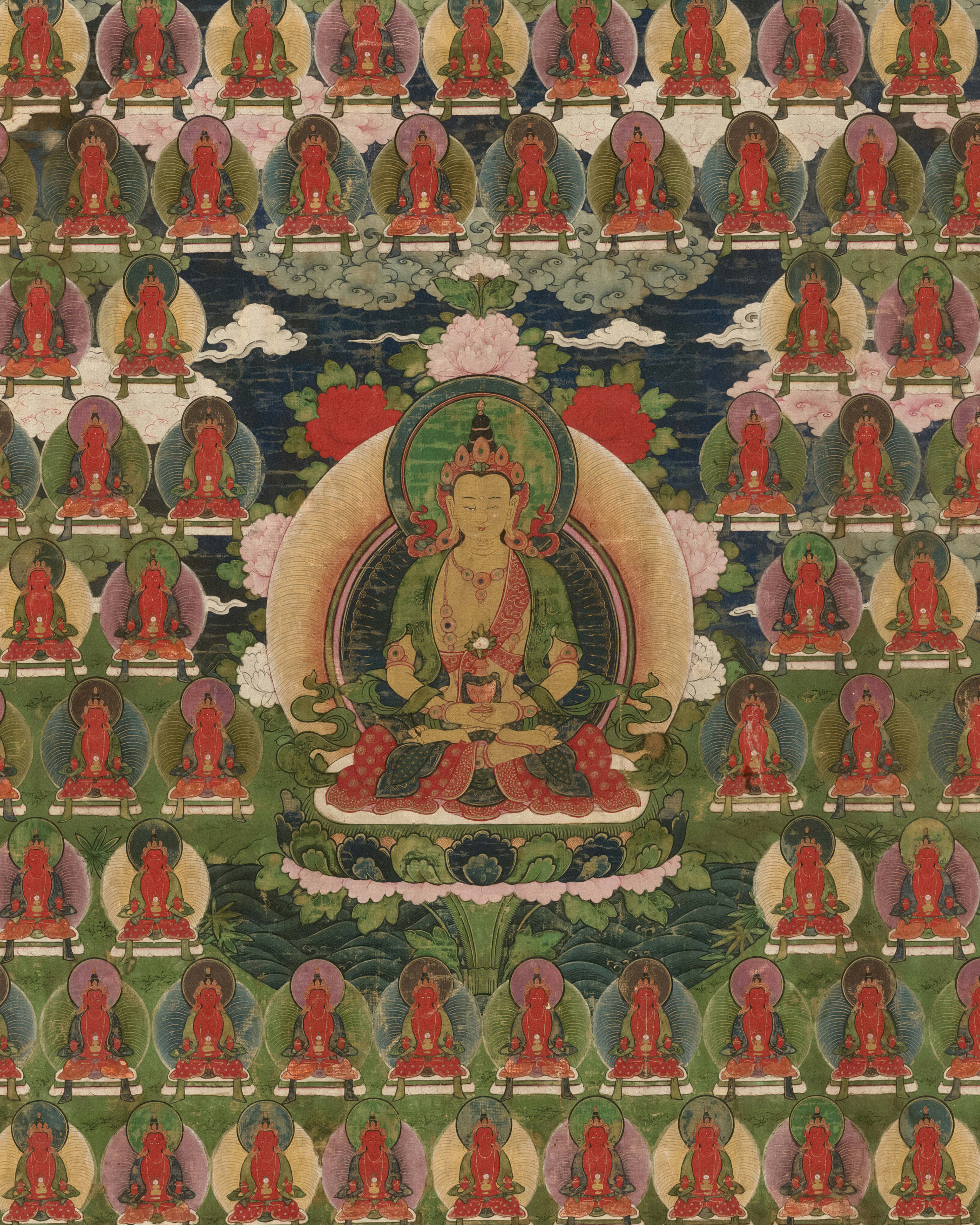
In the history of Indian civilization, the Therigatha is not a passive spiritual anthology – it is a manifesto of resistance. It is a direct confrontation with the Vedic-Brahmanical order that institutionalized caste, codified patriarchy, and denied women both dignity and liberation. Long before the vocabulary of modern feminism or the radical clarity of Ambedkarite thought, these women spoke with courage, logic, and defiance.
Composed around the 6th century BCE, the Therigatha contains 522 verses by 73 Theris – elder Buddhist nuns. These verses are not merely devotional reflections; they are lived experiences of revolt. They expose the everyday violence of social structures and celebrate the conscious rejection of them. Under the Buddha’s Dhamma, women did not just find spiritual refuge – they found intellectual and social freedom. This was not reform within the system; it was a rupture from it.
“Under the Buddha’s Dhamma, women did not just find spiritual refuge – they found intellectual and social freedom. This was not reform within the system; it was a rupture from it.”
Brahmanical Patriarchy: A System of Graded Inequality
The Vedic-Brahmanical framework was not an accidental structure – it was a deliberate system of control. It denied women access to education, barred them from Upanayana, and declared them unfit for moksha. Their existence was defined through पुरुषसत्ता – male authority. Religion was not a path to liberation for women; it was a mechanism of subordination. Babasaheb Ambedkar in Annihilation of Caste makes this structural critique unmistakably clear: “Caste is not merely a division of labour. It is also a division of labourers.” This division was not limited to caste alone – it extended deeply into gender. Women were placed at the bottom of this hierarchy, denied both agency and autonomy.
Babasaheb further exposes the condition of women in Brahmanical society in The Rise and Fall of Hindu Women: “The rise of Brahmanism was the rise of male supremacy and the degradation of women.” This is the context in which the Therigatha must be understood – not as isolated spiritual poetry, but as a counter-tradition that directly challenges this systemic degradation. While defenders of the Vedic tradition often invoke figures like Gargi or Maitreyi, Babasaheb’s method compels us to look beyond exceptions and examine structure. These women were anomalies, not representatives. They were acknowledged as thinkers, not as liberated beings. The system never intended equality – it only tolerated rare deviations.
Buddha’s Intervention: A Radical Break
The entry of women into the Buddhist Sangha was not a symbolic gesture – it was a revolutionary act. It dismantled the Brahmanical monopoly over knowledge and liberation. As Babasaheb writes in The Buddha and His Dhamma: “The Buddha was the first teacher in the history of the world who recognized the right of women to take Sannyasa.” This recognition was not charity – it was justice. It affirmed that women are complete human beings capable of the highest realization. The Therigatha is the living proof of this transformation.
Therigatha: Voices That Refuse Submission
The women of the Therigatha came from diverse backgrounds – Queens, Widows, Servants, courtesans. Yet their voices converge on one powerful idea: rejection of imposed identity. They rejected the Brahmanical claim that liberation is reserved for upper-caste men. They asserted, through experience, that Nirvana is independent of caste and gender. In a striking dialogue, Mara attempts to belittle Soma Theri by claiming that a woman’s intellect is inadequate. Soma’s response is sharp and uncompromising: a disciplined mind transcends all distinctions. This is not mere spirituality – it is a rejection of epistemic inequality. Similarly, Punna Theri’s critique of ritual purity exposes the absurdity of blind faith. When told that bathing in sacred rivers removes sin, she responds with devastating logic: if that were true, aquatic creatures would be the first to attain heaven. This is rational thought dismantling ritual authority. Babsaheb himself was deeply critical of such ritualism. In Riddles in Hinduism, he writes: “Hinduism is a religion which is not founded on morality. It is founded on rules.” The Theris reject these rules – not through abstract philosophy, but through lived critique.
From Domestic Bondage to Conscious Freedom
The Brahmanical system glorified domestic life while concealing its exploitative core. Women were reduced to unpaid labor within the household, bound by religious duty and social expectation. The Therigatha exposes this reality without hesitation. Mutta Theri’s declaration – “I am free!” – is not symbolic. It is a political assertion. Free from the pestle, the mortar, and an oppressive husband, she reclaims her existence. Domesticity, often idealized as sacred, is revealed as a site of control. Babasaheb’s analysis of women’s oppression aligns with this lived experience. In The Rise and Fall of Hindu Women, he notes: “The woman became a mere tool, a chattel, a slave of man.” The Theris refused this condition. Their renunciation was not escape – it was resistance. They did not negotiate with oppression; they walked away from it.
Reclaiming the Body: Breaking the Myth of Beauty
In Brahmanical ideology, a woman’s body was controlled and objectified. It was seen as a means for reproduction and a site of aesthetic consumption. The Theris dismantled this narrative by confronting the illusion of beauty. Ambapali and others describe the aging body not with sorrow, but with clarity. Wrinkles, decay, and impermanence are not tragedies – they are truths. By exposing the transient nature of beauty, they break the hold of the male gaze. This is liberation at the level of consciousness. It shifts the focus from external validation to internal realization.
Annihilating Caste Through Practice
The most radical aspect of the Therigatha is its complete rejection of caste hierarchy. Women like Punna and Punika – coming from oppressed and enslaved backgrounds – attained arahantship. This was not symbolic inclusion; it was actual equality. Babasaheb’s lifelong struggle was aimed at this very annihilation. As he declares in Annihilation of Caste: “Turn in any direction you like, caste is the monster that crosses your path.” The Buddhist Sangha, as reflected in the Therigatha, does what Brahmanism never could – it removes this monster. In the Dhamma, birth does not determine worth. Insight does. These women were no longer defined by caste or gender. They became Daughters of the Buddha – equal participants in the path of liberation.
A Proto-Ambedkarite Consciousness
The Therigatha embodies principles that resonate deeply with Ambedkarite thought: liberty, equality, and fraternity. These women exercised agency – they made decisions about their own lives. They asserted autonomy – they rejected imposed roles. They claimed dignity – they refused to be defined by oppressive structures. Babasaheb, in The Buddha and His Dhamma, emphasizes: “Liberty, equality and fraternity are not to be treated as separate items. They form a union of trinity.” This trinity is visible in the lives of Theris. Their liberation is not individualistic – it is rooted in a collective transformation of values. They understood suffering, identified its causes, and eliminated it through wisdom (प्रज्ञा). Their path was rational, ethical, and emancipatory.
Conclusion: Rebellion as the Highest Form of Dhamma
The Therigatha is not a text of silent spirituality – it is a loud, fearless rebellion. It is the voice of women who refused to accept the authority of Vedic-Brahmanical patriarchy. It is the assertion that no system – religious or social – has the right to enslave human beings. Babasaheb’s call echoes this spirit: “Educate, Agitate, Organize.” The Theris did exactly this through knowledge, through resistance, and through collective transformation. Their message remains urgent even today: if a tradition denies equality, it must be challenged. If it enforces hierarchy, it must be dismantled. True spirituality lies not in obedience, but in liberation. The Therigatha is, therefore, not just an ancient text. It is a continuing revolution. A reminder that the journey from darkness to light begins with the courage to say NO.
References
- Pali Selection – 1
- Personal Notes on Pali Selection – 1
- “थेरीगाथा समजून घेताना” – Vicharvedh lecture by Ashalata Kamble
- Ambedkar, B. R. Annihilation of Caste. In Dr. Babasaheb Ambedkar: Writings and Speeches (BAWS), Vol. 1. Mumbai: Government of Maharashtra, 1979.
- Ambedkar, B. R. The Buddha and His Dhamma. In Dr. Babasaheb Ambedkar: Writings and Speeches (BAWS), Vol. 11. Mumbai: Government of Maharashtra, 1992.
- Ambedkar, B. R. Riddles in Hinduism. In Dr. Babasaheb Ambedkar: Writings and Speeches (BAWS), Vol. 4. Mumbai: Government of Maharashtra, 1987.
- Ambedkar, B. R. The Rise and Fall of Hindu Women: Who Was Responsible for It? In Dr. Babasaheb Ambedkar: Writings and Speeches (BAWS), Vol. 3. Mumbai: Government of Maharashtra, 1987.