
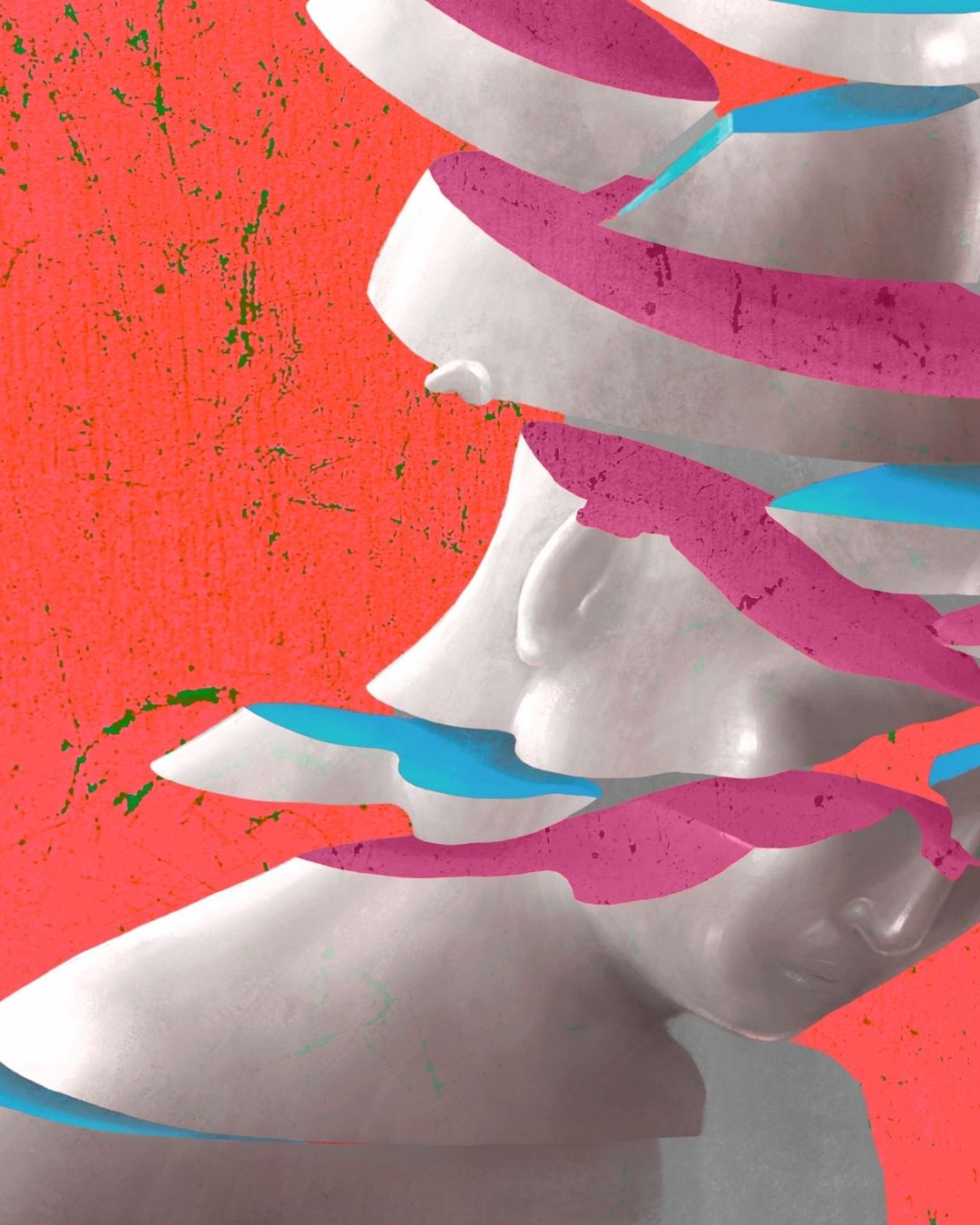
Okay. Let’s move past the clickbait title now that you are reading this. I am not referring only to the literal, medicalised “stripping” in the Trans Act 2026 in India, but to a broader condition in which trans people are persistently stripped of dignity and constitutional rights. The “stripping point” is not a singular event incited by the Trans Act 2026. It is an ongoing condition that names the structural violence on trans, gender variant and intersex lives, perpetually exposed to scrutiny and control. Rights, even when formally recognised, remain contingent and subject to verification, revocation, and reinterpretation by the state. Some trans women have responded with a striking, if unsettling, resignation: if the state insists on medicalised verification, then so be it – we will strip. It is a defiant refusal, even a kind of dark humour directed at the state, but it is worth pausing here. What sits underneath is a deep fatigue produced by continuous scrutiny. When one’s existence is already policed and stripped—both literally and metaphorically – by families, bureaucracies, and law enforcement, the threshold of what counts as violation against us is tragically lowered. From Tara, who was burnt alive in the Pondy Bazaar police station in Chennai, to the routine custodial violence and arbitrary detentions of trans women in Hyderabad, Bangalore and other parts of India, this is not exceptional violence. It is pervasive, structured, and ongoing. Nobody cares. We have always already been stripped. Outside of the hash-tagged urgency of the current moment of hum dekhenges and reel-making, this has been the condition for a long time. Many of you woke up only now. Wonder how many would have shown up if our hashtag was hum kaagaz nahi dikhayenge.
The rollback of trans legal recognition and rights through the Act is situated within a broader project of Hindu nationalism. It sits alongside the recent imposition of uniform civil codes in Gujarat, the controversial Special Intensive Revision of electoral lists and the 2026 Supreme Court decision denying protections to Dalit Christians and Muslims under The SC/ST (Prevention of Atrocities) Act. It reflects a wider pattern of erosion of fundamental rights for Muslims, Dalits, and Adivasis. By defining a “true beneficiary” through Hindu mythological categories of “transness”, the Act mirrors problematic narratives of “fake beneficiaries” in reservations, policing legitimacy and excluding those outside flawed state-sanctioned categories. As Fiza Sultana pointed out in a group conversation, “transness” becomes an anthropological category under the present Act. Most importantly, as Living Smile Vidya had already noted well before NALSA, we are not a single social class or a unified caste. We are a coalitional formation across caste, religion, class, and disability. These power differences structure access to resources, representation, and survival within trans communities themselves.
Alarmingly, the government has announced that the 2027 Census will commence on 1st April. The first phase covering household details includes three categories for the sex of the head of household – Male, Female, and Transgender. The implications of collecting data on trans households (both within traditional systems and outside) must be carefully considered against the criminalising provisions of the Act.
The Trans-Intersex Self-Respect Coalition @tisr.c has importantly highlighted that all the provisions of the Trans Act 2026 are derived directly from Part II of The Criminal Tribes Act 1871. They draw our attention to a crucial point.
No ruling party can simply reintroduce a colonial law like The Criminal Tribes Act of 1871 in contemporary India; doing so would be unconstitutional under Article 13 of the Constitution, which declares that any law inconsistent with or in violation of fundamental rights is void to the extent of that inconsistency, and prohibits the state from making laws that abridge or take away those rights. This point needs to be clearly foregrounded in the legal petitions currently being put together by various interest groups, often without transparency or meaningful, wide-ranging community consultation. The irony of a “postcolonial” Indian government, whose ideological project is a revival of Hindu caste supremacy, bringing back colonial legislation is not lost on anyone.
In V. Vasanta Mogli v. State of Telangana, the High Court in 2023, struck down the Telangana Eunuchs Act, 1329 Fasli as unconstitutional, holding that its provisions were identical to the repealed Criminal Tribes Act, 1871 and therefore manifestly arbitrary and contrary to constitutional principles. The Court further directed the state to provide reservations for transgender persons in education and public employment. Our demand is deceptively simple: we are Indian citizens; we have fundamental rights under the Constitution. Repeal the Trans Act.
Independent trans activist Mugil Anbu Vasantha has raised an important alarm over (he writes regularly here), the “transgender survey” conducted in Karnataka, which has only been temporarily stayed by an interim High Court order in October 2025. The court has “restrained” the state government from carrying out identification through “strip and search” methods already conducted, directing that all collected data be treated as strictly “confidential”. This reveals something far more fundamental: trans people are unable to access even the bare minimum conditions of citizenship under the Indian state. Even before this Act, trans and intersex people have been negotiating a combined nexus of NGOs, hospitals, the state, and chamcha trans representatives, particularly dominant caste ones, to be issued or denied identity cards under the TG Act 2019. The 2019 Act itself has no clear-cut procedural rules, applications are arbitrarily rejected, and implementation remains piecemeal, uneven, and regionally inconsistent. There is an absence of trans masculine and intersex representation across welfare boards (most boards are inactive/defunct) and many report that authorities continue to insist on medical procedures for certification despite the “victory” of self-declaration under NALSA. Those who have been forced to navigate this system understand the violent shifting goalpost of the “rights” supposedly granted to them.
The NALSA judgement goes beyond self-declaration and explicitly affirms fundamental rights, prohibits discrimination, and directs the state to provide reservations, healthcare, and welfare. However, its reduction to a “third gender” ruling in media, activist and academic discourses has enabled Brahmanical structures to sideline these equally important directions. The most significant change the NALSA judgment brought about, as Mugil points out (instagram story @chopt_arts, 25th March 2026), is this: It recognised the legal category of a transgender person (self-declared), apart from the existing categories of “male” and “female”. As a movement, we are long overdue for a collective conversation on understanding horizontal reservation as an important demand and the many lessons we can learn from horizontal reservations already granted to women, persons with disabilities and “subquotas” with Scheduled Caste (SC) categories.
The question of identity documents is not symbolic, it is structural. What happens when you do not have a single state document that reflects your identity? Can you rent a house, open a bank account, apply for a job, continue education, or access hospital care? In everyday life, every interaction with the state and the public, from the ticket controller on a train to airport security, become sites of fear and risky negotiations. The right to hold documents that reflect your gender is inseparable from access to basic rights such as healthcare, education, employment, and minimal safety – all things that make life survivable. Who is the oldest trans person you know in India? Precisely.
The current “my body, my rights” framing, centred on privacy, self-declaration, and individual autonomy, risks flattening the crisis into a liberal identity discourse. Questions such as “who are you to decide my gender?” or appeals to “doctor-patient confidentiality” do not capture the socio-material conditions shaping trans and intersex lives. Today, we are all too familiar with the brutal violence faced by inter-caste couples in India – so-called “honour killings”, the manufactured hysteria around “love jihad”, anti-conversion laws across states and the routine filing of false cases against young adivasi men who marry according to their customs under POCSO. In this context, ideas like bodily autonomy, privacy and ethical confidentiality are empty signifiers. We are a country that celebrates the Supreme Court’s “landmark” decision in allowing a 24-year-old woman like Hadiya to exercise her choice to convert and marry.
Make no mistake, this liberal viral moment, where ‘Jaya Bacchan is standing up for the dolls’, actively obstructs a deeper and necessary critique.
The anti-caste critiques articulated by Living Smile Vidya, Mugil Anbu Vasantha, Fiza Sultana, Christy Nag, Aanandh Rajappan among others, foreground how Brahmanical hegemony operates across movements, state systems, NGOs, hijra gharanas, political representation, legal citizenship, and affirmative action.
A 25-year-old Babasaheb identified heterosexual, reproductive endogamy as a central mechanism through which caste sustains itself. Those who defy it, whether through trans existence or inter-caste marriage, face social excommunication in the form of familial abandonment, violence, and isolation. This is social death, one of the most brutal punishments under caste as a punitive, disciplinary system. Trans people disproportionately experience familial abandonment, resulting in the loss of social support systems and pushing the most vulnerable into precarious living and labour conditions.
What we are witnessing now is this;
The withdrawal of documentation and legal recognition from those who have already lost key support systems and points of access, pushes them from conditions of social death into civic death. The Constitution remains the primary safeguard within an otherwise harsh legal and social structure; when constitutional rights are curtailed, as in the case of the Trans Act 2026, even formal protections are effectively lost. When you do not possess documents that reflect who you are, you are structurally excluded from economic, social, and political life. This exclusion is not experienced equally; it is intensified across caste, class, religion, disability, and among those engaged in precarious street-based labour.
Do not allow this moment to be reduced to a liberal discourse of identity and privacy. Re-centre the socio-material realities.
“The issue is not just that we are being asked to strip for medical boards. It is that our fundamental rights under the Constitution are being stripped.”
To my fellow trans and intersex activists: let us refuse to being tokens for intersectionality that is emptied of any political force and build a stronger foundation for our collective demands. Let us refuse the trajectory of the “queer movement” (right to “private”, consensual sex) and instead move towards the Periyarist and Ambedkarite politics that Living Smile Vidya continues to urge us towards. Our collective survival is at stake. Jai Bhim!
Special thanks to Mugil Anbu Vasantha and Fiza Sultana for their inputs.