
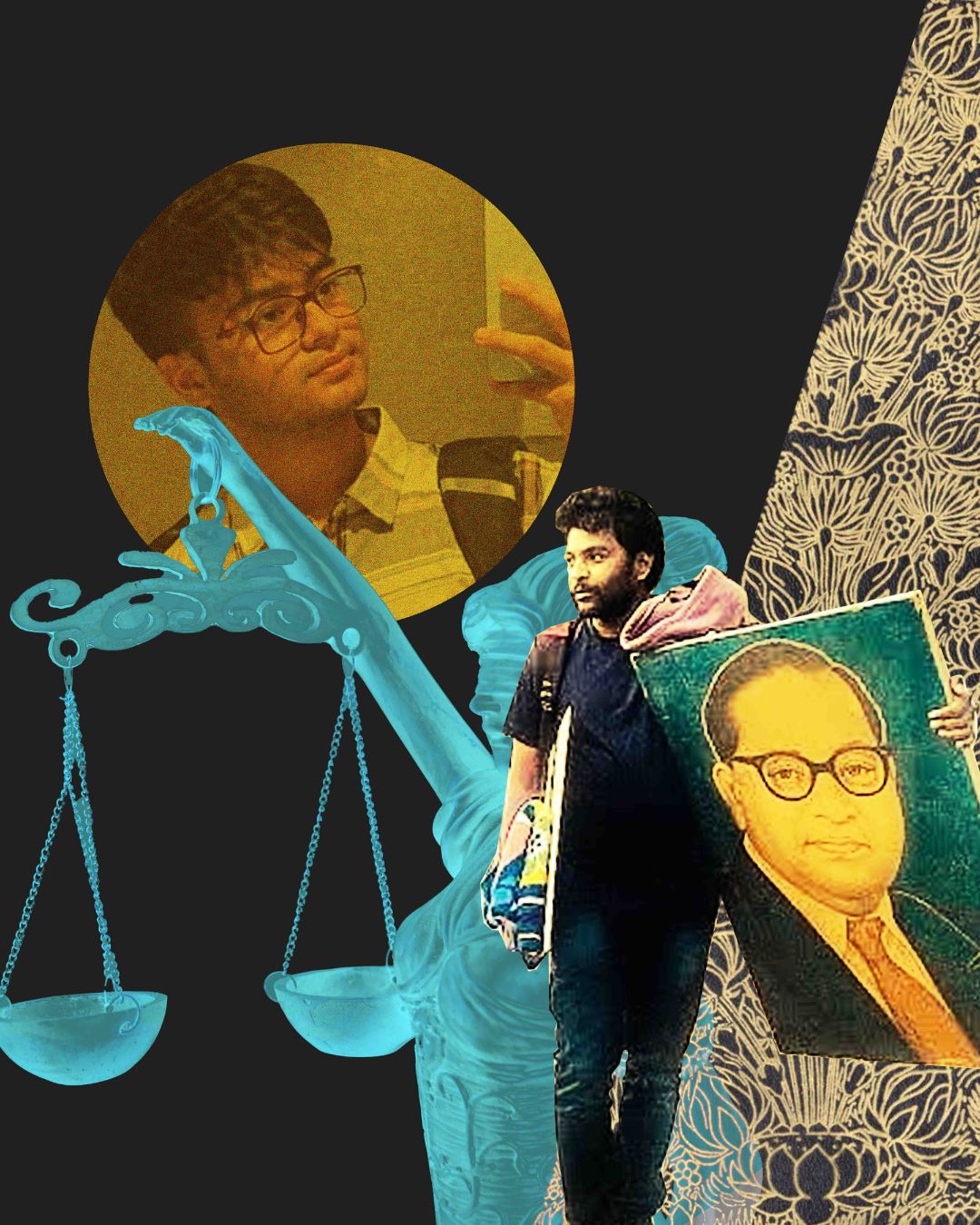
In the wake of Rohith Vemula’s suicide in 2016 at the University of Hyderabad, the death was termed institutional death/murder caused by institutional discrimination. Ten years later, in 2026, Sahil Wakode, a Scheduled Caste student from the Indian Institute of Technology Bombay, committed suicide after allegedly being caught cheating in an exam. Several other suicides have taken place in between and have been termed as institutional murders/deaths. However, there is no clear definition of such terminology. This article seeks to throw light on the concept of institutional discrimination as it exists in various jurisdictions across the world and its possibilities in the context of caste-based discrimination in India.
A Few Bad Apples
In 1999, the Macpherson Report was released in the United Kingdom in the aftermath of the racially motivated murder of Stephen Adrian Lawrence, an 18 year old black student. The report concluded that the case was not investigated properly due to covert racial biases. The court rejected the theory that it is the presence of ‘a few bad apples’ in the police force that hold racially biased attitudes and articulated that what was plaguing the police force was actually ‘institutional racism.’ The Macpherson principle established an anti-discrimination principle under which complaints perceived as racist in nature must be recorded as such, and a fair investigation must follow. In India, the Supreme Court of India in the case of Amit Kumar vs. Union of India (2025), the parents of Ayush Ashna and Anil Kumar, Scheduled Caste students at IIT Delhi who committed suicide, demanded that a fair investigation take place once an FIR (First Information Report) had been lodged under the SC/ST Prevention of Atrocities Act, 1989. The police had instead conducted a preliminary inquiry and determined that the students committed suicide due to academic pressure. As a consequence, they did not register the FIR. The Supreme Court ruled in a Macpherson way that the police must register an FIR and conduct an investigation even if the parents’ complaint was a ‘figment of their imagination’ or a ‘reflection of their anger towards the management.’ The court means that if an incident is perceived as a caste-based atrocity, then it must be registered as such and only a fair investigation can unravel the reality.
One of the assumptions underlying the Atrocities Act is that caste-based discrimination is deeply embedded within Indian society and, by extension, even within its formal institutions. However, the Atrocities Act in its statutory wording largely addresses direct and overt forms of wrongdoing targeted specifically at individuals belonging to SC/ST groups. Moreover, the offences enlisted in the Atrocities Act are criminal in nature, requiring that an offence be committed by a specific person against another specific person.
Spectra of Discrimination
Due to the limited and extremely specific coverage provided by the Atrocities Act, several emergent and contemporary forms of discrimination remain unarticulated and unaddressed. For instance, in 2014, IIT Roorkee changed its passing rule, raising the passing CGPA from 4 to 5. This was rightly termed an ‘institutional decision’ by a Fact Finding Report, as it was found that this rule resulted in the expulsion of 73 SC, ST, PwD, and OBC students, compared with the expulsion of 7 general-category students. Several petitions were filed, but the petitioners did not allege discrimination, and the courts chose not to interfere with universities’ autonomy. Similarly, in 2007-08, the Physics department of the University of Hyderabad changed its rules for granting fellowships by tying these grants to course performance. Senthil Kumar, a PhD scholar at this department, committed suicide soon after. In 2006, the Faculty of Sciences changed the rules so that even if a student scored the minimum 50% passing mark, the doctoral committee would make the final call on their grade. The Senthil Kumar Solidarity Committee report stated that SC/ST students were disproportionately affected by these measures, even though the rules appear arbitrary and apply to all students.
The Thorat Committee report detailed several institutional norms and practices plaguing the All India Institute of Medical Sciences (AIIMS) in 2008. These ranged from disproportionate marking of marginalized students in vivas, lack of representation in class rep positions, caste-wise segregation in hostel residence, inability to participate in certain sports activities and cultural festivals, improper application of reservation policies and much more.
Such rules are in fact indicative of ‘indirect discrimination’ or/and ‘institutional discrimination.’ Indirect discrimination occurs when a facially neutral rule has a disparate impact on individuals bearing certain disadvantaged characteristics such as a lowered caste identity or a non-normative gender identity. Institutional discrimination occurs when an institution employs rules whose operation maintains the dominant status quo, rendering direct outward prejudice irrelevant to a wrongdoing. The rules operate such that no overt acts of discrimination or prejudice by a specific individual towards a specific individual are required.
The Gap
The Constitution outlawed untouchability. This was preceded and followed by various pieces of legislation on temple entry and curbing social boycotts. The Untouchability Offences Act was enacted in 1955 (amended and renamed as the Protection of Civil Rights Act in 1976). These laws were intended to enable ‘civil rights’, modelled after civil rights laws in the USA. The Atrocities Act was enacted in 1989 as a penal law. However, none of these laws adequately account for other forms of discrimination, such as those arising from the framing of facially neutral rules or from institutional rules and policies that enable covert discrimination. However, such norms have been identified and documented across various fact-finding and government-sponsored reports. The law, however, has not caught up. The Atrocities Act and the Constitution may be able to address direct forms of discrimination more effectively, but their ability to address other typologies of discrimination is rather limited. It is imperative that any new anti-discrimination laws should account for and recognise these various forms of discrimination that are particularly at play at educational institutions and workplaces and that are not merely caused by ‘a few bad apples.’