
Systematic tactics of British colonialism have impacted local and indigenous communities including India’s caste system. It had dismantled traditional economies, imposed foreign system and enforced cultural, social and economic marginalisation. These actions, driven by profit making mechanisms have left a poverty-stricken population, malnourishment, alienation and exclusion in the society. To fight against it, on March 2, 1930, M K Gandhi informed the Viceroy of British India, Lord Irwin, and the British monarch George V that a nationwide campaign of civil disobedience would begin on March 11. The movement was not merely about salt or symbolic protest; it was about challenging systems of monopoly and domination through which colonial authority and elite economic interests controlled everyday life in India.
At the heart of the campaign was a direct challenge to British monopolies over essential resources. Gandhi soon began his famous 200-mile march to the Arabian Sea in Gujarat to break the colonial salt monopoly, launching what would become one of the most iconic protests of the freedom struggle. Farmers, fishers along the coast and workers across western India rallied behind the movement. In the intense summer heat, the act of producing salt in defiance of British law became a powerful symbol of resistance. In Bombay, mill workers joined demonstrations in solidarity. Brahman-Baniya mill owners responded by filing cases against the workers; tensions escalated into unrest. This paved out a way for the most well-known Bombay riot of 1930. The wave of protest spread beyond the city into the surrounding coastal regions. Across the creeks and villages of the Konkan, including the areas around Uran and Panvel, people began adapting civil disobedience to their own local struggles. One such struggle unfolded in the forests near the village of Chirner.
On September 25, 1930, hundreds of villagers gathered in forest outside Chirner in present-day Raigad district of Maharashtra. The gathering coincided with the local celebration of Akkadevi, a village goddess. The participants were not armed rebels but members of tribal communities who had come to collect grass and firewood for devotional rituals/practices/customs; their families had followed for generations. Under colonial rule, however, such everyday acts had been transformed into crimes.
When British officials arrived to stop the gathering as it was restricted according to them, tensions escalated rapidly. Within moments, the police opened fire at the crowd. Eight villagers fell to the ground, marking one of the lesser-known yet deeply significant events of India’s freedom struggle: the Chirner Jungle Satyagraha. The national news of that time. Despite its significance, the incident rarely appeared in mainstream narratives of the independence movement as media houses were owned by Brahman-Baniya tycoons. In fact, when violence broke out, Gandhi distanced the Congress, declaring that it was not part of the civil disobedience campaign. The villagers of Chirner were effectively isolated from the broader nationalist movement.
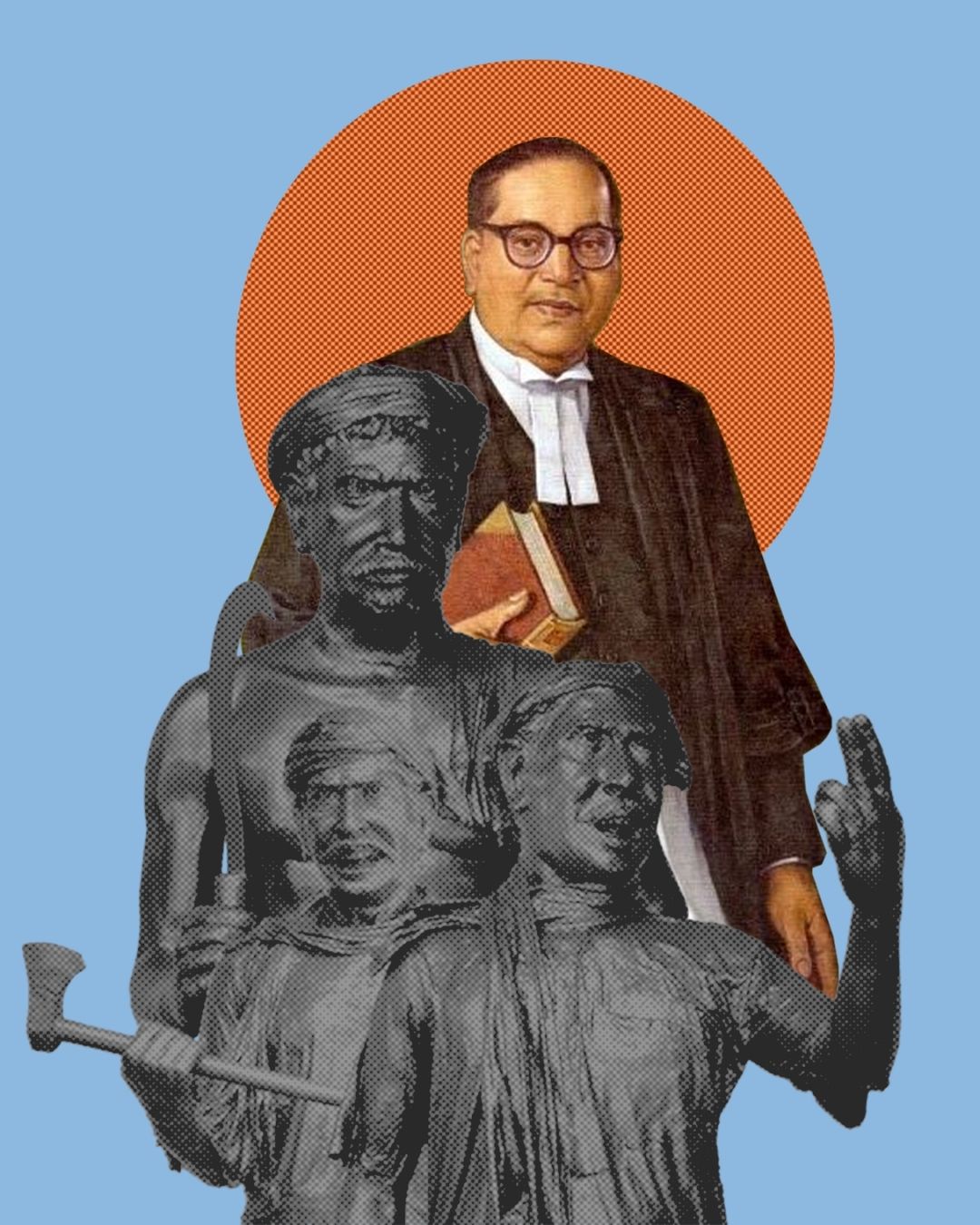
Yet the story of Chirner reveals how anti-colonial resistance was deeply intertwined with struggles over land, forests and livelihoods. In the aftermath of the firing, 57 villagers were arrested and accused of serious crimes including murder and dacoity. The colonial administration sought to imprison them and present the protest as a criminal conspiracy. At that moment, there was little support from Congress leadership. It was Dr. B. R. Ambedkar who stepped in to defend the accused villagers in court.
“Long before he became the principal architect of India’s Constitution, he was already using the law as a weapon against injustice.”
For Babasaheb, still in the early years of his legal career as a barrister, the case represented more than a courtroom dispute. It was a matter of justice for poor villagers confronting the coercive power of the colonial state. The roots of the Chirner Satyagraha lay in the transformation of forest governance under British rule. The colonial state had steadily expanded its authority over forests through laws such as the Indian Forest Act, 1927. These laws declared forests to be state property and imposed strict restrictions on the customary rights of local communities. Gatherings inside forests were also subject to surveillance and regulation, even when they were tied to rituals and seasonal festivals. For centuries, rural communities had depended on forests for survival. Grazing livestocks, collecting firewood, gathering grass and accessing minor forest produce were part of everyday life. Women walked into forests to collect fuel for cooking, farmers gathered fodder for livestock and tribal communities relied on forest produce as both sustenance and supplementary income. Colonial forest laws transformed these customary practices into punishable offences. By asserting state ownership over forests, the British administration imposed a bureaucratic regime on resources that had long functioned as shared commons. In the Konkan region, these restrictions had severe consequences. Forests were not distant wilderness but integral parts of local economies and cultural life. The new laws therefore disrupted entire systems of livelihood.
Resistance to such policies had been building across India for decades. In many regions, protests against forest restrictions became an important part of anti-colonial mobilisation. In coastal Maharashtra, these protests took the form of “Jungle Satyagrahas”, where villagers entered reserved forests to reclaim traditional rights. The village of Chirner became one of the centres of this mobilisation. Contemporary accounts suggest that hundreds of people participated. The crowd reflected the region’s social diversity. Farmers, fishermen, artisans, labourers, and members of tribal communities such as the Katkaris, Mahadev Koli, Aagari and Thakurs walked together into the forest. Many women were also present, highlighting how deeply forest resources were embedded in household survival.
The plan was simple. The villagers would enter the forest and collect grass and wood in open defiance of colonial restrictions to survive the day. By doing so collectively and publicly, they sought to demonstrate that the laws themselves were unjust. For many participants, the act carried emotional as well as political meaning. It was a way of reclaiming their relationship with land and forest.
The British authorities responded quickly. The local mamlatdar arrived with a police force and ordered the crowd to disperse. At first the confrontation remained tense but non-violent. The situation escalated when officials attempted to confiscate the grass and wood collected by the villagers. The villagers resisted. For them, surrendering the gathered material would mean accepting the legitimacy of a law they had deliberately come to challenge. Amid the confusion and rising tension, the police opened fire on the unarmed crowd. Panic spread instantly as people tried to flee. When the smoke cleared, eight villagers lay dead from nearby hamlets: Dhaku Barkya Phopherkar, Nagya Mahadu Katkari (Chirner), Raghunath Moru Nhavi (Koproli), Ananda Maya Patil (Dhakati Jui), Rama Bama Koli (Mothi Jui), Parshuram Nama Patil (Pandive) Hasuram Budhaji Gharat (Khopta) and Alu Bemtya Mhatre (Dighode) – is believed to have been the first to fall to the bullets.
Their deaths transformed the protest into a powerful symbol of sacrifice in Maharashtra’s regional history. The incident exposed the readiness of the colonial state to use lethal force to maintain control over land and resources. Following the firing, the British administration launched a sweeping crackdown. Hundreds of villagers were arrested and charged with rioting, murder of government officials and dacoity – offences that carried severe penalties including the possibility of capital punishment. By framing the protest as criminal violence, the authorities attempted to justify the firing and shift attention away from state brutality. But the case soon encountered a formidable legal challenge. Babasaheb led the defence of the accused villagers, joined by the senior lawyer R. P. Karandikar and assistant V N Shahasrabuddhe. His strategy focused on dismantling the prosecution’s narrative. Babasaheb argued that the gathering in the Akkadevi forest had been a peaceful act of cultural festival. By shifting the focus onto the actions of colonial authorities, he eroded the base of the State’s attempt to criminalise the protest. The trial lasted several months and attracted significant national attention. For many observers it became a test of whether colonial courts would deliver justice when the accused were poor villagers confronting the power of the state. Challenging those official narratives, Babasaheb not only eradicated the witness credibility but called villagers actions as a right to self-defence. Babasaheb also argued the village assembly was a cultural gathering and not a premeditated riot. He argued, when police used excessive force the cultural gathering turned chaotic and retaliated. Babasaheb also said that the authorities mismanagement was preplanned. Through rigorous cross-examination of police and forest officials, he exposed numerous contradictions in their testimonies. The prosecution struggled to establish credible evidence linking the accused villagers to the alleged crimes. Babasaheb further argued that any violence that may have occurred was a spontaneous reaction to the police firing rather than a planned conspiracy. Ultimately, the most serious charges collapsed due to lack of evidence. While some of the accused received lesser sentences of a few weeks, many were acquitted and the feared death penalties were avoided. For the villagers of Chirner, the verdict represented a crucial moral victory.
Babasaheb’s role in the case did not go unnoticed. In February 1931, a public meeting was organised in Panvel and Chirner to honour him for defending the satyagrahis. Villagers and local leaders publicly thanked him for standing with them in their struggle for justice. Yet its significance is profound. When villagers built the Chirner memorial, the government destroyed it. The incident reveals that the fight against colonial rule was not confined to urban centres or elite political leadership. Farmers, fisher’s tribal communities and rural labourers were equally central to the movement, often resisting authority and casteist behaviour through struggles rooted in their everyday livelihoods.
It also reminds us that environmental questions were deeply embedded within the politics of freedom. The protest at Chirner was fundamentally about access to forests – about the right of communities to sustain themselves through resources they had used for generations. Equally important is the legal battle that followed. Babasaheb’s defence of the villagers highlights another dimension of his legacy. Long before he became the principal architect of India’s Constitution, he was already using the law as a weapon against injustice. Each year on September 25, local communities gather at a memorial in Chirner to remember the martyrs of the Jungle Satyagraha. In the forests of Akkadevi in 1930, ordinary villagers stood up against the power of the colonial state. Their sacrifice – and the courtroom battle that followed – remains a powerful event that the struggle for freedom was fought not only through famous national movements but also through countless local acts of courage where people defended their land, dignity and right to live.
This is a reminder to environmental activism and those who cry climate justice as if it is a trend, Chirner Satyagraha is a demonstration of the way to fight against capitalism, monopolies and tyrannical systems which still persists. In 2006, Chirner witnessed the same rule. This time it wasn’t colonials but the Indian company: Mukesh Dhirubhai Ambani’s Reliance Industries Limited and Rahul Bajaj’s Bajaj Auto. Just after 4 years when Ashok Chavhan and Prithviraj Chavan proposed Navi Mumbai Special Economic Zone (SEZ) to drive industrial growth and Chirner villagers protested. To silence their protest, the administration and government decided to honour Satyagrahis and those who were martyred in 1930. A big event was organized and land acquisition started taking place. Policy modifications took place. A family whose men were martyred, avoided attending the program and did not sign the land acquisition papers. The police force went into their homes and the family reminded authorities that this is a house which was sacrificed for the rights of the land during tyranny. Today the 1400 hectares of land which was customary right of the villagers have gone and many kilometres are in SEZ. This wasn’t the first time that Chirner had fought the monopolies and industrial tycoons. Last year, Maharashtra Chief Minister Devendra Fadnavis government initiated the third Mumbai’s expansion. He promised that Chirner will be an innovation centre, economic hub and technology driven industry. He also said, it will be bigger and better than Dubai. He declared that it will be an important ‘Edu city’. Soon thereafter the selling of the land hastily began.
In the Chirner case, Babasaheb understood, the struggle is not because of the forces that gets amplify but why the forces amplified in such time and period are the cause reason. In 1932, two years after Chirner Satyagraha, Babasaheb started a peasant rebellion against the Khoti. The Anti-Khoti movement also gave a launchpad to the Independent Labor Party. The aim was to concentrate on the problems and grievances of landless and poor tenants, agriculturalists and of urban workers.
References
- Footage archive by the BBC - https://www.youtube.com/watch?v=Yv7s07n77xo
- The Maharashtra government is set to develop Karnala-Sai-Chirner New Town (KSC New Town) as the city’s third urban hub. Spanning 323.44 square kilometres across 124 villages in Raigad district, this ambitious project aims to alleviate pressure on Mumbai and Navi Mumbai by creating a well-planned, sustainable, and technologically advanced metropolis.
- Dr. Dilip Basanekar, महाराष्ट्र राज्य गॅझेटिअर- रायगड जिल्हा विशेष पुरवणी गॅझेटिअर: Maharashtra State Gazetteer- Raigad District Special Supplement Gazetteer (Marathi), Paryatan va Sanskrutik Karya Vibhag, Mumbai, 2023.
- स्वातंत्र्य संग्रामात झालेल्या चिरनेर जंगल सत्याग्रहातील हुतात्म्यांना अभिवादन. Report 2023. Link
- Dictionary of Martyrs India’s Freedom Struggle (1857 to 1947) Vol. 3 Maharashtra, Gujarat and Sind published by Indian Council of Historical Research, 2014. Link
- India’s Viagra – SEZ - https://newint.org/features/special/2007/09/01/special_feature
- Officer Joshi H. interviewed for the study. Archival by Center of South Asian Studies Link
- Babasaheb Ambedkar, Writing and Speeches Vol 17. Part 1 Link
- Zone of Conflict, 2006 Report, https://frontline.thehindu.com/the-nation/article30209959.ece
- 20 Uran villages to ignore govt functions on Chirner forest satyagraha eve, 2010 Report. Link
- Government Pushes For ‘Third Mumbai’ In Chirner, 2025 Report, Link