
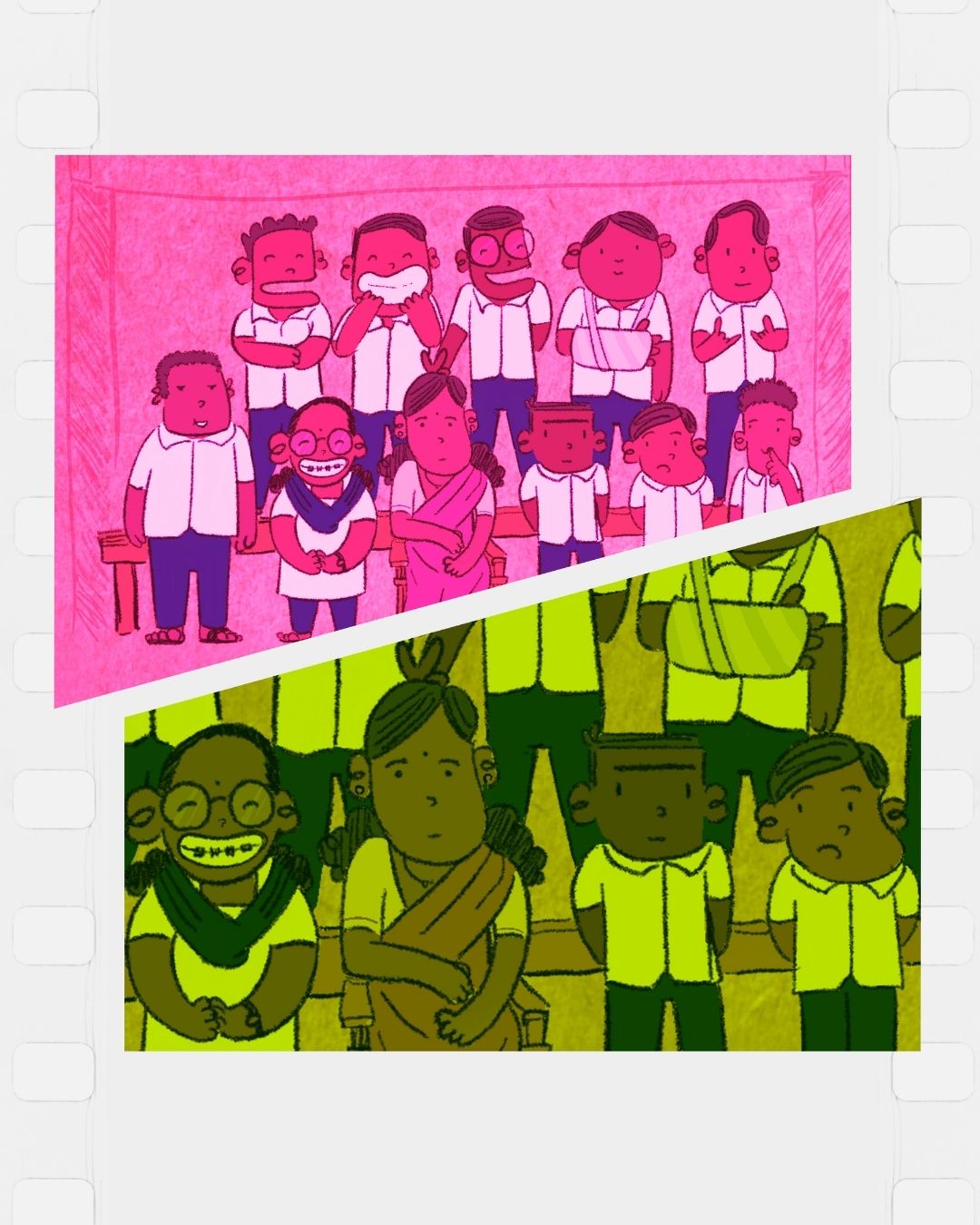
Da'lit Kids, a short film, was denied screening permission in February 2026 by the Ministry of Information and Broadcasting and the Central Board of Film Certification (CBFC) at the Animela Film Festival without any explanation. The usual exemption for student films was also not taken into consideration. This systematic casteist exclusionary politics was met with protest, and many other filmmakers also withdrew their films from the film festival, showcasing their solidarity with the filmmakers of Da'lit Kids, Appu Soman and Tomy Joppan. The protest against the government’s discriminatory stance was carried out through solidarity screenings against censorship across the country. One such screening took place in Bengaluru on 22 March 2026 at Big Room Studios, organised by Ambedkar Reading Circle and Neelavarana.
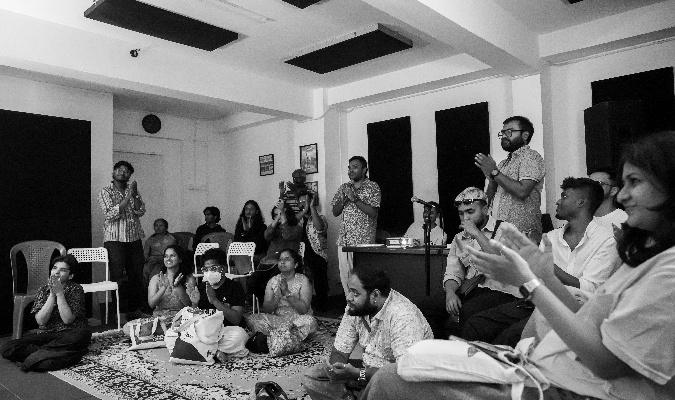
Solidarity Screening of Da'lit Kids at Big Room Studios, Bengaluru
Da'lit Kids is an animated short film written, directed and animated by Appu Soman, with sound design by Tony Joppan, music by Jem and presented by Satyajit Ray Film and Television Institute (SFTRI). It tells the story of a student named Aravind, who faces harsh punishment and humiliation for what is essentially a harmless, playful act typical of school life. However, Aravind stands up for himself, challenging the caste-based authority imposed on him. When asked why he chose to tell this story, Soman replied, “… it’s a lived experience. But not mine alone. It's of people I know, of friends and mine too. I wanted to tell the story that is closer to me…I didn’t want it to be superficial or alienating to people who watch it. It should reflect what I feel and then I could call it mine. So that’s where the story was coming from, then it translated into this film over the period of time.”
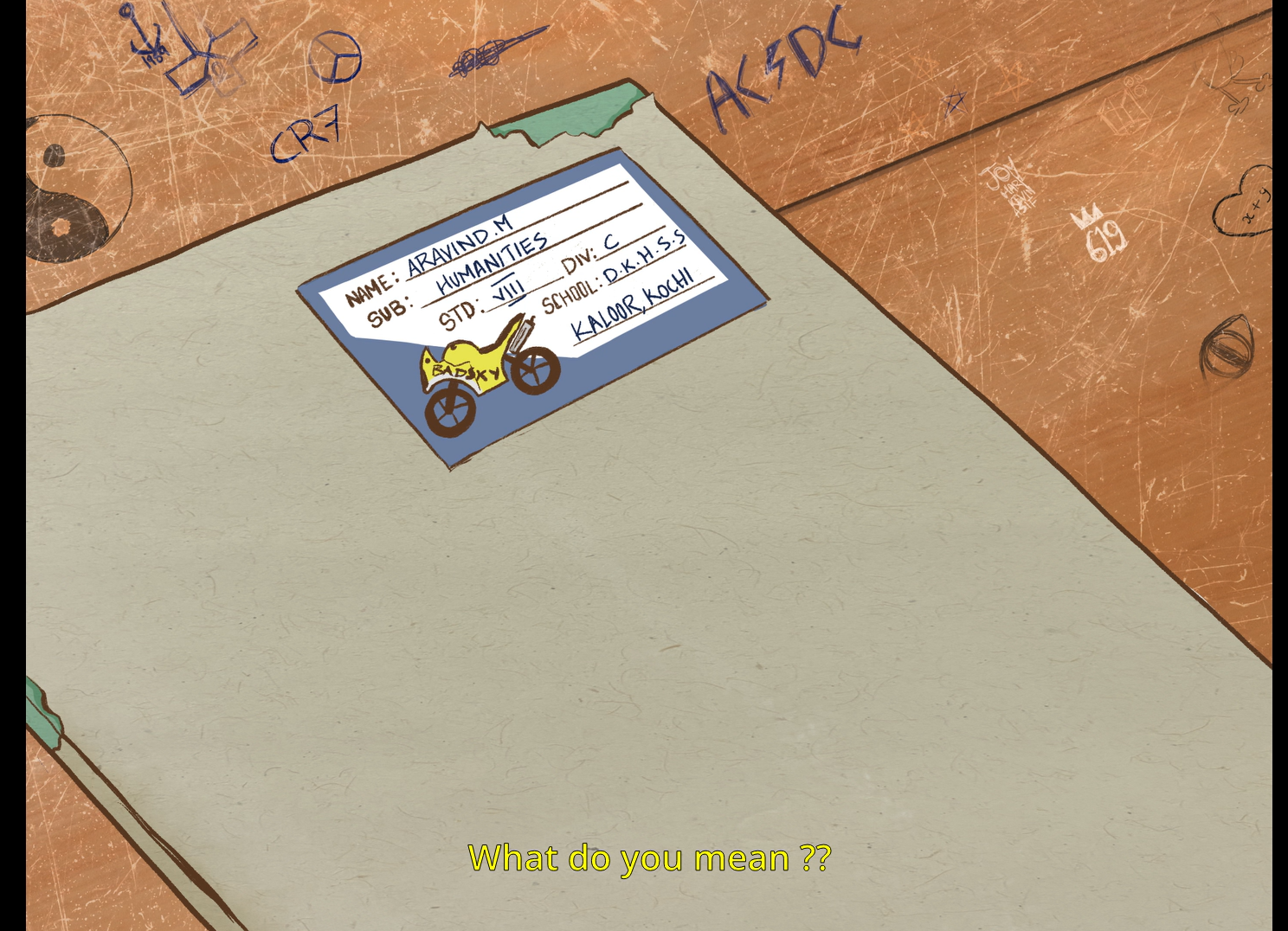
The film begins with the non-diegetic conversation of two students, before the camera reveals Arvind’s notebook. The subject mentioned in the notebook is humanities, hinting at the irony of a lack of humanity in casteist classroom environments teaching humanities. As the opening unfolds, we hear the students discussing their homework. Aravind explains that he couldn’t complete it due to difficulties at home and questions the purpose of such assignments. In response, the other student dismissively remarks, “Anyway, you don’t need these things! You’ve a reservation and a quota… your life will be sorted anyway…”
This opening effectively sets the tone of the film by bringing attention to the stigma of being labelled a “quota student”, a form of discrimination that Dalit students often encounter from an early age and continue to face throughout their educational journey. According to the Ministry of Education’s Unified District Information System for Education (UDISE+) Report (2021–22), dropout rates among Scheduled Caste students are 1.46% at the primary level, 3.56% at the upper primary level, and 12.55% at the secondary level. These numbers are consistently higher than the national average, particularly in secondary education. However, it is a well-known fact that most dropouts go unreported, and students are passed in their absence as well, to keep the numbers favourable to the system.
While multiple factors contribute to these dropouts, caste-based discrimination, such as verbal and physical abuse, derogatory labelling, and social exclusion, is widely recognised as a significant cause. By foregrounding this reality, the film immediately draws attention to the systemic challenges faced by Dalit students.
The film then moves forward through a sequence of flipping pages. We see ‘Chapter 1: Lines,’ followed by math problems, reflections on resistance, and pages filled with scribbles and drawings. These include familiar school-time games like XO, Bingo, and FLAMES, as well as simple robot sketches that capture the everyday world of a student. There are also scribble doodles like Thrash, which Soman says was music he listened to growing up and wanted it to be there.
Amid these seemingly ordinary elements, powerful and unsettling phrases appear, such as ‘Death’ and Desolation,’ ‘Your God Never Mattered,’ and the lyrics of No Church in the Wild ‘What God to a Non-Believer’. These lines serve as sharp critiques of casteism and its consequences, pointing to experiences of despair, violence, and hopelessness. The questioning of God reflects a deeper, recurring concern among oppressed communities grappling with injustice and faith.
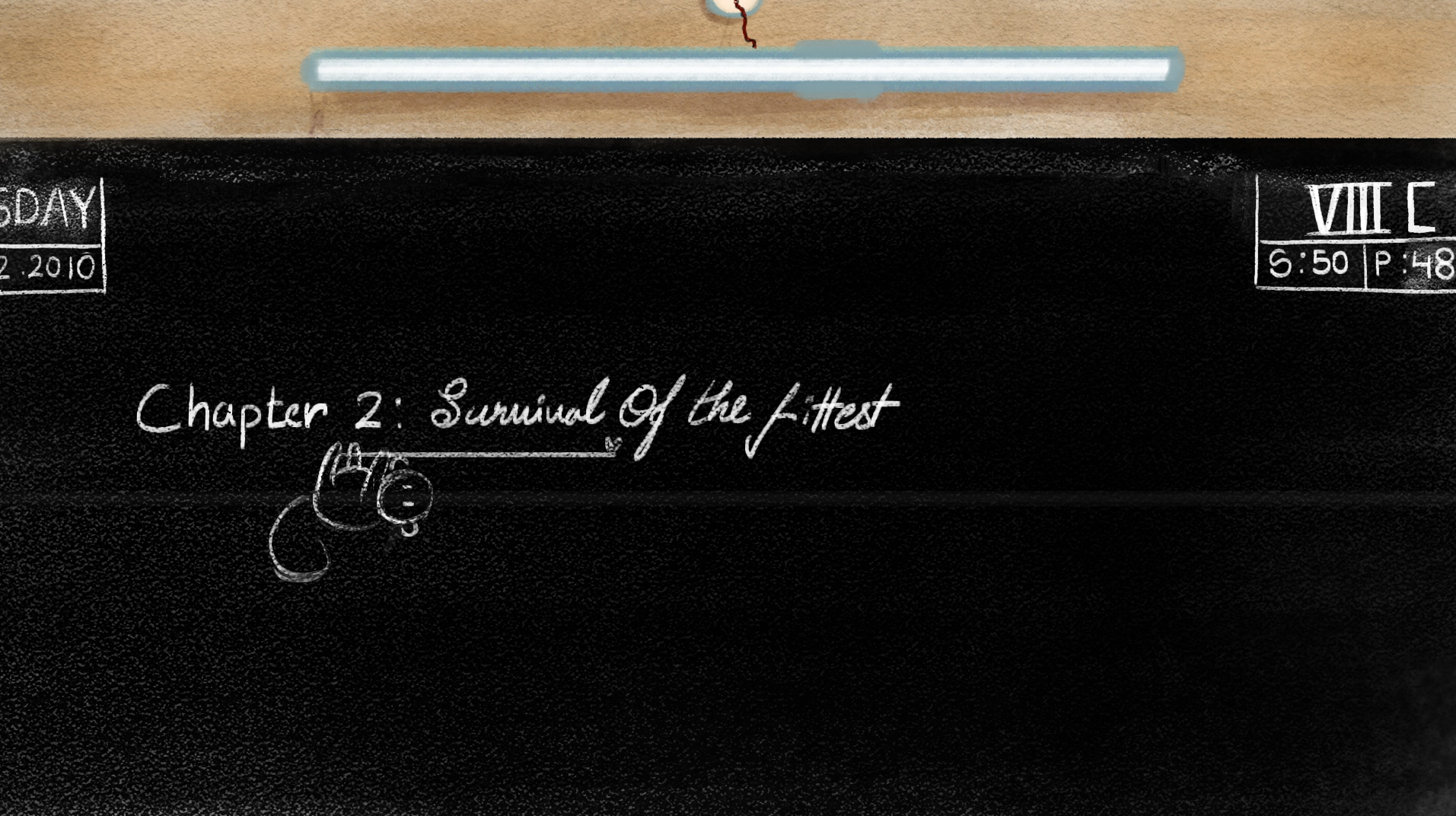
Even fleeting moments carry weight. This one page that appears only briefly conveys a great deal. The FLAMES game, for instance, ends with Aravind and Riya being labelled “enemies,” gesturing to society’s intolerance towards inter-caste relationships and the real consequence of (dis)honour killings. The pages then begin to flip rapidly, transitioning into the main narrative. A teacher is shown dictating notes for ‘Chapter 2: Survival of the Fittest,’ which directly frames the story that follows. In the scene, a child waters a banana plant while the mother, holding a baby, and the father stand close by, watching. As the child waters the plant, the banana bunch grows larger. However, a Brahmin figure abruptly enters, with a large face and eyes, smacking his lips, plucks the banana, and leaves, while the child and his family are terrified by him. The child’s innocent desire to eat the banana is snatched away. This not just represents the killing of a child’s wish but also the Dalit labour, where a child’s labour is extracted by Brahminical forces, leading to alienation from not just the product but also the individual from himself, by the Savarna attack on the labour and identity of the individual. The scene raises a critical question about the idea of ‘survival of the fittest.’ It is interesting to see how Soman draws attention to more of a social Darwinism than a scientific approach to make a point from a humanitarian lens. It challenges the notion by asking who truly gets to be ‘fittest’ in such a system, suggesting that power and dominance, rather than fairness or effort, determine survival. It can be read as a commentary on how dominant caste forces suppress and appropriate the labour and voices of marginalised communities.
Additionally this page has a poem written on top which Soman says, “And that four lines of poem which you see, it's from a poem called Vazhakula by Changampuzha Krishna Pillai, which is essentially talks about the story on that page (explained above). It was my first exposure in the school to a poem that spoke about caste and exploitation. Also my Malayalam teacher would speak about her lived experiences. This poem and this experiences became turning point in my life and hence wanted to include it in my film.” This poem is considered as one of the early voices of resistance in modern Malayalam literature which has been a significant influence on Soman.
The narrative of the film then shifts to a blackboard illustration, where ‘Chapter 2: Survival of the Fittest’. Here the movement from monkey to human is shown. Starting with hunting and gathering to the agriculture phase of evolution and then the competition among the humans to survive is portrayed. The film critiques how the dominance of the so-called ‘fittest’ humans has been normalised in society. Further magnified through imagery of bulldozed settlements and violent attacks on marginalised communities, pointing to casteism and capitalism as enduring systems of oppression.
In the classroom, a student asks, “Teacher, if humans evolved from monkeys, does that mean humans still have animal traits?” The teacher responds, “Not all humans will have those traits, but some monkeys in this class do.” This remark carries layered implications, prompting the viewer to question who is being dehumanised and labelled in this way, and how such language reinforces existing hierarchies and stereotypes.
The film then moves to ‘Chapter 3: I,’ where we can see Aravind. The teacher dictates a line: “The meaning of survival of the fittest was thus extended to what was respected by the higher society…” This single statement subtly critiques curricula and the interpretation of the elements one studies, often reinforcing the idea that one must conform to the values of the perceived higher sections of society, typically aligned with the upper caste, the dominant caste, and the upper class.
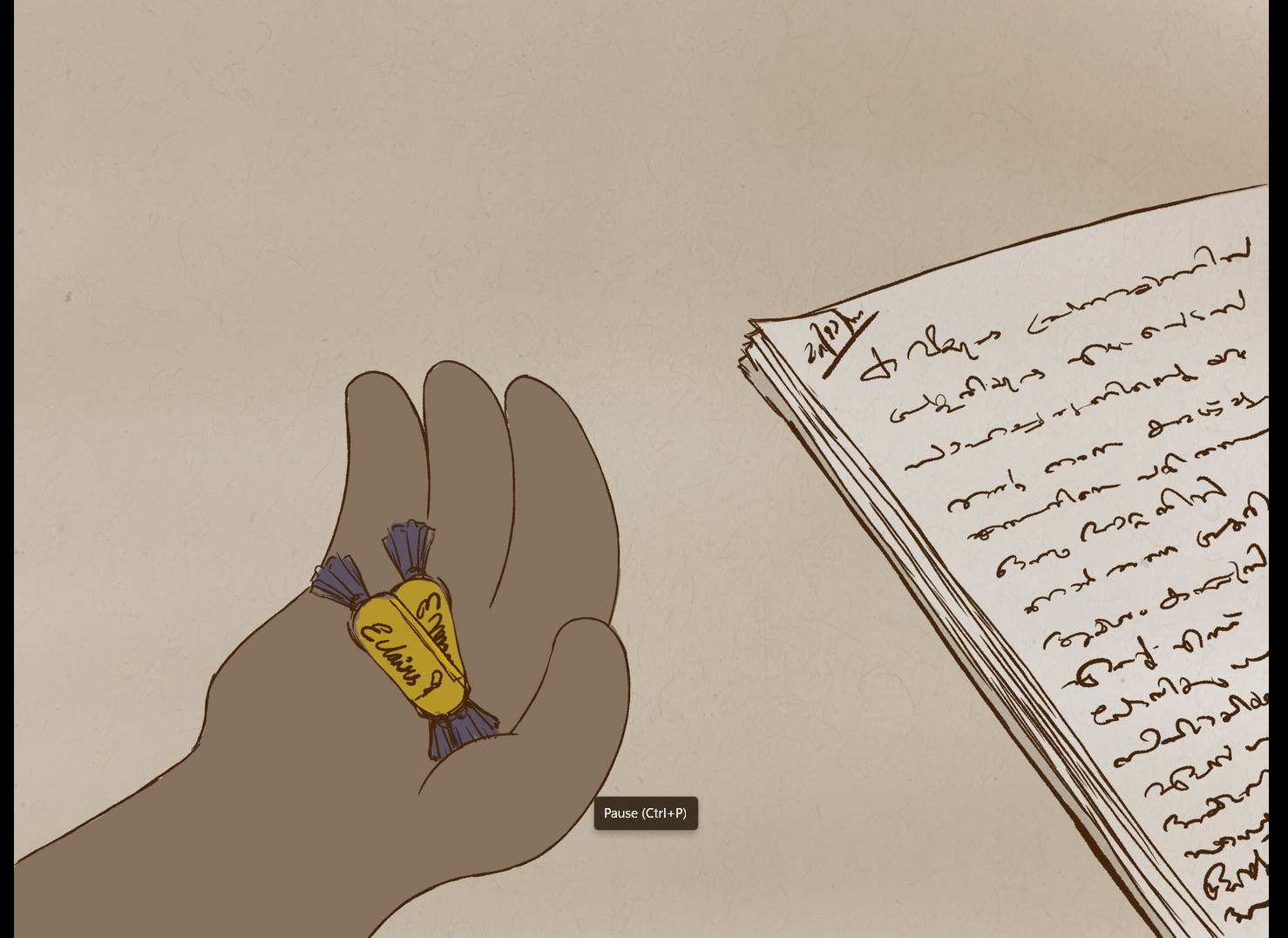
As this is being dictated, Aravind quietly takes out two eclairs from his bag and shares them with a friend. The teacher notices and throws a piece of chalk at him. At this moment, the film’s artistic expression reaches a striking high point. As the chalk travels through the air, it transforms, first into a stone, then a sharpened stone, then a blade, followed by a knife, a sword or a machete, and finally a gun firing a bullet. The bullet then morphs back into chalk just before striking Aravind. This sequence parallels the lesson on human evolution with the evolution of weapons, suggesting that while humans have advanced, so too have the tools of violence. It highlights how such tools have historically been used not merely for survival but for control, exploitation, and the continued oppression of marginalised communities.
The teacher then turns to humiliating Aravind. Snatching his notebook, she angrily questions what he has written. She proceeds to beat him with a stick, berating him for filling the book with everything except the prescribed notes. She says, “You might have so many things to do! Simply coming to class! Won’t even take a bath! Useless! Stupid! Utter Failure! Waste of Space! Uncultured! Bottom Feeder! Animal! Moron! He and his pathetic work!”
As this happens, her voice multiplies and overlaps, creating a layered, overwhelming soundscape that reflects the intensity and brutality of her dominance. The moment becomes less about a single individual and more about a system speaking through her. Finally, she throws the notebook away, and it falls to the floor, symbolising both the dismissal of his voice and the erasure of his identity.
When asked about this moment and usage of caste slurs by teachers, Soman said, “Every single word of this slur I’ve heard in my life from teachers, and I just wanted to bring that here. It was very common for teachers to use such slurs openly, and they never hesitated to say such things.”
The teacher’s behaviour clearly reflects a Brahminical hegemony, hurling casteist remarks at the child. It brings to mind the book Joothan by Om Prakash Valmiki, where he recounts multiple instances of caste-based atrocities, including being beaten without cause simply because he was Dalit, much like what Aravind experiences here.
This raises important structural questions: can a child be beaten and humiliated for something as trivial as sharing a chocolate? Did she beat him only for that reason? Is it justifiable for a teacher to use dehumanising language, calling a student uncultured, or an animal, for such an act? The teacher’s remark about the child not bathing further exposes deeply ingrained prejudices. How does she assume this? Because he is a Dalit? Such comments are rooted in notions of deep rooted casteism and untouchability reflecting caste stereotypes associated with certain communities embedded not just in individuals but also in educational spaces and broader social systems that continue to marginalise and humiliate students like Om Prakash Valmiki and Aravind for no reason. The CBFC has done the same by denying Da'lit Kids a screening for no reason and without any clear justification. Yet, both within the filmic narrative and beyond it, there is resistance. Aravind stands up against the injustice he faces in the film, just as the filmmakers themselves resisted institutional rejection in reality. Both refuse to accept the silencing imposed on them.
Aravind then looks directly into the teacher’s eyes and points toward his book. Irritated, she asks why he is staring, but follows his gesture and looks at the book herself. What unfolds next is deeply symbolic. The figures from earlier begin to emerge from the book: the child labouring in the opening scene, the baby and parents, the human figures from the blackboard lesson on evolution, and even the monkey representing the beginning of evolution, all collectively pointing toward the book.
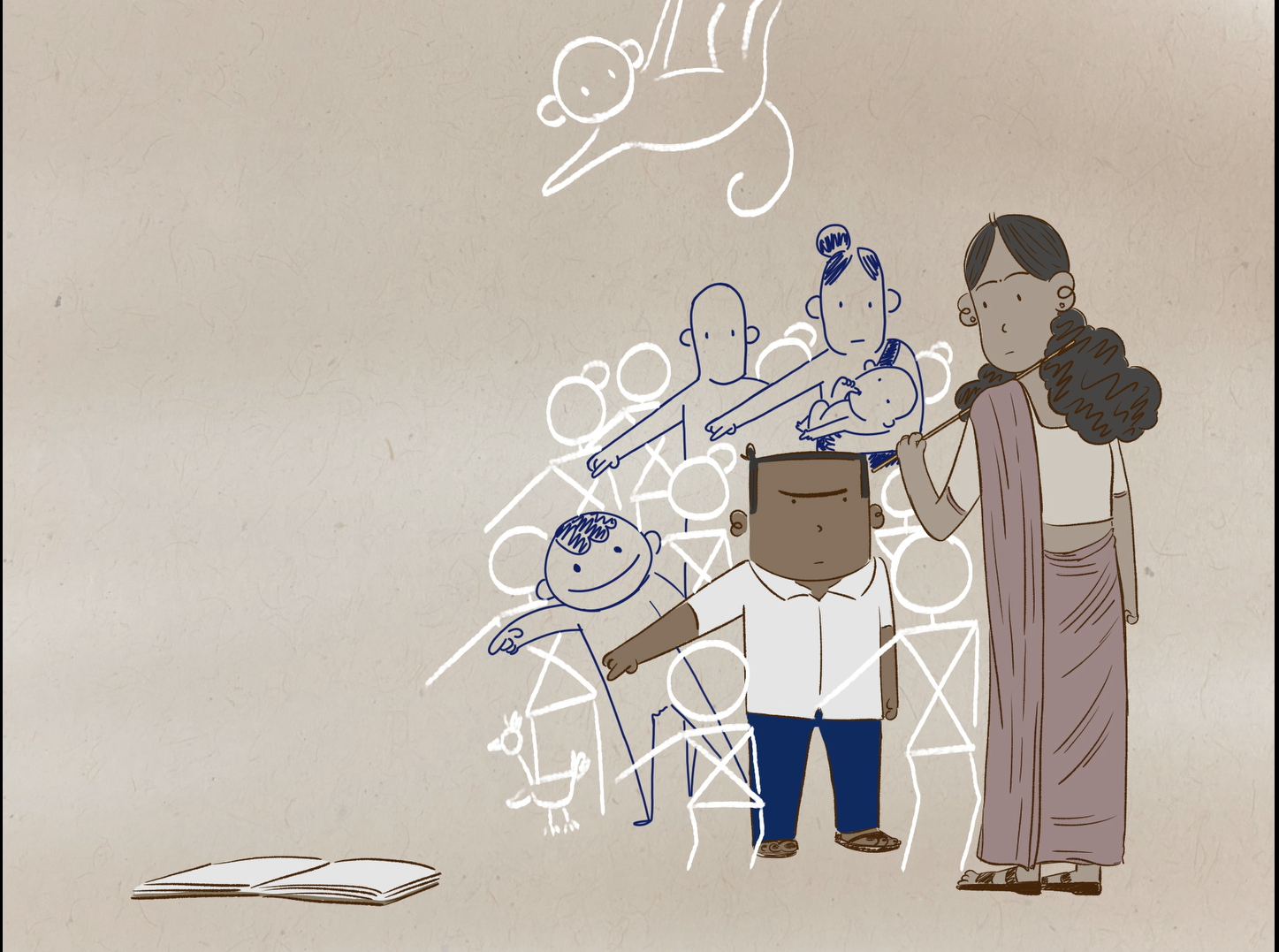
This moment works as a powerful metaphor. It suggests that Aravind draws strength, courage, willpower and resilience from generations of individuals who have resisted and survived oppressive caste structures. The act of pointing to the book becomes an act of Dalit defiance, backed not just by him alone, but by a collective history of struggle and resistance. The scene brings together past and present, showing that every act of resistance, no matter how small, is part of a larger continuum. It also echoes Babasaheb Ambedkar’s maxim Educate, Agitate, Organise, with the book symbolising education and knowledge as tools of protest and empowerment. Faced with this moment of challenge, the teacher is left stunned and ultimately drops the stick.
“The reaction of CBFC to a short, six-minute animated film like Da'lit Kids highlights this tension; if such a brief work is seen as threatening, it points to the fragility of the very structures it critiques.”
The film adopts a direct, unflinching approach, striking at the heart of casteism in school spaces. More broadly, it reflects the existence of such discrimination in educational institutions, as seen in the experiences of students like Rohith Vemula and Payal Tadvi, among others, who resisted institutional caste-based oppression and were institutionally murdered.
In this light, the film conveys a powerful message about confronting injustice, encouraging individuals to stand up for themselves and resist when oppressed. By directly challenging Brahminical ideologies, the narrative becomes socio-politically provocative and hence the Savarna censorship.
Censorship of anti-caste films has increasingly come into focus, especially with the growing popularity of Dalit cinema in recent years. Films like Pariyerum Perumal (2018), Kaala (2018), Bison (2025), amongst others in South India, along with Santosh (2024), Phule (2025), Dhadak 2 (2025) in the North, reflect a rising wave of narratives that challenge caste hierarchies. Such films are often perceived as a threat to entrenched Savarna power structures that rely on maintaining dominance and exclusion.
Cinema, as a socio-political medium, holds the power to question and unsettle deeply rooted systems like caste, which in turn invites censorship. Speaking about it, Soman says, “I never wanted to send my film to Animela Film Festival. But one of my faculties has been very encouraging, and she sent it. Until the last moment, I was not told about it. I got a call and was informed that my film will not be screened as it did not receive the exemption which is given to student films by CBFC, and therefore, the screening is cancelled. I was the only person who did not have information on it. Another film that was cancelled, the filmmaker got that information two weeks prior to the festival.” This narrative indicates the inherent urge of the system to oppress marginalised communities that challenge dominant narratives. The reaction of CBFC to a short, six-minute animated film like Da'lit Kids highlights this tension; if such a brief work is seen as threatening, it points to the fragility of the very structures it critiques. The response of bodies like the CBFC reflects not only resistance to these narratives but also an underlying discomfort with the growing influence of anti-caste cinema. While on one hand, anti-caste films are censored, on the other hand, hindutva propaganda films are highly encouraged. For which Soman says, “I was actually sad that my film screening was cancelled. Nobody even came forward and spoke to me after whatever had happened, the so-called veterans of animation industry. The festival also did not take the initiative to go ahead and screen it. They said that since the ministry has decided, their hands are tied. But this is how they try to exclude people like me from such spaces. This is how they try to stop people from making films which challenge oppressive structures, like how Santosh was banned last year. They’ll ask you to make cuts, they’ll ask you not to talk about particular issues, so that you don’t speak, and people don’t hear about it. But then they’ll make things like Dhurandhar happen. CBFC is notoriously doing this. I really did not think they would ban a short film, an animated one. Even animation scared them… maybe the title itself did…”
The film ends with Aravind quietly reclaiming his space. He picks up his book, dusts it off, and pops the eclairs toffee into his mouth. It’s a small yet meaningful act of resilience. The film and the fraternity have also dusted off the CBFC’s stance and have begun screening Da'lit Kids. When asked about space and community building, Soman said, “I had so much faith in this animation industry. But once I made the film, I realised there is no animation industry and no space for people like me. I had to essentially build from scratch. Therefore, every single time I tried to build that space, for myself first and obviously for the community. These screenings and everything tell this story. So many people came forward to help, not just the film community but also the academic community and other spaces. When people stand by you, that is where you know community building is happening”. The continued solidarity screenings across the country suggest that the film’s journey is far from over, and its message continues to resonate and spread.