
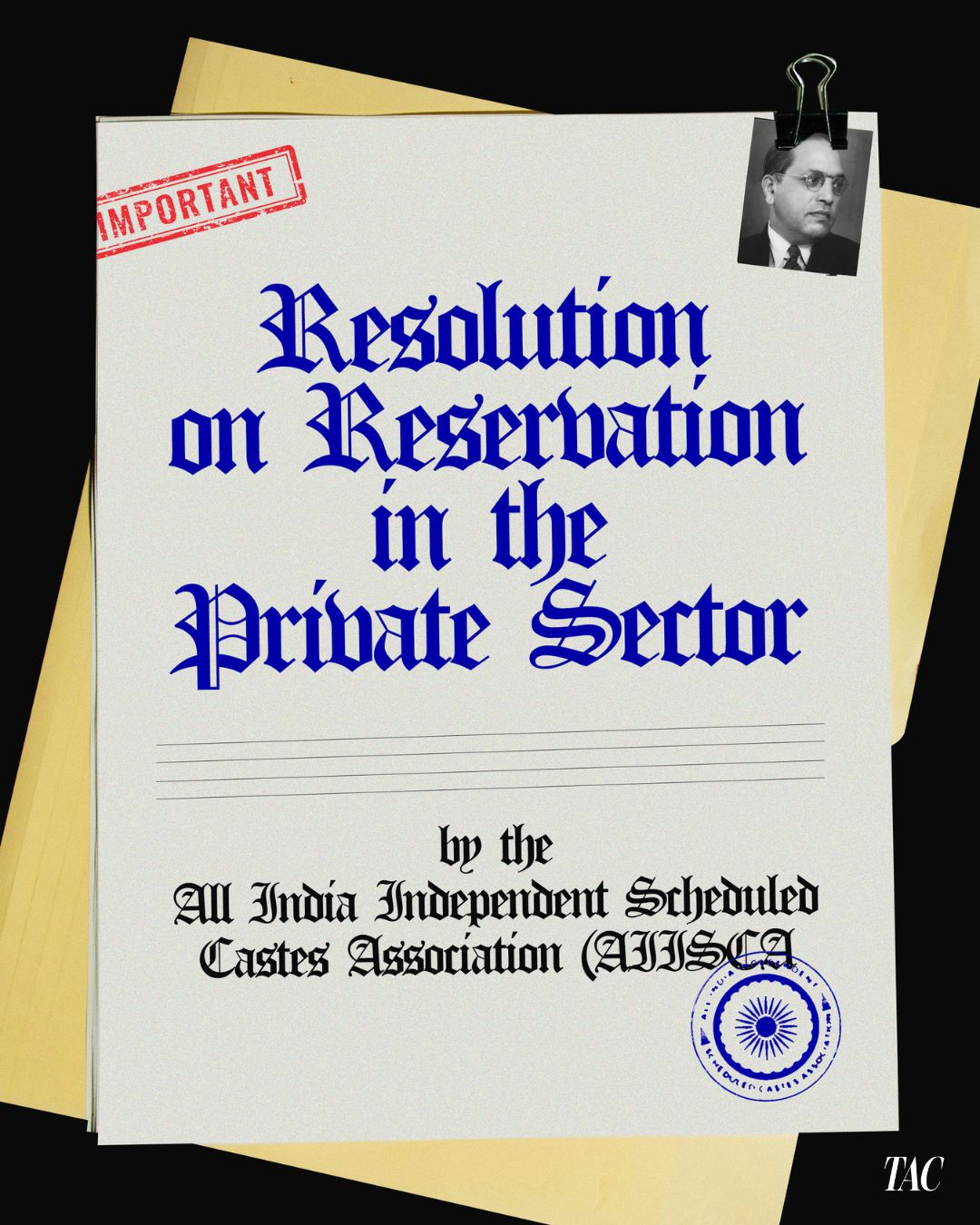
(From conference conducted in Nagloka , Nagpur, Maharashtra on 7th October, 2023)
Caste, as commonly understood as a system of social division, encompasses more than just issues of ‘Touchability’ and ‘Untouchability.’ As emphasized by Babasaheb Ambedkar, caste also serves to legitimize the economic monopoly held by Hindu upper castes. It categorizes work as a ritual obligation, relegating the producing and laboring castes (Shudra and Ati Shudra) to the lowest social strata, while elevating the consuming castes (Brahmins and Savarna) to higher positions. The caste system operates on principles of restriction, coercion, violent disciplining, and punishment, rather than reciprocity, cooperation, and interdependence.
During his time, Babasaheb Ambedkar fought against the traditional caste-based economy. His struggles included efforts to abolish oppressive revenue systems like the Khoti system and caste-based practices such as Mahar Watan in British Maharashtra, providing us with glimpses of the exploitative history of the caste-based economy.
While some argue that the new market economy, constitutional provisions, labor laws, and welfare policies have transformed India into one of the fastest-growing economies, various indicators reveal the persistent age-old caste hegemony of the upper castes and the subjugation of the lower castes. According to the 2011 census, the conditions of Scheduled Castes (SCs) are worse compared to the upper castes. Approximately 34% of SCs still live below the poverty line (BPL), in contrast to only 9% among the upper castes. Similarly, the total wealth possessed by the SC population in India is a mere 7%, which is 2.5 times less than their total population, while the upper castes enjoy a significantly higher national wealth share of 45%, nearly double their population percentage. Land possession among SCs is also significantly lower at 7.3%, compared to 42.2% among the upper caste category. Furthermore, the Multiple Multidimensional Poverty Index (MPI) indicates that 33.3% of SCs experience multidimensional poverty.
Although welfare provisions and reservations in jobs and education have been instrumental in promoting social and material mobility among lower castes, the underfulfillment of reserved seats and the subversion of reservation policies have limited their benefits to a small section within the lower castes. Several studies have revealed that many unfulfilled reserved seats are converted into general quota and are filled by upper caste candidates, even in the formal private sector industries and corporate houses. For example, a study by Thorat and Paul Attewell in 2007 found that higher caste candidates receive preferential treatment over lower caste candidates, even when possessing the same qualifications. This highlights the significant role played by caste capital and family networks, in addition to high-quality education and skills, in gaining entry into the supposedly open or free job market economy. Another study by economists Ashwini Deshpande and sociologists Katherine Newman and Surinder S. Jodhka showed that access to productive employment and well-paying jobs in the private sector remains largely limited to privileged sections of society. In a study based on a sample of the top 1,000 companies listed on the Indian stock exchange in 2010, it was found that caste diversity was virtually nonexistent in the Indian corporate sector, with 65% of corporate board members being from a single upper caste group. A study conducted by the Azim Premji University in 2019 indicated that SC/ST communities were "over-represented" in low-paying jobs and "under-represented" in high-paying ones, suggesting a significant underrepresentation of marginalized sections in private sector employment, which could not have occurred without discriminatory and biased corporate HR policies. Furthermore, the Socio-Economic and Caste Census of 2011 indicates that only 4% of SC and ST families have a member in government jobs.
Additionally, the economic reform process in India, formally initiated in 1991 and primarily characterized by liberalization, privatization, and globalization, has led to the contraction of the public sector and the rise of the private sector. This shift has started to dismantle the limited protections previously afforded to SCs in terms of employment opportunities. Privatization has significantly restricted Dalits’ access to fundamental means of sustenance and development, including education, employment, and healthcare facilities. The government’s pursuit of privatization of public sector units and the entry of multinational corporations (MNCs) without a comprehensive policy of reservation in the private sector has not only reduced the scope of reservation policies but has also left millions of Dalits and other marginalized sections unemployed. Between 1991 and 2012, over 20 lakh jobs were lost in the organized public sector. Considering the 50% reservation in the public sector, this implies that at least 10 lakh families from the SC, ST, and OBC communities have lost their opportunities. This number has likely increased significantly since the Modi government’s privatisation efforts, especially after 2019.
Justice Dinesh Maheshwari, while commenting on EWS reservation, observed that under Article 15(5) of the Constitution of India, the state has the authority to mandate reservation in privately managed institutions. He emphasized that unaided private institutions, including those imparting professional education, cannot be viewed as operating outside the national mainstream. Reservations in private institutions, as held in previous judgments, do not inherently violate the basic structure of the Constitution. This viewpoint raises the important question of whether there is a need for a comprehensive anti-discrimination law that also applies to the private sector. The private sector’s immunity from the constitutional responsibility of eliminating discrimination has become a significant challenge in post-liberalization India, allowing the Brahminical hierarchy to make deeper inroads than before. The private sector, now assuming the primary role of an employer, often lacks the requisite social responsibility or constitutional mandate. Therefore, there is a pressing need to address the constitutional immunity enjoyed by the private sector, especially given its growing prominence in the economy and the government’s increasing inclination to embrace private capital, sometimes at the expense of the constitutional commitment to equality.
In this context, we, the All India Independent Scheduled Castes Association (AIISCA), present the following demands:
Reservation in the Private Sector
Recognizing that caste-based discrimination persists in the private sector, we, the members of AIISCA, strongly advocate for the extension of reservation policies to the private sector, both in employment and educational institutions. This move will help ensure equal access to opportunities for all, regardless of caste, and promote inclusivity in the economic landscape.
Equal Employment Opportunity Act (EEOA)
Acknowledging the prevalence of discrimination in hiring and wage payment, particularly in rural areas, we call for the immediate enactment of an ‘Equal Employment Opportunity Act’ (EEOA). This legislation will provide legal safeguards against labor market discrimination, ensuring fair and unbiased employment practices, particularly for casual agricultural wage laborers.
Reservation and Legal Safeguards in Non-Farm Private and Cooperative Sectors
Recognizing the high order of discrimination in certain categories of jobs in the non-farm private and cooperative sectors, we propose a dual strategy. First, we advocate for legal safeguards through the EEOA to protect against discrimination in hiring. Second, we endorse the implementation of reservation policies, similar to those in the public sector, to guarantee fair participation of marginalized groups in private industrial and tertiary sector employment.
Affirmative Action and Compensatory Policies in Business and Corporate Capital
In light of the historical denial of the right to business and trade to marginalized communities, we urge the government to establish well-defined affirmative action policies for both public and private sector financial institutions. These policies should ensure the equitable supply of capital to minority businesses, addressing the discrimination and lack of financial capital faced by these enterprises.
Furthermore, we call for compensatory policies aimed at increasing the share of Scheduled Castes (SCs) in business and corporate capital. This compensation is crucial for redressing the longstanding denial of economic opportunities to SCs and promoting economic equity.
We, the members of AIISCA, are committed to advocating for these resolutions to address the systemic inequalities and discrimination faced by Scheduled Castes in India’s economic sphere. We urge the government and relevant authorities to take immediate and concrete actions to implement these measures, thereby fostering a more inclusive and equitable society for all.