
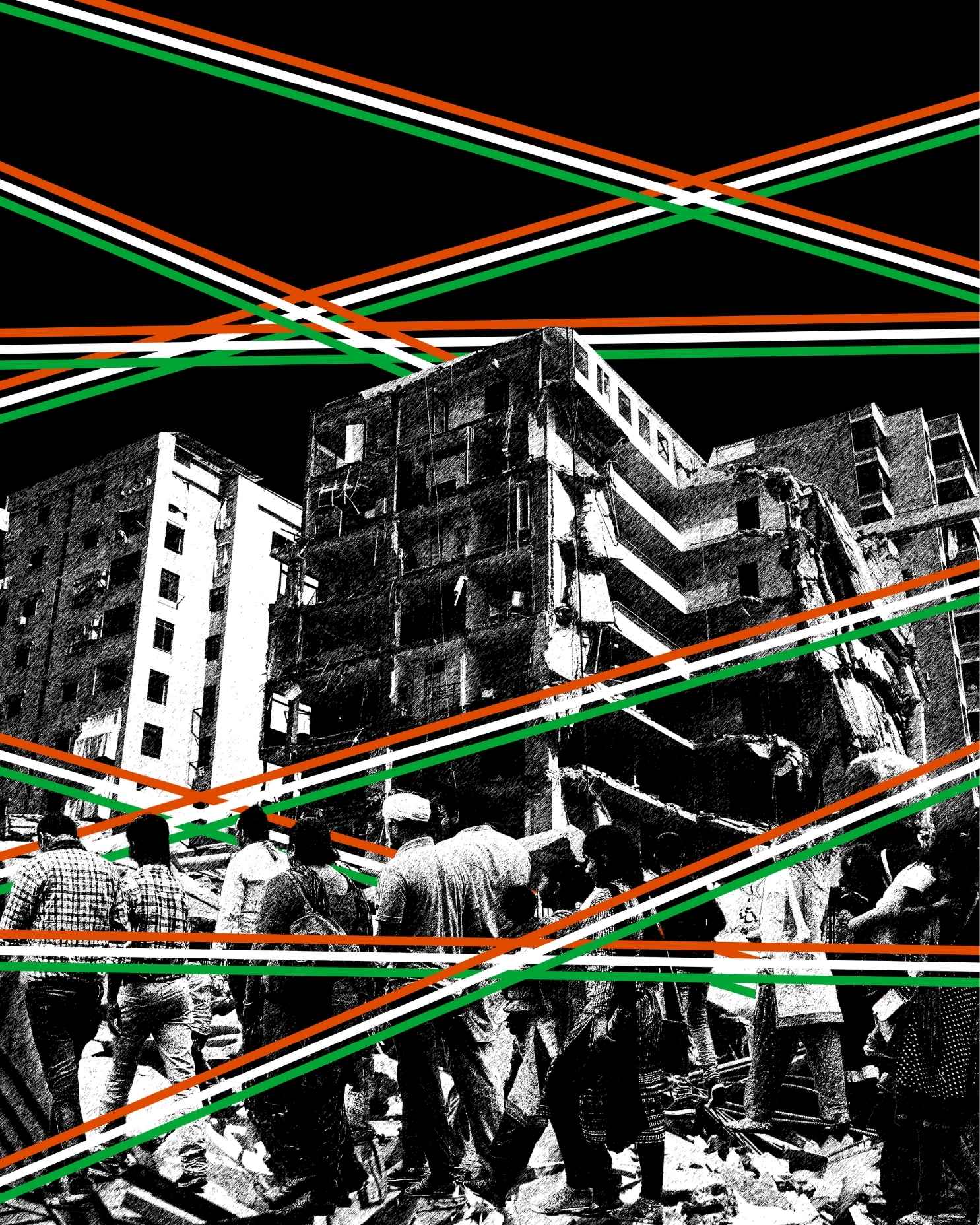
Since Israel and America have been attacking (large-scale airstrikes) Iran from February 28, 2026, it is a watershed event in the history of global politics in general, and the Gulf region in particular. It is particularly notable since it occurred two days after the Indian Prime Minister’s visit to Israel.
Furthermore, speaking at the Knesset (Israel Parliament), Prime Minister Modi used the phrases “fatherland” and “motherland,” explicitly referring to Indian-origin Jews who see Israel as their ancestral homeland (fatherland) and India as their site of birth and upbringing (motherland), to show closer affinity and true friendship.
It is significant to note that Vinayak Damodar Savarkar uses the concepts of “fatherland” (Pitribhumi) and “holy land” (Punyabhumi) to illustrate the idea of Hindu Rashtra in his book Hindutva. This idea of “othering” minorities, particularly Muslims and Christians, has historically served as an intellectual source for the Rashtriya Swayamsevak Sangh (RSS) and other upper-caste organizations, including the Bhartiya Janta Party (BJP).
Nonetheless, it has been more than a month since the Middle East has become a zone of severe war between Israel, America, and Iran. The Trump administration is hell-bent on overthrowing Iran’s theocratic state and assassinating its senior officials, including Supreme Leader Ayatollah Khamenei. The ongoing battle in the region has brought everything to a halt, from politics to economics, and the consequences are beginning to emerge. So far, Modi has not condemned the death or attack on Iran’s sovereignty, indicating a historical paradigm shift in regional diplomacy.
However, scholars of global trade and economics, as well as energy security specialists, are concerned about the growing costs of basic necessities due to a scarcity of crude oil, natural gas, and other commodities. Indian academicians and state machinery attempt to predict the future of the changing nature of the global world order and India’s share in it.
Surprisingly, no one has yet made the effort to explore the Indian diplomatic decision-making process during the recent crisis (or any crisis in general) from a sociological perspective – perhaps because doing so would disturb the comforting illusion of a “neutral” and “objective” foreign policy and diplomacy. This article uses a Critical Caste Studies method to analyze Indian diplomacy and its decision-making process in the present Gulf crisis and in the broader stage of world politics in an attempt to break through this carefully kept silence.
Indian Diaspora and the Question of Caste
Statistically, the Indian diaspora is the largest population that has historically relocated throughout the world in search of better opportunities and a higher standard of living, contributing considerably to Indian GDP. Interestingly, the Indian diaspora in the Gulf region is made up of almost 10 million people, the majority of whom work as blue-collar workers.
The remittances, and trade through the Strait of Hormuz, Islamic theocracy, Pakistan, and Hindu-Muslim issues in the region appear to be more important to the Indian mainstream media and current political establishment than the long-term socio-political ramifications for the diaspora and society as a whole. Alternatively, it seems they are accustomed to separating domestic matters entirely from the intricacies and power dynamics of anarchic global structures.
In his piece Understanding Dalit Diaspora, Sociologist Vivek Kumar examines the so-called Indian diaspora, challenging its representation as a unified category – a tendency that continues to dominate mainstream Indian scholarship. Kumar argues that the diaspora, much like Hindu society itself, is deeply fractured along caste lines and cannot be understood as homogeneous, whether within India or abroad. Yet, dominant narratives persist in flattening these differences. This becomes evident when sections of the upper-caste Indian diaspora enthusiastically mobilise in support of Modi – whether at Madison Square in the United States or during his visits to Australia – while simultaneously resisting the inclusion of caste hierarchies in academic curricula, such as the California State University debate in 2016. In contrast, Dalit diaspora groups have consistently supported such inclusion, exposing the caste-based fault lines that structure diasporic political behaviour.
Caste and the Structure of Indian Diplomacy
How, then, has caste shaped Indian diplomacy – an arena often portrayed as a puritan space governed by rationality, objective ideas, and strategic thinking? Or is this “objectivity” itself a carefully curated myth?
The Ministry of External Affairs, the Prime Minister’s Office, ambassadors, ministries, and a network of well-known think tanks are claimed to influence diplomacy by balancing internal and external forces. However, traditionally, Indian foreign services have been managed by English-speaking upper-caste elites, who are thought to be “naturally” suited to represent the country. Their social and class baggage, far from being accidental, silently shapes the vocabulary, priorities, and goals of Indian diplomacy. What is portrayed as equally objective statecraft frequently reveals a highly selective worldview – one that goes beyond borders under the respectable slogan of “national interest.”
In their work, Priya Chacko and Vineet Thakur state that ‘P. N. Haksar, himself a Kashmiri Brahmin, called the MEA bureaucracy “Brahmanical” in their mentality’. They dig deeper in their piece and find out that “when Chokila Iyer became the foreign secretary in 2002, she was the first woman and the first SC/ST candidate to rise to the top position.”
To highlight the caste question or the Brahmanical aspect of Indian diplomacy, social elites in the Indian subcontinent raise their eyebrows, questioning the necessity of incorporating caste into international relations. Braj Ranjan Mani, the author of Debrahmanising History (2005), assertively responds to this kind of shrewdness: ‘Nothing can be more hypocritical than the claims of academic neutrality and objectivity (with the tantalising premise of not “stating” anything) that is often invoked by “disinterested” social science. There is a writer behind every writing, and it matters from where one writes, to whom one writes, and with what objective and perspective’.
In his very first work Castes in India: Their Mechanism, Genesis, and Development (1916), Ambedkar characterized caste as an “enclosed class” that lost the open-door nature of the class structure that exists globally. Ambedkar emphasizes that the Chaturvarna system is predicated on the idea of “graded inequality,” while the fixity of position, duty, and occupation is predetermined.
In the same vein, Gopal Guru addresses how Hindu culture has been seen and sustained over time while adhering to the concepts of “theorizing Brahmin” and “empirical Shudra”. As a result, institutions as well as upper-caste elites at the helm of affairs have come under scrutiny for designing, spreading, and justifying diplomacy in contemporary world developments.
Cultural Narratives and Strategic Thinking
In his books The India Way: Strategies for an Uncertain World (2020) and Bharat Matters (2024), External Affairs Minister S. Jaishankar characterizes Indian diplomacy through the selective invocation of “traditions” and “civilizational” notions. His concept of “Hanuman diplomacy” simplifies complicated geopolitics to mythical metaphor by portraying India as a kind saviour who reaches out to its people worldwide. Furthermore, rhetorically, he uses concepts like Vishwa Mitra and Amrit Kaal to depict a period of progress and development while being faithful to its traditions and legacy. What appears as strategic thinking often reads more like cultural performance – where mythology (Hindu) and nationalism (Brahmanical) substitute for critical engagement with global realities.
With the coming of the current government, one book that has gained prominence is the Arthashastra by Chanakya. In our college days, we kept hearing upper-caste professors eulogising how wonderful a work of statecraft the Arthashastra is. It guides regional relations, often summarized by the idea that “a friend’s enemy is our enemy”. For more than a decade, scholars working on India and China have been rushing to compare the Indian Arthashastra with the Chinese classic The Art of War by Sun Tzu to appease their upper-caste bosses in Indian academia’s jugad tantra.
Once again, it is vital to turn to scholar Braj Ranjan Mani to show the genuine objective of Arthashastra and Hindu Dharma Shastra: ‘The representation of Hindu dharma as a uniquely indigenous way of dispensing “righteousness”, “justice” and “equality of all” should not conceal the fact of its exclusionary norms of caste and patriarchy that glorified the suppression of Dalit-Bahujans and women’.
Migration as Escape and Resistance
Throughout history, Indian migration has occurred in two stages. The 19th century saw the first wave – indentured labour – while the 1960s and 1970s saw the second wave, which mostly sought opportunity. In Emigration Against Caste, Transformation of the Self, and Realization of the Casteless Society in Indian Diaspora (2021), Gajendran Ayyathurai, in his field-based research in Caribbean countries, explains the reasons behind such migration. According to him, “nonetheless, the emergence of the Slavery Abolition Act of 1833 in Europe and the colonial Indian indentured policy to circumvent it unwittingly opened the possibility for subordinated Indians to resist religio-casteism, i.e., caste-imposing religious prescriptions/identities and labor exploitation by privileged caste men, by migrating in and emigrating outside South Asia”.
While working on this piece, I am reminded of Damul, a 1985 Bollywood movie directed by Prakash Jha. Its plot is neither remote nor cinematic; rather, it seems familiar. The movie depicts lower-caste people attempting to flee the oppressive structure of feudal-Brahmanical rural life by moving to places such as Punjab. But their attempt to seek dignity is met with brutal consequences: violence, arson, and a forceful reminder of their “place” in the Hindu Varna order.
These are not just scenes from a film. They echo my lived experiences. When I enquire about my school body who work in Ahmedabad and Kalyan, they smile and say, they don’t want to work for the higher caste in the villages. My brother-in-law, who makes sweets in a shop (Halwayi) in Kalyan, would frequently tell me how his sweets were devoured by everyone there. However, when he establishes businesses in his neighbourhood, no one will buy since it is made by a Dalit.
In these small, everyday experiences lies a larger truth: migration is not just about livelihood; it is about the quiet, persistent search for dignity in a society that continues to deny it. In his book Blocked by Caste: Economic Discrimination in Modern India, Sukhdev Thorat and Katherine Newman recount the same story. It is an empirical analysis of discrimination in non-market transactions, such as fair price stores, basic healthcare services, and educational opportunities.
Remittances and Lived Realities
What effects have migration and mobility had on society as a whole, and how have they helped the lowest socioeconomic groups? ‘Some Indian workers live apart from their families for years to send 50 to 70 percent of their modest incomes home. In their numbers, they add up. Last year, India’s global remittances amounted to nearly $130 billion – nearly the same amount India spends importing oil. More than a third came from the Gulf’, Alex Travelli writes in The New York Times.
Again, I would like to revisit two Indian movies to depict the realities of aspiring Dalits, urbanisation, and Indian mentality: Manjhi: The Mountain Man and Pa. Ranjith’s Kabali.Manjhi: The Mountain Man, directed by Ketan Mehta, stars Nawazuddin Siddiqui as a Dalit man who returns from the city and shows how an age-old caste-ridden society treats him when his identity is revealed in the hamlet.
The director of Kabali drew inspiration from Ambedkar, portraying Rajinikanth as an assertive Dalit who challenges Brahmanical Indian culture after returning from Malaysia. Ambedkar himself, who received his education in the West, created a policy requiring the Indian government to send at least 13 Dalit students abroad (USA, UK) each year.
To continue the goal of sending Dalits overseas for opportunities, Chandra Bhan Prasad, author of Dalit Capitalism, A Memoir: A Self-Respect Movement (2014), organised a Quit India Party (not a political organization) at his home last year. It is important to note that Dr. Ambedkar began advocating three changes to Dalits’ destiny in his speeches and campaigns starting in 1924: changing their name (identity reform), changing their location (migration), and changing their religion (conversion).
Prime Minister Modi stated in the Indian Parliament that the country can overcome the current economic crisis in the same way it overcame the difficulties brought on by the COVID-19 pandemic. How did Indians deal with the inefficiency and harshness of the governmental apparatus during COVID-19?
Crisis, Return Migration, and Caste Entrapment
Workers lost their employment, marched on foot, and perished every day. Yesterday, my cousin, who works in Kalyan, called to tell me that “we don’t have enough LPG to cook”. He claims that the situation now appears to be worse than it was during COVID since he was able to eat at that time, which is unlikely now.
To handle any unanticipated crisis, my smart and considerate wife purchased an induction machine (which was out of stock for a few days) for me here in Delhi. The government, the mainstream media, and followers of Modi emphasise that everything is normal, although news reports of huge lines at gas stations across the nation contradict this. The fundamental cost of LPG and goods has increased five to six times in local stores. People are already unemployed due to the closure of stores, companies, and restaurants across the country. If this continues for a longer period – which is likely – the worst scenario is yet to be imagined, especially for those who work in the unorganised sector.
People who are affected in the Middle East and cities will undoubtedly return to their own country. This means returning to the village’s predetermined hierarchical rural settings, thus blocking the possibility of any kind of mobility.
The Indian National Congress and patriotic Indian intellectuals denounced the British for exploiting Indian labour when indentured labour concerns arose. However, Iyothee Thass, an Indian social reformer, offered a different viewpoint and harsh criticism. “More directly, Thass wrote against the brahmin-male controlled Congress’ stand against the British indentured policy as a way to preserve the caste-based oppressed Indians under the brahmin exploitation in India. In contrast, Thass and his fellow anti-caste Indians showed how repatriated Indians from Mauritius, Trinidad and Tobago, Guyana, Fiji, and South Africa brought back prosperity, which was not otherwise possible due to Brahmanical oppression before their migration from India” writes Gajendran Ayyathurai.
How does caste play a significant role in the lives of the Indian workforce migrating to Middle Eastern countries over time?
Caste in Gulf Migration
Pranav Raj & Md. Mizanur Rahman , in Migration, Debt, and Transnational Livelihood: Indian Labour Diasporas in the GCC States Amid the Pandemic, South Asian Diaspora (2023), argue that the majority of low-wage workers are SC/OBC. Nevertheless, they are able to go abroad either by borrowing money from local moneylenders at high interest rates or by selling their jewellery and property.
The above scholars conducted their literature review and empirical research in Bihar after COVID-19 and narrated: ‘A majority of the sample participants came from Scheduled Castes (SCs) and Other Backward Castes (OBCs), but there were also a handful from general castes. The existing literature also reports that a sizeable percentage of Gulf migrants come from socially and economically disadvantaged groups like OBCs and SCs (Dutta 2023; Santhya et al. 2022)’.
In every instance, workers do not want to return voluntarily, whether they are in Indian cities or overseas. One worker, a migrant returnee, is described by the above researchers: “I had lost my job during the pandemic and was left stranded in Dubai because of travel restrictions. In the beginning of the lockdown, I could sustain myself with some money that I had. When the Vande Bharat Mission (VBM) was launched by the Indian government, I didn’t even have enough money to purchase a flight home. Only with a friend’s assistance was I able to return home.”
The crisis has been felt across the globe, however, it is going to hit Asian nations the worst. BBC reports that: nearly 90% of the oil and gas passing through the strait is bound for Asian countries. The Philippines has declared a national energy emergency. People in Thailand have also been asked to keep air conditioning at 26-27C, and all government agencies have been told to work from home. Similar news are also coming from Srilanka and Bangladesh as well.
According to BBC, “In Myanmar – engulfed by civil war since May 2021 – have brought in an alternate day policy for private vehicles as it tries to conserve fuel. In Indian state of Gujarat, a shortage of gas rather than oil has seen the region’s ceramics industry shut down for the best part of a month. With no end in sight to the Iran conflict, the 400,000 people employed in the trade have been left in limbo”. Reports from Maharashtra, Delhi and Haryana are coming that workers are forced to return to their homes because of the energy crisis.
The recent Gulf crisis – which has resulted in inflation, supply interruptions, and a weaker rupee – will not affect all Indians equally. Migrant laborers, many of whom hail from historically underprivileged castes, will bear the brunt of the consequences. As they lose job opportunities and return home, they are driven back into what B. R. Ambedkar referred to as the “caste republic of India,” where social mobility is fundamentally limited. Indian diplomacy, formed by a brahmanical prism, typically ignores that reality. It lauds remittances and the worldwide Indian image while dismissing the caste identity of migrant workers. The “Indian worker abroad” is portrayed as homogenous, concealing the fact that caste decides who migrates, under what circumstances, and who suffers the most during crises
“The primary concern remains: will foreign policy experts and practitioners admit that international labour flows are caste-structured?”
Without acknowledging this crude reality of Indian society, Indian diplomacy would continue to perpetuate internal hierarchies in the name of national interest and neutrality.