
One ought not to hastily reduce Prajakta Mali’s presence at the RSS Dussehra function in Nagpur (2023) to merely an individual act of opportunism – something we often attribute to Marathi or Hindi actors and celebrities seeking visibility, acceptance, or work within a pro-regime, majoritarian Hindutva discourse. Such an explanation, while tempting, is insufficient.
The issue is deeper and structural.
It concerns how sections of Mali caste society in Maharashtra – despite being classified as OBCs and benefiting from the state’s social justice framework – often lack a substantive consciousness of social justice. This is not unique to the Malis, it can be said of several OBC communities. However, the case of the Malis is historically and politically distinct.
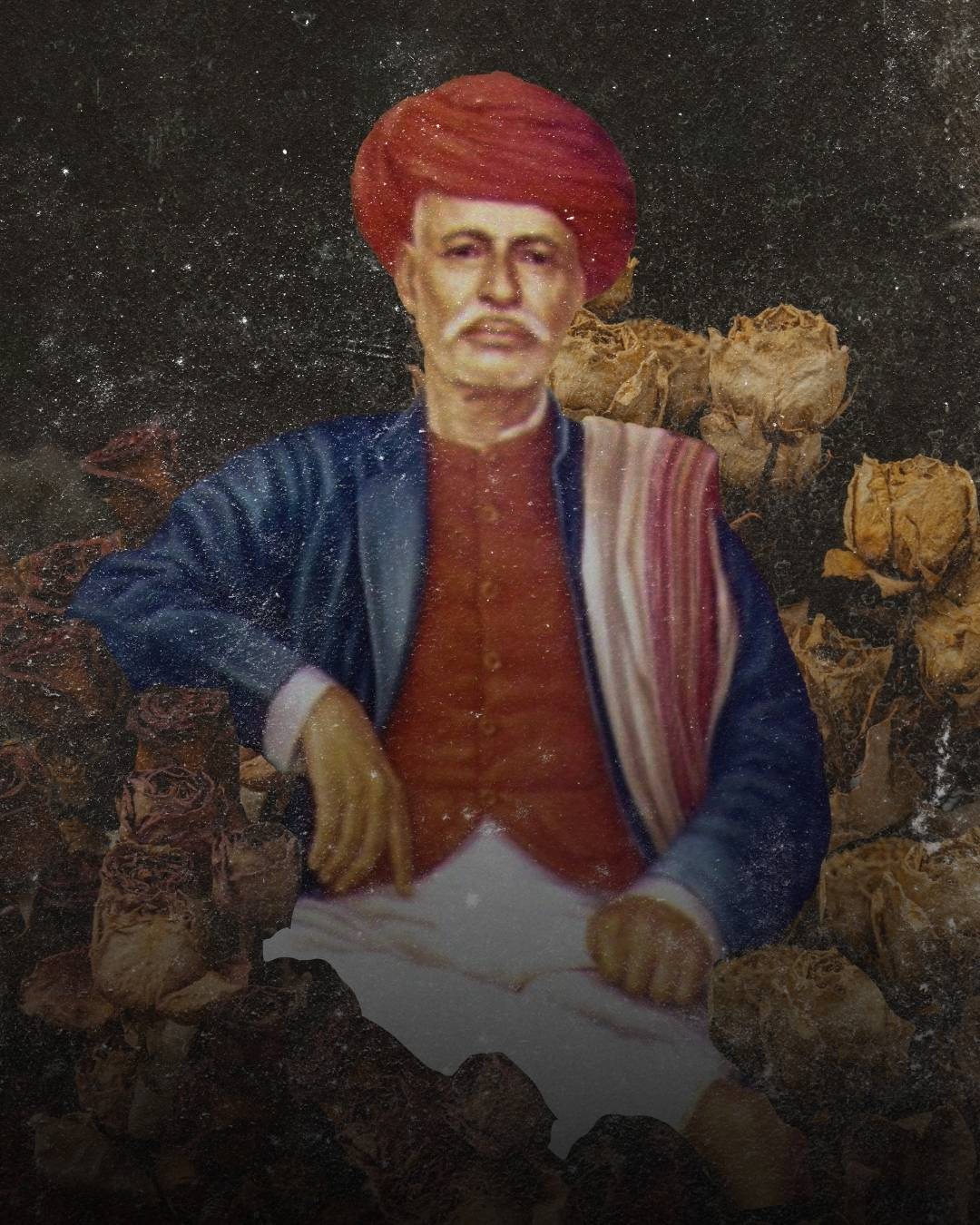
The Malis inherit a powerful anti-caste, anti-Brahmanical legacy shaped by Jyotirao Phule and the Satyashodhak movement. This legacy does not lend itself to a simple narrative of Sanskritisation, instead, it demands that we understand the phenomenon through a “backward lens” of cultural lag.
Phule’s movement was not an isolated intellectual exercise. It was a mass-based social revolution in which Malis played a foundational role. Alongside rebel Brahmins and oppressed untouchables, Malis formed the core support base of the Satyashodhak Samaj. Leaders like Narayan Lokhande and Krishnarao Bhalekar, as early as 1877, built a strong grassroots movement in western Maharashtra. They actively challenged Brahmin-Savarna hegemony by rejecting Brahmanical rituals and removing Brahmins from positions of social authority.
The question, then, is: what went wrong?
“The decline cannot be explained merely as a lack of leadership after Phule’s death. Rather, it reflects a deeper loss – the loss of the desire to remain rebellious, and the abandonment of the responsibility to perform a collective, caste-transcending modernity.”
The decline cannot be explained merely as a lack of leadership after Phule’s death. Rather, it reflects a deeper loss – the loss of the desire to remain rebellious, and the abandonment of the responsibility to perform a collective, caste-transcending modernity.
This pattern is not limited to the Malis. Even beyond caste, across ideological formations, we see similar failures. Indian Marxists, for instance, despite rejecting religion, have struggled to build a sustained cultural opposition to Brahmanism or what we now recognize as Hindutva. This raises an important question: is reformism, atheism, or critique alone sufficient to produce a lasting ideological counter?
Historical evidence suggests otherwise.
The most significant challenges to Brahmanism have not emerged from reform or critique alone, but from the radical act of religious conversion. Whether in the case of lower-caste conversions to Islam, Christianity, or the mass conversion to Buddhism led by Ambedkar, these were not passive acts of victimhood. They were transformative moments that reconstructed collective subjectivities and reorganized cognitive worlds.
Conversion replaced the prohibitions of Brahmanical gods with new systems of meaning, enabling oppressed communities to claim dignity, humanity, and access to the divine – something denied to them within Hinduism. These acts may not have entirely dismantled Brahmanism, but they created resilient ideological communities that could sustain opposition.
The continued “othering” of these converted communities by the RSS and the ruling regime reveals something deeper than electoral strategy. It exposes the limits of Hindutva’s assimilative capacity. While political management is possible, ideological assimilation often fails.
In this context, the political trajectory of the Malis becomes particularly significant. Scholars have pointed to the post-Mandal consolidation of OBCs and the shift of Malis towards right-wing politics, especially in Maharashtra, where alignment with the BJP-RSS offered an alternative to Maratha-dominated Congress power structures. While this explains political realignment, it does not resolve a deeper paradox.
At a time when various castes are aggressively reclaiming historical icons and asserting cultural pride, the Malis have remained relatively passive in publicly asserting their association with Phule.
Why?
One possible explanation is material. Compared to many other marginalized communities, Malis have historically been relatively better off, reducing the urgency of sustaining a radical, rebellious identity. Another explanation lies in the limitations of the Satyashodhak movement itself. It remained confined to localized reforms and did not evolve into a broader religious or civilizational alternative like Buddhism, Islam, or Christianity.
There is also a deeper philosophical question: the absence, within caste Hinduism, of a desire for a liberatory “master.” Hindu religiosity often reproduces hierarchy rather than offering unconditional acceptance. In contrast, for those who converted to Buddhism under Ambedkar, the figure of the Buddha becomes a source of dignity, equality, and belonging – resolving the existential lack produced by caste oppression.
This difference is visible ethnographically in Maharashtra.
In Dalit Buddhist households, Phule and Savitribai Phule are omnipresent. Their images, songs, and symbols are deeply woven into everyday cultural and political life. Children dress as Phule and Savitribai during Jayantis – their legacy is lived, performed, and continuously reproduced.
In contrast, it is often difficult to find similar representations in Mali households.
This is the core of the argument: Phule, whose movement was once led by the Malis, appears today to have been abandoned by them – not only politically, but culturally and spiritually.