
The word without a definition
From the ramparts of the Red Fort, Prime Minister Narendra Modi told the nation that armed Naxalism was finished but that a subtler threat remained: the “dimagi Naxal” – the intellectual or mental Naxal, embedded, he said, in government committees and corridors of power. These people, he said, must be identified and isolated. But he did not say who they were.
The next day, Congress leader and former Union Home Minister P. Chidambaram claimed the label for himself – proud, he said, to be a “dimagi Naxal.” Only then did a cabinet minister offer a three-point definition: those who support Maoists and reject the Constitution, those who stand with separatists and support Article 370, and those who want to “cut the chicken neck” separating the north-east from India.
The sequence is the argument: accusation first, then a senior Opposition leader claiming the label as his own, then – only once the claim was public – a government scrambling to say who it had not meant. That is not how a state names a threat. It is how a state manufactures one: a label elastic enough to catch whoever the moment requires, clarified only under pressure, after it has already done its work in public.
What Ambedkar reckoned with
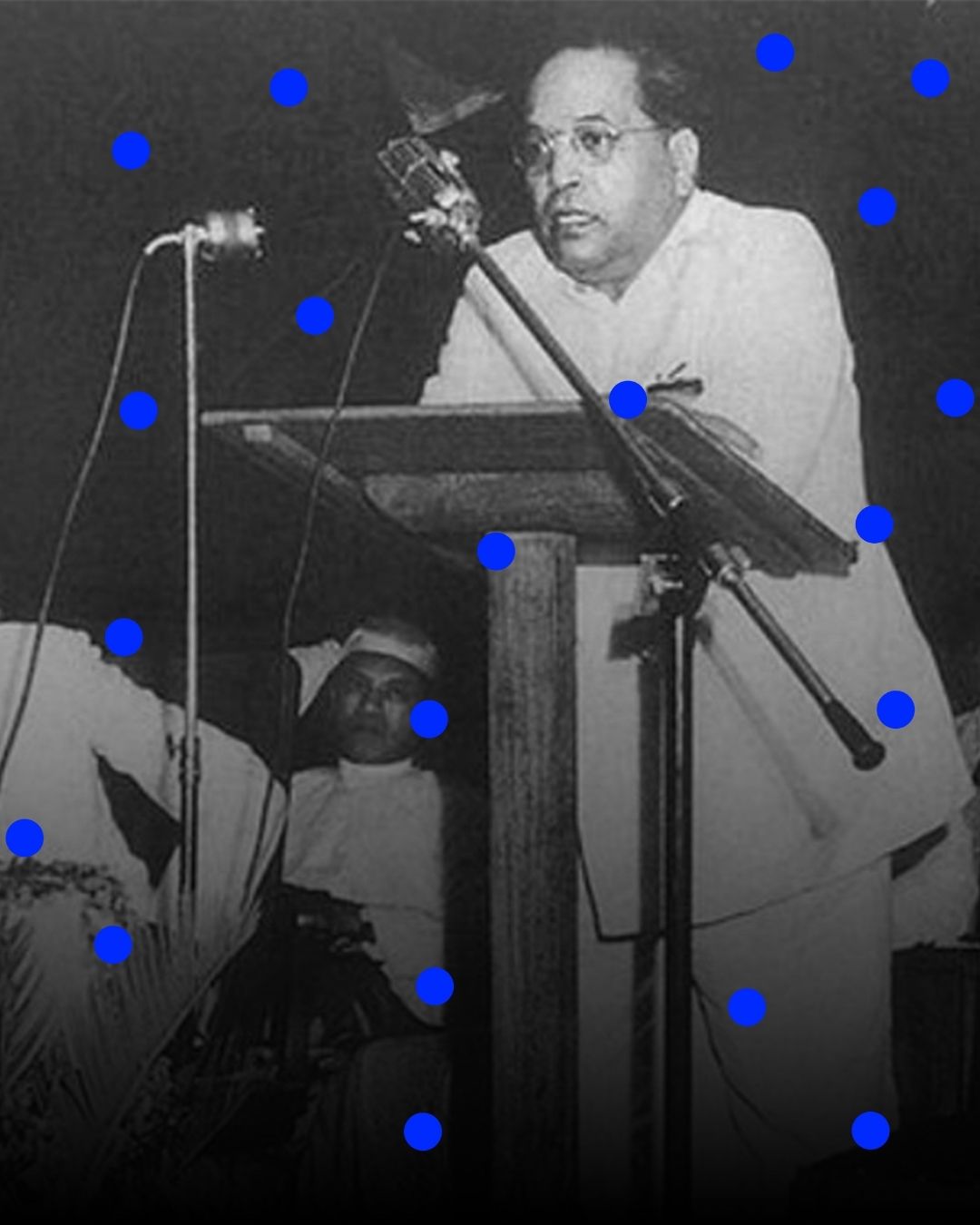
Set this beside a text the Prime Minister’s own office would, on any ordinary day, invoke with reverence: Ambedkar’s speech to the Constituent Assembly on 25 November 1949, the eve of the Constitution’s adoption. He used the occasion to address its critics: the Communist Party, wanting a dictatorship of the proletariat, and the Socialist Party, wanting an unconditional right to nationalise property and fundamental rights absolute enough to permit overthrowing the state, not merely criticising it.
An offer of procedure
No constituent assembly, Ambedkar said, had given its critics an easier route to remake the constitution: a two-thirds majority, and it was theirs to change. Then the harder edge: if they could not secure even that, their dissatisfaction could not be presumed shared by the public at large. This is majoritarian legitimation. The door held open on terms that treat failure to win a supermajority as proof the grievance does not matter. This is a complicated precedent. Ambedkar’s own relationship with the organised Left was one of real friction, and this speech is among the texts through which that friction is read.
The argument has not aged well, and not for the reason one might expect. Ambedkar was not wrong that the amendment procedure was unusually open. In his words, it was facile. He could not have anticipated what an unbroken, decade-long parliamentary supermajority would do with a facile procedure; nor how easily the constitutional order could be reshaped by routes that bypass the amendment procedure altogether.
What happened to the safeguard
The abrogation of Jammu and Kashmir’s special status in 2019 is the clearest instance. It did not proceed by the two-thirds route of Article 368, but by a presidential order reinterpreting Article 367, followed by Parliament – sitting in place of a long-dissolved Constituent Assembly – declaring Article 370 inoperative, and an ordinary law downgrading a state to two Union Territories, a route the Supreme Court upheld in December 2023. A change of that magnitude to India’s federal structure did not need the safeguard Ambedkar described. It went around it. The 103rd Amendment’s 10% economic reservation shows the opposite drift: the safeguard working exactly as designed, yet producing an outcome critics say inverts its own logic – backwardness-based remedy converted into general-category entitlement. Two failure modes, one fact: a sustained supermajority can do more to a constitutional settlement than its author anticipated.
Fraternity, borrowed rather than found
This is what happens to Ambedkar’s answer to his critics in conditions he did not live to see. Fraternity, in the same speech, is reserved not for his treatment of the Communists and Socialists but for a separate anxiety: the absence, in Indian social life, of any felt sense of common brotherhood across caste, without which liberty and equality are, in his words, no more than coats of paint. He does not extend that framework to the opposition addressed earlier in the same speech. That extension is mine, not his.
But it is the right frame now, because it names what “isolate” refuses. Fraternity does not require the state to find its critics congenial. It requires dissent be met as dissent – named, engaged, defeated in argument or at the ballot if it deserves to be – rather than folded into an undefined category filled in after its invocation. Ambedkar, for all the majoritarian edge of his answer, still addressed his critics: he named them, stated their objections accurately, and offered a mechanism, however imperfect, by which they could prevail. The Prime Minister’s speech offers no mechanism and no argument – only a word, undefined by design, and an instruction to isolate whoever it is eventually made to fit.
That is the real distance between 1949 and 2026. Not that one moment was more gracious, and the other is not. Ambedkar’s own engagement with dissent had its hard edge. It is that one moment kept opposition inside the argument. The other isolates it from the argument altogether and calls that isolation “security”.
The views expressed in this article are the author’s own.