
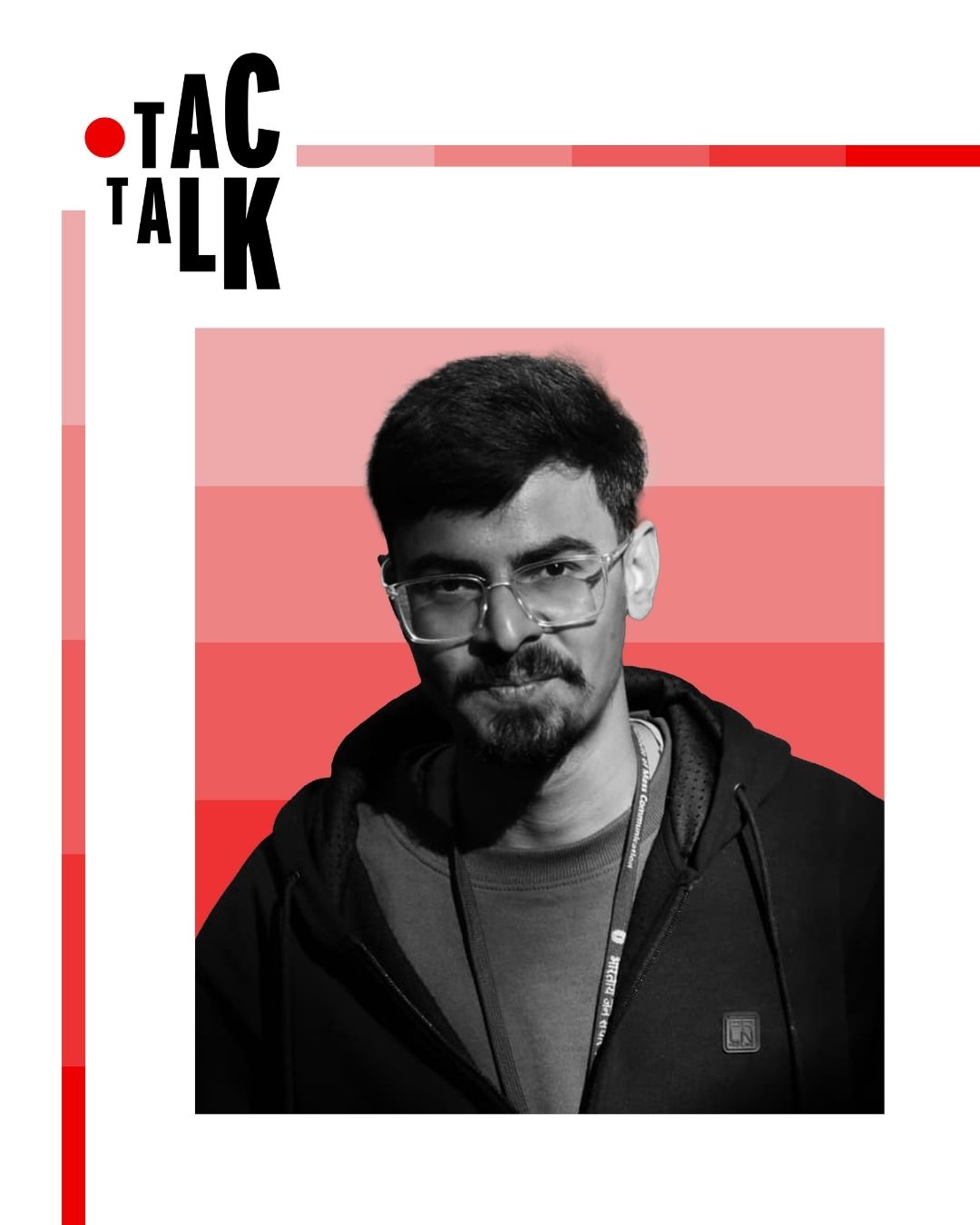
The Ambedkarian Chronicle (TAC): What inspired you to start Bahujan Lives Matter, and what gap did you see that the movement needed to address? Have you seen any changes in public awareness or engagement with caste issues since you started the page? If so, what stands out to you?
Manish Sagar (MS): Back in 2020, there was no dedicated page related to Dalit, OBC and Adivasis news, and I would receive atrocity cases through social media. Which I used to post on Ambedkar Dhamma Stories. People have to take screenshots and then reshare, also people used to say caste is a thing of the past, and specially the savarna youth. This led to the foundation of Bahujan Lives Matter, where atrocity and casteism is archived and people can share. We were not the first news platform, there were many others who were doing fantastic jobs in the field, but there was a void on social media especially on instagram.
TAC: There is a strong focus on certain forms of atrocities in your page that do not make it into the mainstream news, such as the recurring deaths of manual scavengers, inter-caste killings, student protests, and different instances of casteism, how do you look at your page beyond just the cataloguing of news on caste?
MS: As the page has a reputation of more than 5 years, people trust it, also we have kept the legacy of publishing only verified information. Many news stories don't get published because we couldn’t verify it independently. We’re not doing enough, more than our expectations.
TAC: You reported at least seven cases of vandalism targeting Ambedkar statues on 14 April this year. What was striking was that, alongside each incident, there was also an element of Dalits reclaiming public space and celebrating. How do you interpret this?
MS: It is very personal to me. I am from Uttar Pradesh and Dalits reclaiming public spaces is not new to me. Ambedkar is the atmosphere and mood everywhere around me. My father has used Jai Bhim as a salutation even before I was born. He was also married in a Buddhist wedding with a portrait of Babasaheb in blue coat and red tie... But the disrespect and hatred against such symbols is not what I have been familiar with, I didn’t grow up in an environment where people disrespected, lest vandalised, Babasaheb in front of us. For savarna journalists, vandalism is inherent to the dignity of such statues – their conscience is broken, they are not moved by their own violence. Which is why such a recurring event gets underreported, and doesn’t make headlines. Increasingly, these days, Dalits are replacing Babasaheb and Buddha with Hindu gods. It’s their disillusioned form of enlightenment. As Babasaheb said “Today religion has become a piece of ancestral property. It passes from father to son so does inheritance. What genuineness is there in such cases of conversion ? The conversion of the Untouchables if it did take place would take after full deliberation of the value of religion and the virtue of the different religions. How can such a conversion be said to be not a genuine conversion? On the other hand, it would be the first case in the history of genuine conversion. It is therefore difficult to understand why the genuineness of the conversion of the Untouchables should be doubted by anybody.” (BAWS Vol 5). Buddhism may have not reached Dalits as missionary religions did, even education hasn’t reached many despite a large share of budget state allotments for SC/ST Welfare which goes underutilised. But Dalits know implicitly, regardless of anything, that Babasaheb is what gives them dignity and self respect, and he is an icon for them, and his statues can be seen in the remotest area where there are no roads. Some statues are deformed, unmade by improper techniques and not perfect, but still people have built them with their faith, made sure that there is a quintessential blue coat, round eyeglasses, with one hand holding the constitution and the other raised in a pointed finger.
TAC: Do the people whose stories you report reach out to you with updates? If so, what kinds of conversations do such interactions lead to?
MS: We get reported issues mostly through Twitter of ground activists, we contact them, get details of the victims or their family. We ensure if police have registered their FIR – if SC/ST Act is not registered, we enquire to police and build pressure, and also help provide legal aid to the victims. Sometimes people involved in the cases reach out while others don’t. Some even became friends. But I consider all Dalits as my family, each atrocity case feels like it happened to one of my family members. That sense of fraternity lies at the heart of everything Bahujan Lives Matter does.
“I consider all Dalits as my family, each atrocity case feels like it happened to one of my family members. That sense of fraternity lies at the heart of everything Bahujan Lives Matter does.”
TAC: Sustaining an independent anti-caste media platform requires an immense emotional, financial, and organizational effort. What do you think the future holds for anti-caste media, and what will it take for such platforms to thrive?
MS: As a Dalit and an Ambedkarite, I refuse to see this reportage as profit making rather I see it as a mission, it’s very emotionally and mentally taxing when confronted with such a vast number of atrocities. On caste there is a scope in academics, art and cultural movement, funds can be extracted in the name of research or events. But on the matter of atrocity, there is none, no one likes to consume the stories of violence on a regular basis, on a regular basis it just gets overwhelming and gets normalised. There is a need for narrative building, for people to recognise humanity underneath the violence Dalits suffer. That is a difficult and different form of work.