
In law, there are two main typologies of equality: formal equality and substantive equality. Formal equality focuses on equality of treatment, whereas substantive equality focuses on equality of outcome. Affirmative action provisions in the Indian Constitution embody the principle of substantive equality, whereby the law is sensitive to the disadvantages faced by communities due to caste and other identity markers.
In 1951, Champakam Dorairajan, a Tamil Brahmin woman who was not even a medical or engineering aspirant, went to court against caste- and religion-based quotas introduced in medical and engineering colleges by the state of Tamil Nadu. Her claim was that this quota policy was discriminatory against Brahmins and that she was personally affected as a member of the community even though she was not aspiring for any of the seats. The Supreme Court of India upheld Champakam’s claim and put a stop to Tamil Nadu’s quota policy. The court made a formal reading of equality as contained in Article 15(1) of the Constitution. Dr Ambedkar soon after remarked:
“I have often in the course of my practice told the presiding Judge in very emphatic terms that I am bound to obey his judgment, but I am not bound to respect it. That is the liberty which every lawyer brings in telling the Judge that his judgment is wrong and I am not prepared to give up that liberty. Under Article 46, an obligation has been laid upon the government to do everything possible in order to promote the welfare and the interest of weaker sections of the public. I cannot see how one can escape an amendment so as to prevent Article 29(2) and Article 16(4) being interpreted in a way in which it has been interpreted to block the advancement of the people who are spoken of as the weaker class. That is the necessity for amending Article 15.”
In order to overcome the myopic, literal, and non-purposive interpretation made by the court in Champakam’s case, the judgment led to the very first amendment of the Constitution in 1951 itself whereby Article 15(4) was inserted enabling the State to make ‘any special provision for the advancement of any socially and educationally backward classes of citizens or for the Scheduled Castes and the Scheduled Tribes,’ notwithstanding anything contained in Article 15.
Even in the intermediary years after the amendment, reservations were being interpreted as ‘exceptions’ to the notion of equality. It ultimately took the Supreme Court 25 years to finally adopt the notion of substantive equality in State of Kerala vs. NM Thomas (1976), where the court held that reservations are part of the equality code of the Constitution (i.e., Articles 14-16) and not an exception to it.
The NM Thomas case has proved to be a north star at least when it comes to questions of minimum applicability of reservation provisions. More recently, in Neil Aurelio Nunes vs. Union of India (2022), the Supreme Court upheld the application of OBC (Other Backward Classes) reservations in the NEET exam, relying on the transformative NM Thomas case, which reshaped the understanding of reservations in India.
However, courts are wary of expanding on questions related to substantive equality-based inclusion beyond constitutionally mandated reservation provisions. V.S. Sai Sachin vs. State of Tamil Nadu (2017) is a case in point. The Government of Tamil Nadu passed a Governmental Order reserving 85% of all the MBBS/BDS seats in the State of Tamil Nadu for students who wrote the NEET (National Eligibility cum Entrance Test) exam and passed their senior secondary school from the Tamil Nadu State Board. 15% of the seats were reserved for students of all other boards who cleared the NEET exam.
The court framed the claims of the Tamil Nadu State Board students as being motivated by ‘jealousy’ as they had the ‘choice’ to opt for any other boards such as the CBSE or ICSE boards. The court ignored the fact that CBSE (Central Board of Secondary Education) schools are far less affordable to students marginalized by caste, class, and language, leaving them with the more affordable state board schools. The Court further stated that the objective of the NEET exam is to promote the most talented and ‘meritorious’ students and the 85:15 reservation ratio proposed by the State of Tamil Nadu would severely dilute merit and amount to ‘step-motherly’ treatment of CBSE students. The court essentially framed this measure as discriminatory and disadvantageous towards CBSE students. The court, in a way, echoed the judicial sentiments of the 1951 Champakam case.
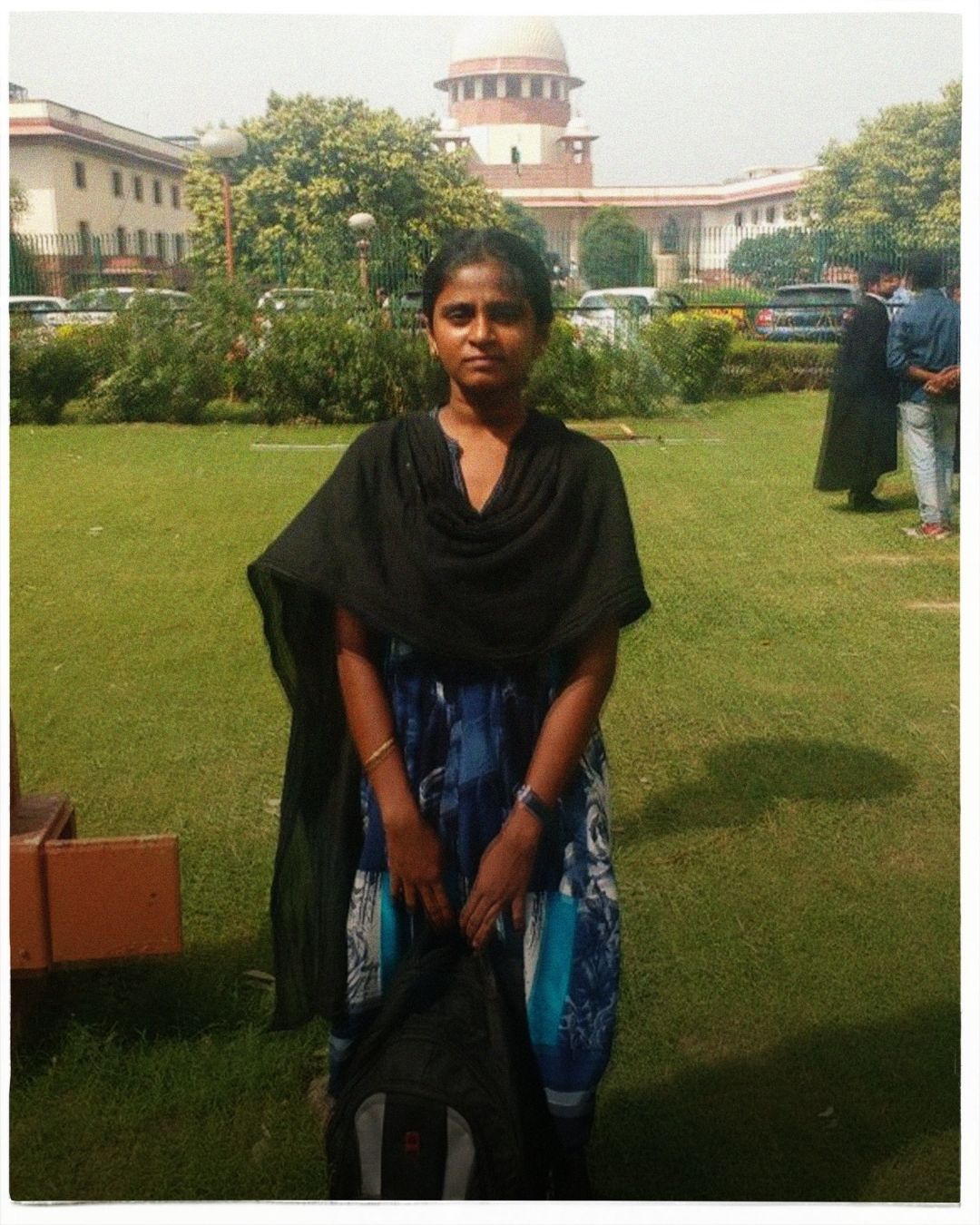
The court also stated that only reservations based on social status are permissible under the Constitution, and that reservations beyond this are impermissible. The court viewed the 85:15 reservation scheme as an ‘institutional’ reservation in which the state board is disproportionately advantaged. The court again ignored the fact that many of the state board students are also from the SC/ST/OBC sections of society. The 17-year-old Shanmugam Anitha, who was a NEET aspirant, was a member of the Scheduled Caste community and at the same time severely disadvantaged by lack of access to urban CBSE schools or NEET coaching classes.
It may also be noted that, compared with other state boards, the CBSE syllabus closely aligns with the NEET syllabus, thus giving CBSE students a natural advantage in the NEET exam. In the edited volume Mapping the Elite: Power, Privilege, and Inequality (2019), Ajantha Subramanian’s chapter titled “The Meritocrats” examines how upper-caste Tamil Brahmin students are over-represented in CBSE schools and consequently over-represented in IITs because the curriculum and orientation of CBSE and IIT entrance exams are also closely aligned. The A.K. Rajan Committee report laid bare several issues related to the NEET exam, including federal imbalance that would further compound the inequities that the already socio-economically disadvantaged students are subjected to.
The State of Tamil Nadu appealed the single-judge bench’s decision of the Madras High Court in V.S. Sai Sachin to a division bench of the Madras High Court, which upheld the former bench’s decision to strike down the 85:15 allocation. The State of Tamil Nadu, in a separate litigation, sought a one-year exemption from the application of NEET to the State, but this plea was also denied. S. Anitha was a litigant in the NEET exemption case.
These decisions were given by courts between July and August 2017, and S. Anitha committed suicide on 1 September 2017. The recent 2026 CJP-led protests over the NEET paper leak brought attention to Anitha’s suicide, which was a result of the Indian courts’ mischaracterization of state board students and a refusal to uphold Anitha and other students’ pleas for substantive equality.