
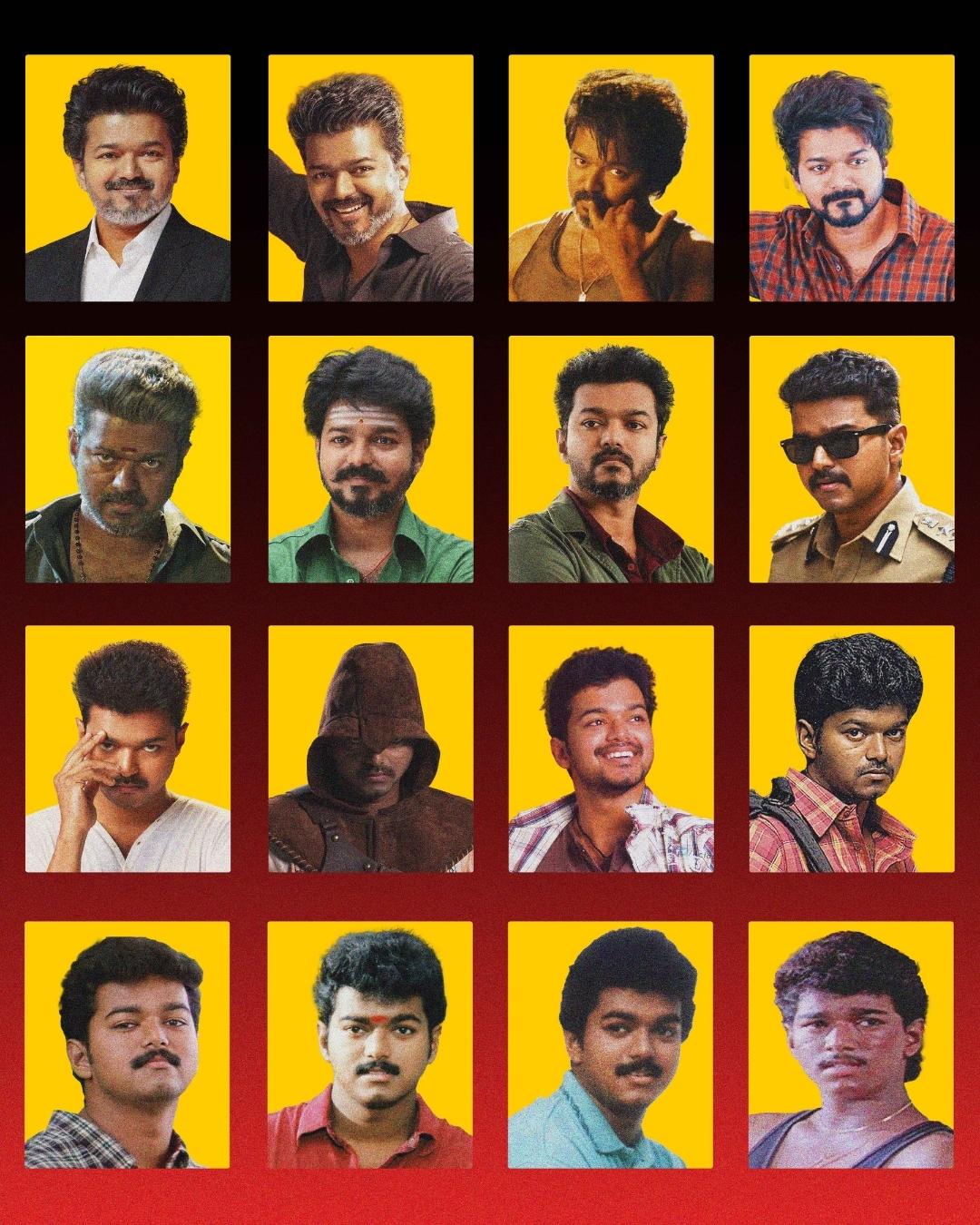
Can a film star govern the state? What began as a speculative question has been answered by the people of Tamil Nadu. On May 10, 2026, C. Joseph Vijay, known to millions simply as Thalapathy, was sworn in as the 9th Chief Minister of Tamil Nadu, a moment when the screen persona and the state merged into one, and when a man delivered a speech that was simultaneously a constitutional address and seemingly a closing monologue of a twenty-five-year cinematic career.
The rise of Vijay as a political force represents more than a celebrity’s entry into public life. It signals a deeper transformation in democratic behaviour, where cinema, identity, and emotional resonance shape not merely electoral outcomes, but the very texture of governance itself. Tamil Nadu has long witnessed the convergence of cinema and politics. Leaders such as M. G. Ramachandran and J. Jayalalithaa successfully translated cinematic appeal into political authority.
Cinema as Political Capital
Vijay’s political appeal is rooted in over two decades of carefully constructed public perception. His films have consistently portrayed him as a champion of justice, a critic of corruption, and a voice for the marginalised. This repetition has created a powerful psychological bond with audiences, which media scholars Donald Horton and Richard Wohl (1956) described as parasocial interaction, a one-sided emotional relationship between audiences and public figures that feels, to the audience, entirely reciprocal and real.
This is reinforced by the halo effect, first studied by psychologist Edward Thorndike, where success in one domain leads to assumptions of competence in another. For many voters, Vijay’s cinematic success became a proxy for leadership ability. His fan associations, which evolved into organised social networks, functioned not merely as cultural communities but as mobilising structures, embedding him deeply within public consciousness long before formal political engagement. What makes Vijay’s case unusual, however, is that the parasocial relationship was not incidental but an explicit raw material of his political entry. The bond was never broken before being redirected. It was carried, intact and intensified, across the threshold of the state.
The Messiah on Screen: A Filmography of Power
This bond was not accidental, it was cinematically engineered, film by film, across two decades. Each of Vijay’s major films did not merely entertain, it deposited another layer of emotional and ideological association into the public imagination. The messiah was not born. He was scripted.
“The messiah was not born. He was scripted. Each of Vijay’s major films did not merely entertain, it deposited another layer of emotional and ideological association into the public imagination.”
Velayudham (M. Raja, 2011) was the first decisive installation of the archetype. Vijay played an ordinary village man who reluctantly becomes a vigilante, answering the call of the oppressed when the state fails them. The film's thesis was that the common man, when pushed far enough, is the truest leader. An early and potent seeding of the saviour myth. Crucially, the character did not seek power. Power found him because no one else would answer.
Mersal (Atlee, 2017) escalated the construction dramatically. Vijay played a triple role, one of which was a doctor dismantling a corrupt healthcare empire built on the exploitation of the poor. The film directly critiqued government policies, including GST on healthcare and the inadequacies of public medical infrastructure, drawing fierce reactions from the ruling party at the national level. The controversy did not damage the film – it amplified it. Audiences experienced Mersal not as entertainment but as political vindication. Vijay, both on screen and in the ensuing public debate, was positioned as someone willing to speak truth to power when institutions would not.
Sarkar (A. R. Murugadoss, 2018) pushed the template further. Vijay portrayed a successful NRI corporate leader who returns to India, finds electoral democracy captured by money and muscle, and proceeds to systematically dismantle the nexus – through institutional means and mass mobilisation. In retrospect, Sarkar reads less like a film and more like a rehearsal – a public audition for the role Vijay has since chosen to perform in constitutional reality.
Bigil (Atlee, 2019) added another dimension: the reformer from within a broken community. Playing the son of a slum-based don who coaches a women’s football team to national glory, Vijay embodied upliftment through mentorship, discipline, and sacrifice – virtues more associated with governance than with entertainment.
Master (Lokesh Kanagaraj, 2021) consolidated the archetype most memorably. As JD, a flawed but ultimately righteous professor who battles a criminal exploiting vulnerable youth, Vijay projected a figure who channels personal shortcomings into institutional courage. Crucially, JD was not perfect. He was messy, conflicted, and late to his own heroism. This imperfection paradoxically deepened audience identification, making him feel not like a distant ideal but like a plausible neighbour who rose to the moment. The line between character and actor had, by this point, become almost invisible.
Jana Nayagan: The Film That Became Real Before It Was Released
The crescendo arrived with Jana Nayagan (tr. People’s Leader), Vijay’s most explicitly political cinematic statement, and, as fate arranged it, the film he has not yet released. Announced on Republic Day 2025, its title functioned less as film marketing and more as a political declaration. Its glimpse, released on Vijay’s 51st birthday in June 2025, amassed over 32 million views in 24 hours. The film ran immediately into political turbulence. The CBFC raised objections over its content. It missed its January 2026 Pongal release and was postponed indefinitely. Meanwhile, it was leaked ahead of both its release and the election – a controversy that may paradoxically have strengthened Vijay’s political positioning by framing him as a target of powerful interests.
On May 10, 2026, speaking to reporters immediately after the swearing-in, the film’s producer Venkat K. Narayana described the new Chief Minister with the film’s own title: “He has turned out to be Jana Nayagan for the people of Tamil Nadu.” The metaphor had collapsed. Title and man had merged. The cinema had become the credential.
Emotion, Voting and the Limits of Rationality
Political psychology provides critical insight into why such influence is effective. Nobel laureate Daniel Kahneman, in Thinking, Fast and Slow (2011), explains that human decision-making is largely driven by “System 1” thinking – fast, intuitive, and emotional – rather than slow, analytical reasoning. Elections activate this emotional system above all others. Political neuroscientist Drew Westen (2007) demonstrated through brain-imaging studies that voters rely more on emotional responses than rational evaluation when assessing candidates. His research concluded that political decisions are frequently driven by feelings rather than facts.
Political scientist George Marcus, through the Affective Intelligence Theory, argues that emotions such as enthusiasm and anxiety play a decisive role in shaping political judgment. These studies collectively underline a critical point: emotion is not a distortion of democracy, it is its foundation. However, when emotional identification entirely replaces critical reasoning, democratic decision-making risks being shaped by perception rather than performance.
Fandom, Identity and the Gen Z Factor
A defining feature of Vijay’s appeal is its resonance with younger voters, particularly Gen Z. Shaped by digital media and visual storytelling, this generation often prioritises personality, relatability, and narrative over ideological frameworks. Sociological research on identity fusion (Swann et al., 2009) shows how individuals align their personal identity with a leader or group such that political support becomes an extension of belonging rather than a deliberate political choice.
Vijay’s own language in his swearing-in address acknowledged this dynamic explicitly. He thanked his “Kutti Nanba-Nanbis” (tr. “little friends”), a term of endearment typically reserved for child fans. “It is because of you that this has happened,” he said. In doing so, he folded the youngest, most emotionally attached members of his base into the constitutional moment, not as future citizens but as present agents of his victory. The fan was not a spectator of history, the fan had made history.
The Oath: When the Screen Became the State
What no academic analysis could fully have anticipated was the specific quality of the moment itself. Vijay was sworn in by Governor Rajendra Vishwanath Arlekar at Chennai’s Jawaharlal Nehru Indoor Stadium on May 10, 2026, having secured 120 MLAs in the 234-member assembly with the backing of Congress, CPI, CPI(M), VCK, and IUML. His Tamilaga Vettri Kazhagam (TVK) had won 108 seats outright. He became the first Chief Minister of Tamil Nadu since 1967 who does not come from either the DMK or the AIADMK. The Dravidian duopoly that had defined Tamil politics for nearly six decades was ended not by a rival political dynasty but by a man from the movies.
The Address: A Close Reading
When Vijay spoke after taking the oath, he delivered what must now be considered one of the most remarkable inaugural addresses in Indian political history – not for its policy content alone, but for the way it performed the precise erasure of the boundary between cinema and constitutional power that had been building for twenty-five years.
He opened:
“My dear people residing in my heart, greetings to you all. I don't know how to start or what to say.”
This is not the language of a Chief Minister addressing constituents. This is the language of parasocial intimacy institutionalised. The phrase “people residing in my heart” has been his signature address to fans for years on screen, in interviews, at audio launches. By carrying it unchanged into the oath ceremony, Vijay collapsed the distance between the star and the state. The audience was no longer an audience. They were, constitutionally, his people. And they had been his people, in exactly these words, long before the election.
He continued with his origin narrative:
“Coming from a simple background as the son of an assistant director, I have struggled and worked hard to achieve success in cinema. I know very well what poverty is, and I know what hunger is. I have not come from any great royal lineage. I am one among you, like a member of your family, like your son, your brother, your younger brother.”
The family metaphor of son, brother, younger brother is the deepest available register of identity fusion. He does not position himself as a leader above the people, or even a representative beside them. He positions himself as kin. This is sociologically precise: research on identity fusion (Swann et al., 2009) shows that fusion with a group is most complete when individuals perceive the leader as sharing their essence, not merely their interests. Vijay’s claim to poverty and hunger is simultaneously autobiographical and political, it places him inside the emotional experience of those who voted for him, not outside it looking in with sympathy.
“I am no angel. I am just a normal person living a normal life.”
This is the JD archetype from Master spoken in oath-ceremony prose. The flawed hero who earns authority through the admission of fallibility rather than the assertion of perfection. In political psychology, this is called the pratfall effect – the counterintuitive finding that a capable person who acknowledges weakness becomes more, not less, trusted. For Vijay’s audience, who had spent years watching him play characters defined by their human imperfection alongside their ultimate righteousness, this admission did not undermine confidence. It confirmed my character.
“When crores of people are with me, I have the confidence that I can handle whatever comes my way.”
This is a remarkable reversal of traditional authority. He does not claim competence as an individual. He claims competence as a function of collective will. His strength is not technical expertise or administrative experience. It is the moral authority of mass support. This is both his most powerful rhetorical move and his most significant governance risk: a leader who derives confidence from the crowd must govern in ways that maintain the crowd’s faith which is not always the same as governing well.
Then came the moment where the screen cracked, and the administrator peered through:
“We have taken over in a situation where more than 10 lakh crores of debt has been incurred, the treasury has been emptied, and an unbearable burden has been placed upon the state. Some might think I am saying this to make excuses, but that is not the case. Only by going inside can one know the true state of affairs. I intend to release a white paper to show you the reality.”
This is the most institutionally significant passage in the speech. The promise of a white paper on state finances, delivered within hours of taking office, is a direct acknowledgement that the cinematic narrative of reform – in which the hero arrives, surveys the corruption, and dismantles it – is insufficient for what governance actually demands. He is already preparing his audience for the gap between the film and reality.
He then delivered what may become the defining line of his administration:
“This Vijay will not do wrong, nor will he let anyone else do wrong.”
The third-person self-reference is striking. Not “I will not.” Vijay will not. He speaks of himself as a persona distinct from yet inhabited by the man simultaneously the constitutional officer and the cinematic myth. This is, in the language of performance theory, restored behaviour: behaviour rehearsed, reflected upon, and performed again, where the original and the repetition become indistinguishable. Every courtroom speech in Mersal, every rooftop declaration in Velayudham, every moment in Sarkar where a lone man confronted institutional rot – all of it is restored here, in constitutional form, before the Governor of Tamil Nadu.
He concluded with a sweep of secular, inclusive address:
“The face of this Vijay is the face of Hindus, Muslims, and Christians alike. You can trust this Vijay 100%.”
And then, almost as an afterthought that contained everything:
“Let us all come together to provide a fresh and new governance. This is a new beginning.”
Not a government. Governance. The word choice is telling. He is reaching for something that transcends administration – a quality of relationship between leader and people that echoes the moral compact of his most beloved characters. It is, at once, the most ambitious thing a Chief Minister could promise and the hardest to deliver.
Performance theorist Richard Schechner described restored behaviour as actions that exist “between” the original impulse and the performance – neither purely spontaneous nor purely scripted. Vijay’s address existed in exactly that space: between the actor who had spent twenty-five years rehearsing exactly this voice, and the Chief Minister who must now make that voice answer for roads, water, debt, and justice.
The Governance Challenge: From Narrative to Responsibility
The transition from actor to Chief Minister involves a fundamental shift – from narrative control to accountability. In cinema, outcomes are scripted, conflicts resolve within defined frameworks, and the hero always finds his moment. In governance, ambiguity is constant, outcomes are incremental, and the opposition does not follow a screenplay. Vijay inherits a Tamil Nadu of formidable complexity. His own speech acknowledged it: more than 10 lakh crores in debt – which many analysts have claimed as deceitful –, an emptied treasury, and the weight of six decades of Dravidian politics behind every institutional arrangement he must now navigate. His first administrative orders – 200 units of free power for every family, a special unit for women’s safety, a dedicated force for drug control – are pointed, populist, and measurable. Each will be tested. Each will be contested.
The film industry’s presence at his swearing-in, while emotionally resonant, also represents a structural vulnerability: a government whose social base is constructed through emotional identification must work harder to establish credibility with the technocratic, administrative, and judicial institutions it now inherits. The collectors, the IAS cadre, the central government – none of these respond to cinematic authority. They respond to competence, negotiation, and political endurance.
There is the risk of overdependence on the image. When voter expectations are shaped by decades of cinematic narrative, the gap between the promise of the screen and the compromises of governance can generate rapid disillusionment. A leader who opens his address by invoking the family – son, brother, younger brother – raises expectations that are not merely political but personal. When a family member disappoints, the wound is not tactical. It is intimate. The comparative case of Pawan Kalyan in Andhra Pradesh is instructive. A star of comparable emotional magnitude in Telugu cinema, Kalyan built a formidable fan base and political party but encountered the limits of cinematic capital when confronted with the organisational demands of governance. Fame is not a substitute for institutional depth. The question for Vijay is whether TVK has built the administrative sinew that celebrity alone cannot provide.
Emotion Is Natural But Accountability Is the Test
Emotion in democracy is neither unusual nor undesirable. There is nothing inherently irrational in finding a leader whose story you believe. Kahneman and Westen’s research tells us that emotional reasoning is intrinsic to human decision-making, not a failure of it.
But a critical ethical responsibility follows. Vijay himself stated it, perhaps without fully intending to: “I will not make false promises or deceive you. I will only do what is possible.” This is an extraordinary thing for a man to say who has spent twenty-five years playing characters who always, ultimately, did the impossible. He is asking his audience – now his electorate, now his constituents – to recalibrate their expectations. To trade the logic of cinema for the logic of governance. To accept that the hero’s journey, in office, is measured not in dramatic confrontations but in water supply, road quality, and fiscal management. Whether that recalibration is achievable – whether an audience trained on the grammar of cinematic triumph can sustain a more patient, granular form of political faith – is perhaps the most consequential question Tamil Nadu's democracy now faces.
Conclusion: The Real Film Has No Script
Vijay’s journey from cinema to the Chief Ministership of Tamil Nadu marks a rare convergence of media, identity, and democratic politics. The films, the characters, the titles, the viral moments, the emotional public performances; all accumulated into a political narrative that was ultimately ratified not by fandom alone, but by the electorate and the constitutional process itself. The screen has become the state. The character has become the Chief Minister. The ‘Jana Nayagan’ of the films is, in law and in office, the ‘Jana Nayagan’ of Tamil Nadu. But the most honest thing Vijay said in his address was also the quietest: “I don’t know how to start or what to say.”
In twenty-five years of cinema, he always knew. The scene had been written. The dialogue had been rehearsed. The director had the shot. What comes now cannot be scripted. There is no editor to cut the difficult scenes, no composer to swell the score when the moment needs rescue, no second take when a decision goes wrong.
The eight crore people who reside in his heart are watching a different kind of performance now. One measured not in box office receipts and viral glimpses, but in white papers and water lines and whether a single paisa of public money is misused. For Vijay, the challenge is irrevocably clear: to govern as well as he led his audience to believe he could. For the electorate, the responsibility is equally profound – to ensure that the admiration that delivered him to power does not excuse him from the accountability that power demands. To love him, if they choose, but to demand of him all the same.
Because in the end, emotion may win elections. But only governance sustains legitimacy. And the real film, the one without a script, has just begun.