
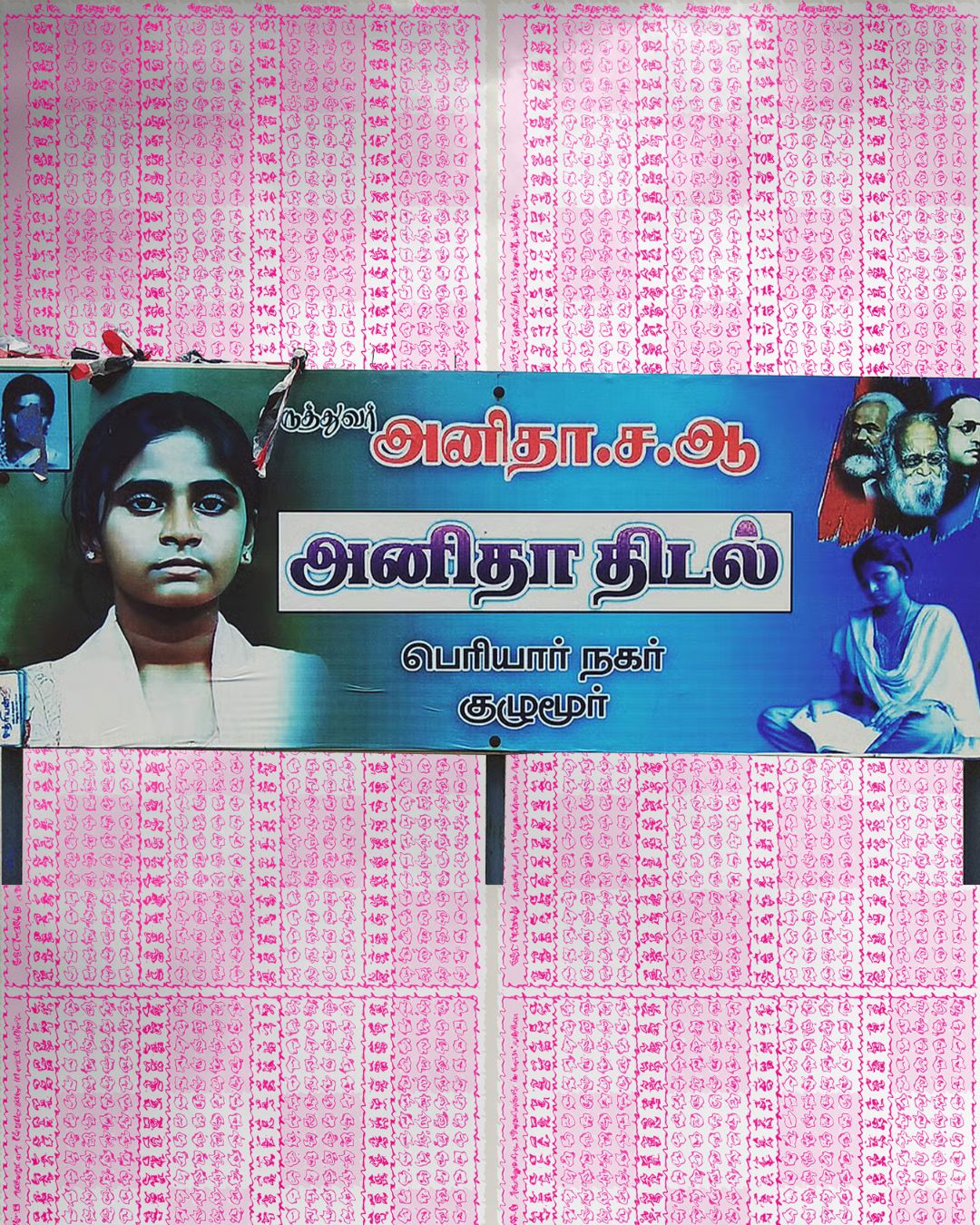
Over the course of a few weeks, protests erupted across India, demanding the government’s accountability for malpractices in conducting the NEET examination and the resignation of the Union Education Minister, Dharmendra Pradhan. After the news of Pradhan’s resignation broke out on July 25, Cockroach Janata Party (CJP) Tamil Nadu and Left-linked student and youth groups announced the withdrawal of their protest at Balan Illam, the CPI state headquarters in T Nagar, where they had been staging a sit-in since the midnight of July 20. However, a section of students and youth opposed ending the agitation, arguing that the movement, at least in Tamil Nadu, had been launched primarily to press for the abolition of NEET, even though CJP didn’t have such a demand at the national level. The Tamil Nadu CJP organisers were accused of abandoning the core demand midway. To understand this tension, we need to pay attention to a slightly different trajectory of protest demand of banning the NEET exam, i.e., to uproot centralized examinations and to restore state autonomy in entrance and admissions in state universities. This demand did not emerge out of thin air, it stems from S. Anitha’s death in 2017. Anitha embodied public resentment against the injustices of the entrance examination, which further reproduces and deepens the inequality of the marginalised community. She seeded the “revolt” against India’s unjust education system by defying the implementation of NEET. This distinctive historical memory in the political landscape of Tamil Nadu has resurfaced time and again in manifesting Tamil Nadu’s unanimous stance against the NEET examination. In this regard, this article briefly traces the implications of the NEET Examination in parliament. Anitha’s revolt against the system, and the public memory against the NEET examination. It will conclude on the implications of Anitha’s and Tamil Nadu’s message against NEET to the rest of the country.
Implications of NEET and Tamil Nadu’s retaliation
The Indian Medical Council (Amendment) Bill, 20161 introduces a common entrance examination for all medical educational institutions in India. The bill proposes a centralised examination, NEET (National Eligibility cum Entrance Test), for admission to all medical course seats at both the UG and PG levels. However, Tamil Nadu vehemently opposed the introduction of the NEET examination in the state, and the union government granted a year’s exemption to the state government to conduct the admission process for medical courses through the NEET Exam. In the February 2017 assembly session, the Tamil Nadu government passed a bill2 to the parliament seeking exemption from NEET-based admissions. And, the bill passed by the state legislature for the assent of the president was withheld, as it was “repugnant” to the provisions of the central legislation. However, as noted by the Madras High Court, the Tamil Nadu government kept the state and the Legislative Assembly in the dark for almost two years about the President’s rejection of the state legislature bill. The bill was rejected and sent back to the state government on the 18th of September, 2017, exactly 18 days after Anitha’s death. The DMK government, on returning to power, formed a committee under retired judge A.K. Rajan on June 10, 2021. The committee studied the effect of NEET on students from poorer families, studying in Tamil-medium government schools in rural areas and submitted the report in July, 2021. It found that the NEET exams favoured urban and affluent students, as rural students lost representation in government college admissions from 61.45% to 49.91% post-NEET. And the Tami-Medium MBBS admission fell from 14.88% to 1.99%, creating obstacles for many first-generation learners who couldn’t afford to retake the entrance exam.3 It highlighted that the shift to NEET-based admission gave an advantage to students seeking private coaching to score in this exam. The report further highlighted that NEET exacerbated pre-existing inequalities for people from marginalised backgrounds by valorising the privileged in access to the CBSE-pattern of preparation and private coaching. It is recommended that NEET be abolished rather than reformed, and replaced with admission based on Class 12 Marks, with score normalisation across different boards. This report was later adopted by the Government as the Tamil Nadu Admission to Undergraduate Medical Degree Courses Bill, September, 2021. However, Governor R. N. Ravi returned the bill, claiming the bill as “jaundiced view”, and the legal battle by Tamil Nadu still continues. When the matter was moved to the Supreme Court of India, the court delivered a landmark judgement in April 2025 regarding Tamil Nadu Governor R.N. Ravi’s delays in passing legislative bills. But the petition filed in November, 2025 regarding the President’s withholding of assent to the bill remains active and unresolved.4
The Story of Dr S. Anitha that sparked the fuel for this “revolution” in Tamil Nadu
Suicides are often referred to as tools of the weak in response to the crisis. Is it really so? Emile Durkheim’s (1951)5 study on suicide notes that suicides are caused more by the social context than by the mere individual temperament. He proposes that the degree of social integration, where the more a person is “connected” to society, and the more “life makes sense” within the social context, the lower the rate of suicide. Anitha wanted to become a doctor because her mother didn’t get the medical help she needed when she was sick. This made her determined to become a doctor, which in turn disciplined her to take her education very seriously. For Anitha,deep down it was either to be a Doctor or to not exist; her suicide signifies inconsolable grief-stricken pain that left her desolated, even amidst the strong familial support. Considering this, how can Anitha’s or any Dalit’s life make sense to be connected to society, amidst the constant othering, exclusion, and discrimination that they keep facing in one form or another across space and time?
"Her qualms were simple: how can a poor rural student from the Tamil Nadu state board syllabus compete with the privately coached, affluent CBSE syllabus-oriented NEET exam, be called an equalising system? The fundamentals of the test are explicitly unequal."
Dr S. Anitha, as I would like to address her, was a Dalit girl from Kuzhumur village in Ariyalur district of rural Tamil Nadu. She was the daughter of a daily wage labourer. Moved by her determination, her brother Maniratnam enrolled her in a hostel with basic toilet facilities to help her concentrate on her board exams. She scored 1176 out of 1200 marks, and had a medical cut-off of 196.75 out of 200. If at all, admission to the medical course (MBBS) that year was through the state board exam marks, Anitha would have been a doctor amongst us. However, the political drama in India engulfed Anitha, “clipping her wings” from becoming a doctor. She revolted against the system. After some uncertainty in Tamil Nadu about the NEET exam, it was finally decided that admission to medical courses would be NEET-based. The scores came in shattered: Dr Anitha scored only 86 out of 720 marks, and she took the fight to the Supreme Court. Maniratnam, narrating these incidents, recalled that they were ridiculed for acting poor when they moved to the Supreme Court to fight against the NEET-based admission, as it was unfavourable and unjust to the rural students from the state syllabus. Her qualms were simple: how can a poor rural student from the Tamil Nadu state board syllabus compete with the privately coached, affluent CBSE syllabus-oriented NEET exam, be called an equalising system? The fundamentals of the test are explicitly unequal. Dr Anitha essentially raised the question that every student is marginalised due to class, caste, and gender in a highly graded society: how can a common national entrance exam be claimed equal, when the access and opportunities are highly differentiated and unequal? These events can be seen consuming her slowly, as her neighbour Selvi Ramesh in her interview with the New Indian Express recalled that Anitha was completely different once she returned from Delhi, the uncertainty latched on to her, the “waning hope” eventually caught up as the Supreme Court dismissed the state’s effort for exemption from NEET on August, 22, 2017. And as Selvi narrates, Anitha, on Sept 1, 2017, cooked her brother his favourite spinach dish, played a while with Selvi’s kids, and requested 10 rupees for candy (thaen mittai), and was only to be found hanging inside her house after a while.6
The Return of anti-NEET discourse
The torch that sparked in Tamil Nadu, held aloft in its opposition to NEET, was lit by Anitha’s revolt. The public memory of Anitha’s revolt sowed the seeds of “revolution” to come in Tamil society against unfair and unequal systems of oppression. Dr Anitha, for me, resembles DuBois’ “Josie”7, as he articulates her as a powerful symbol of unfulfilled promise of going to college in Nashville, portraying her as a diligent, hardworking and striving woman determined to toil and persevere under the weight of systemic oppression and poverty. As Dr S. Anitha’s stories embody Dalits’ struggle for life and opportunity, and her struggles are ridiculed by the caste society till the end of her life. How remorseless and soulless can the caste society be, which orchestrates its struggle as a facade and a drama for attention? It breaks and shatters one’s soul when these venoms are spewed, stemming from the privileges of their caste. The return of anti-NEET discourse in Tamil Nadu, amidst the nationwide protest over malpractices of the NEET exam, perhaps has a wider audience now. The campaign of banning the NEET is fundamentally a quest for equality in education, and the demands are simpler: how can unequal access to resources, opportunities and education create an equalising platform through a common competitive examination? The answers make it evident that these examinations are unequal and don’t mitigate the problems they produce; rather, they act as a filtering process that the rich elite savaranas have chanced upon in gatekeeping opportunities and accumulating privilege. The debate of meritocracy, dubiously articulated, has been given the test of its time, where logic and truths are thrown into the gutter and injustice is upheld. Ajantha Subramanian’s (2019)8 work notes that privilege is shielded by upper-caste people’s notion of their “merit”, which is encapsulated in qualifying for an entrance exam. However, little do they acknowledge that the privilege of affording private coaching centres that train them exclusively for these objective-based, multiple-choice exams doesn’t add to their lexicons of merit. Moreover, the claims here are rather simple: how can there be fair competition when the affluent can afford private coaching centres and examinations conducted on syllabi and curricula that favour them, thereby making education and the pursuit of medicine an elitist affair?9
Endnotes
- The Indian Medical Council (Amendment) Bill, 2016
- Tamil Nadu Admission to MBBS and BDS Courses Bill, 2017
- 20 Reasons and 2 Routes to Eliminate NEET, Indian Express, 2021
- Tamil Nadu moves Supreme Court against President’s refusal to grant assent to anti-NEET Bill, The Hindu, 2025
- Durkheim, É. (1951). Suicide: A study in sociology (J. A. Spaulding & G. Simpson, Trans.). Routledge. (Original work published 1897)
- Finding Anitha: What I discovered about the face of Tamil Nadu’s anti-NEET agitation, The New Indian Express, 2018
- From the chapter, Of the meaning of Progress, from The Souls of Black Folks by W.E.B Du Bois
- Subramanian, A. (2019). The Caste of Merit: Engineering Education in India. Harvard University Press. http://www.jstor.org/stable/j.ctvr33ddc
- Inside India’s NEET crisis: Paper leak mafia, coaching industry & NTA failures, The Frontline